


Historic Boggo Road Gaol in Dutton Park Faces Uncertain Future Amidst Major Transport Hub Transformation

The historic Boggo Road Gaol faces an uncertain future as a public attraction, even as Dutton Park is dramatically reshaped by a new transport interchange and mixed-use development.


Boggo Road Gaol’s Lingering Closure

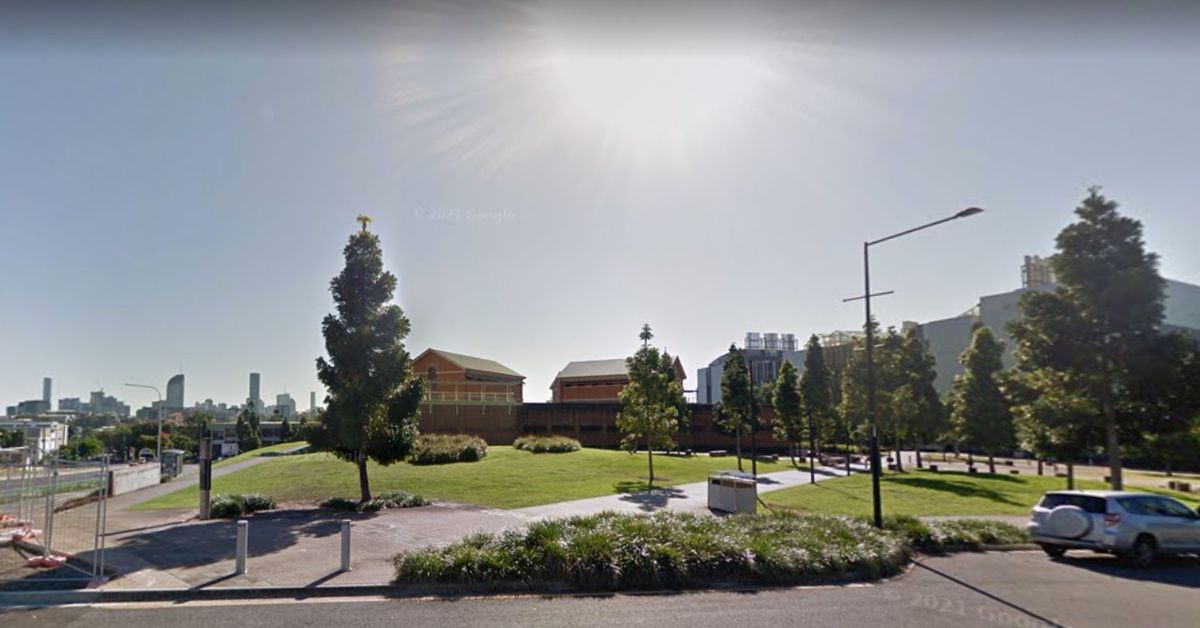
Boggo Road Gaol
Photo Credit: Google Maps

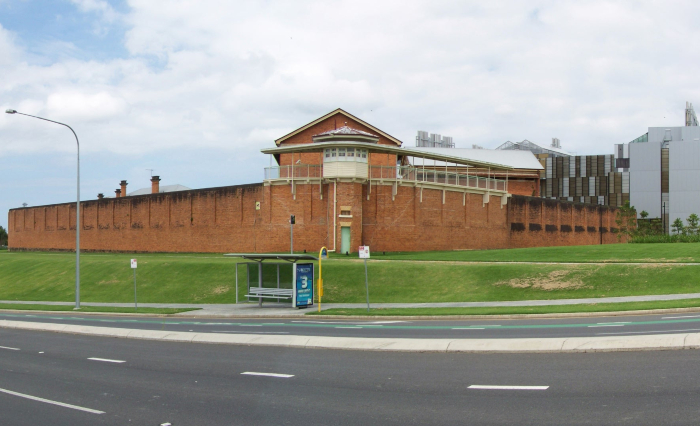
The future of the heritage-listed Boggo Road Gaol, a site that once housed Queensland’s most notorious criminals and later became a popular tourist spot, is currently under review by the Department of Housing and Public Works. Access to the former prison was suspended in 2022 to allow for construction of the adjacent Boggo Road Village. Jack Sim, an entrepreneur who ran popular history and ghost tours at the gaol for nearly three decades, has stated his tours have been on hold indefinitely since that time. 

He expressed concern about the lack of a firm date for tours to resume, especially with the upcoming 2032 Olympic and Paralympic Games. The Department has acknowledged the gaol’s importance to Queensland’s history and indicated that a strategic precinct planning process is underway to inform decisions about its future use, including potential reopening and showcasing its heritage for international and local visitors.

Boggo Road Village Nearing Completion

Boggo Road Gaol
Photo Credit: Stockwell

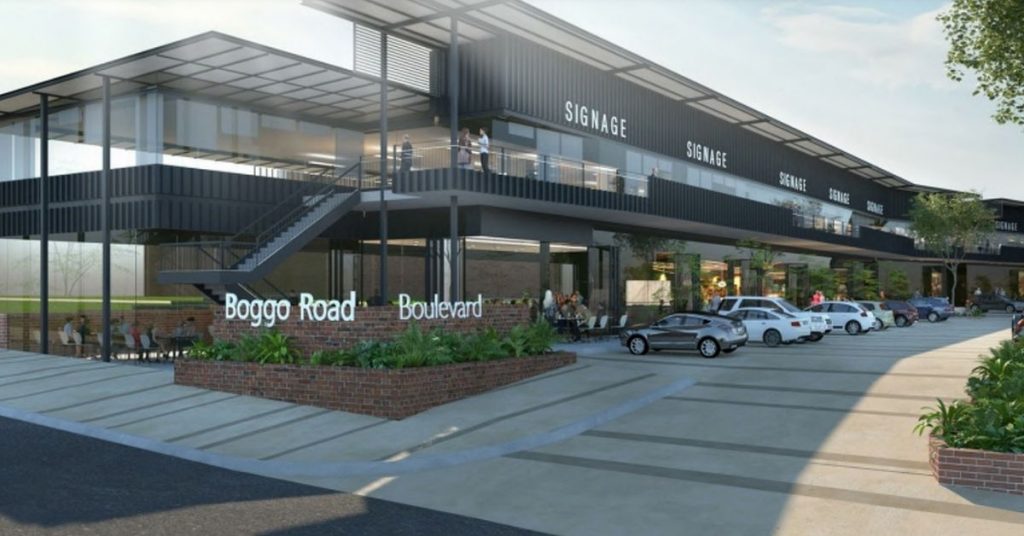
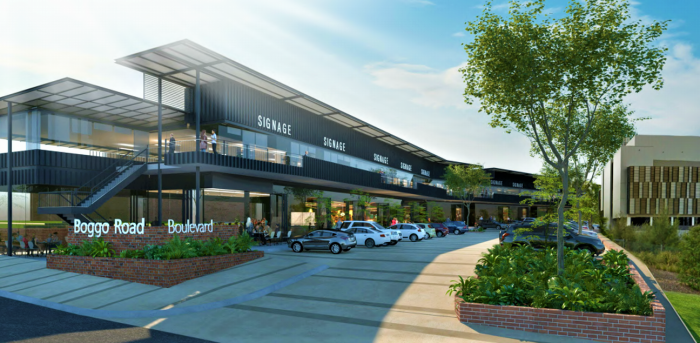
Adjacent to the historic gaol, the Boggo Road Village, a two-storey office and retail complex by Stockwell developer, is expected to open by the end of 2025. This mixed-use development will be anchored by an IGA supermarket and include twelve specialty retailers and ten commercial suites. 

The project, located between the former prison and the Ecosciences Precinct, saw Brisbane City Council approve plans for a “boutique commercial development” in 2021, with construction commencing in 2022. Earlier proposals for the state-owned land, which included demolishing parts of the prison built since the 1970s, were revised after community pressure to maintain heritage elements and improve transport corridors.

Transforming the Transport Landscape

Boggo Road Gaol
Photo Credit: Cross River Rail

The area is also undergoing a significant transport upgrade, with the former Park Road railway station transitioning to be officially known as Boggo Road Station. This renaming, which began in August 2024, aims to unify the rail services with the existing Boggo Road busway, creating a more user-friendly interchange. This change will make it easier for commuters to transfer between the Beenleigh, Gold Coast, and Cleveland rail lines and bus services at one central location.

As part of the massive Cross River Rail project, two new underground rail platforms are being added at Boggo Road. This expansion is set to dramatically increase the station’s capacity, with projections indicating it will become South East Queensland’s second busiest transport interchange by 2036, serving over 22,000 commuters each weekday. 

The new underground station will seamlessly connect with the South East Busway and existing above-ground rail station, providing high-frequency links to new stations in Woolloongabba and the Brisbane Central Business District. It will also improve access to the major health, science, and education precinct, including the Princess Alexandra Hospital and the Inner City South State Secondary College. 

Construction for the Cross River Rail project at Boggo Road is ongoing, with significant progress on the station canopy and underground systems. The new station is anticipated to be operational by early 2026.


A Hub of Innovation and Heritage

Beyond transport, the Boggo Road area is recognised as a vital knowledge and technology precinct, home to important health, science, and education institutions. The precinct’s development includes improved pedestrian and cycling connections, such as a new bridge linking with the Princess Alexandra Hospital and the South East Busway. 

The new Boggo Road station will also feature station art created by Aboriginal or Torres Strait Islander artists, celebrating Queensland’s rich cultural heritage.

Published Date 09-Jun-2025

Johnny Cash’s Alleged Performances at Boggo Road Gaol: Truth or Tall Tale?

Claims abound about Johnny Cash, the iconic “Man in Black,” performing at Boggo Road Gaol in Dutton Park, in the early 1970s, stirring both fascination and scepticism among fans and historians alike.


More than 45 years since Johnny Cash came to Australia in 1971, a story still persists that he visited Boggo Road Gaol, the most notorious prison in Queensland during that time, to perform for a select group of inmates.

The narrative, fueled by memories of retired prison officer Bill Eaddows, suggested Mr Cash played within the gaol’s confines, bringing his music directly to those living in the shadow of the state’s heavy-handed justice system, under the watchful eye of Premier Joh Bjelke-Petersen’s administration.

Mr Cash, no stranger to the prison environment with his performances in American facilities like Folsom and San Quentin, allegedly sought to extend his advocacy for prison reform internationally, choosing Boggo Road as a venue not once, but reportedly twice, in the early ’70s. 

A Musical Family’s Australian Journey

Verifying the specifics is challenging due to the scarcity of records, such as historical correspondences, which have long been lost. The late Mr Eaddows remembered Mr Cash’s performances at Boggo Road Gaol twice in the 1970s, likely during ’71 and ’73, coinciding with his tours in Australia.  Due to a rigorous ban on photography within prison walls at the time, no visual evidence of these events exists.

On the evening of 29 March 1971, Mr Cash had a show at Brisbane’s Festival Hall. This performance is believed to have occurred on the same day he visited Boggo Road Gaol, marking the finale of his Australian tour before departing for New Zealand.

Accompanying the singer to Australia were his wife, June Carter, and six members of her illustrious country music family, The Carters. Alongside them was Johnny and June’s one-year-old son, John, with the family traversing Australia in a caravan.

Advocacy Behind Bars

By the early 1970s, Mr Cash emerged as the foremost figure advocating prison reform. Drawing inspiration from the life of Jesus, whom he greatly admired, Mr Cash leveraged his fame to foster positive change. According to Mr Eaddows, this advocacy led him to perform at Boggo Road Gaol. 

The inmates present at his performance likely had no prior knowledge of Mr Cash’s visit, as such an event would have required discreet and advanced planning. A former inmate suggested that Mr Cash might have corresponded with one of the prisoners, indicating a personal connection to the cause.

Boggo Road Gaol
Photo Credit: Adam French/Google Maps

This behaviour was consistent with the singer’s approach to his tours; he often made unpublicised visits to prisons across the globe, including facilities in Sweden and Germany, totalling over 20 and, by some accounts, as many as 30 prisons. During these visits, he performed for the inmates and engaged with them personally, responding to their letters and listening to their stories.

Scepticism and Investigation

Historian Christopher Dawson, however, casts a significant shadow of doubt over these claims, noting the absence of corroborating evidence and the nature of the sources. 

Mr Dawson’s investigation, prompted by inquiries and the recounting of supposed witnesses, ultimately revealed these stories as potentially fabricated. This conclusion is supported by responses from former staff and inmates who collectively deny the event’s occurrence.

Despite the allure of Mr Cash’s legendary status and his known prison tours, Mr Dawson’s research suggests that the Boggo Road performances are more likely a part of local lore, a myth perpetuated without substantial evidence. 


Yet the intrigue surrounding Johnny Cash’s connection to Boggo Road Gaol highlights the enduring impact of his legacy, not only as a musician but as a figure of cultural significance, whose life and work continue to inspire debate and investigation.

Whilst the truth of his presence at Boggo Road may remain elusive, the story itself speaks volumes about Mr Cash’s lasting influence and the intersection of music, justice, and history in Australia’s collective consciousness.

Published 6-April-2024

Construction Delays Keep Tours of Boggo Road Gaol from ‘Boy Swallows Universe’ on Hold

Tours of Brisbane’s Boggo Road Gaol in Dutton Park, featured in the Netflix series “Boy Swallows Universe,” remain suspended due to some ongoing construction works nearby.


Despite the jail’s international attention following its portrayal in the popular show, the temporary closure, initiated in March 2022 due to adjacent development, has persisted.

The Boggo Road Village project, originally slated for completion in 2023, has yet to commence major construction, leaving the state government to impose safety restrictions on the jail. These restrictions, related to nearby water and sewerage pipe work as well as construction vibrations, have hindered the resumption of tours.

It appears that the prolonged closure has led to numerous disappointed inquiries from eager visitors, including schools and cruise ship companies, who have been denied access for over two years. 

With the recent surge in interest fueled by “Boy Swallows Universe,” online harassment directed at tour operators has escalated.

“We’re being harassed online by people wanting to gain access to the prison since Boy Swallows  Universe,” Tour Guide and Historian Jack Sim said in a radio interview.

Mr Sim has been running tours at Boggo Road Gaol for nearly a decade.

Boggo Road Gaol Boy Swallows Universe
Photo Credit: Netflix

Developer Mark Stockwell attributed the project delays, now expected to extend until mid-2025, to complications arising from concurrent state government initiatives such as Cross River Rail and the underground bus tunnel. Expressing frustration at the prolonged timeline, Stockwell acknowledged Mr Sim’s efforts in preserving Brisbane’s heritage.

Mr Sim, who typically sees peak visitation during school holidays, emphasised the necessity of resolving the construction delay, noting the significance of the jail’s historical and cultural value. 

He underscored the urgency of establishing a concrete completion date to facilitate future planning, including the proposed establishment of a museum within the jail premises.


Mr Sim is advocating for collaboration between the Queensland government and developers to expedite the project’s progress, emphasising the importance of capitalizing on the heightened global interest in the jail’s narrative. He urged authorities to address the issue promptly, citing its adverse impact on tourism in Queensland.

Published 9-Feb-2024

Netflix to Film ‘Boy Swallows Universe’ in Boggo Road Gaol, Other Brisbane Landmarks

“Boy Swallows Universe,” a uniquely Brisbane production for a new Netflix series, will be filming at the Boggo Road Gaol and other Brisbane landmarks in the coming months.


“Boy Swallows Universe” is an adaptation of the 2018 international bestseller of the same title, which was written by Bracken Ridge local Trent Dalton. The semi-autobiographical story centers on Eli Bell, 13, and has themes like “drug addiction, ex-cons, poverty, violence and the discovery of hope through the power of love,” per Variety.

It begins with Bell receiving a mysterious phone call in a secret underground room, ordering him to save his mother at the Boggo Road Prison on Christmas Day. 

Mr Dalton said that his book is a “very deep and personal love letter” to Brisbane. 

“This adaptation to the screen couldn’t happen anywhere else, and I am proud to be part of this exciting adventure on my home turf.”

“Brisbane-based author Trent Dalton captivated the world with his brutal yet magical tale set in 1980s Brisbane among iconic local landmarks such as Boggo Road Gaol and Brisbane City Hall’s clock tower,” Premier Annastacia Palaszczuk said.  

Boy Swallows Universe
Photo Credit: IMDb

“This uniquely Brisbane production will also boost our local screen industry by injecting around $33 million into the Queensland economy and creating approximately 185 jobs for cast and crew, and an estimated 2500 extras.”

Brouhaha Entertainment, Chapter One, Anonymous Content and Netflix will produce the limited eight-part series. John Collee has adapted the book for the screen and will be executive produced by Troy Lum, Andrew Mason, Kerry Kohansky-Roberts, and Joel Edgerton.


“Brisbane has earned its reputation as a one-stop-shop for production, including film-friendly locations, experienced local crew, renowned post-production facilities and a fantastic studio facility in Screen Queensland Studios,” Screen Queensland CEO Kylie Munnich said.

“Boy Swallows Universe” was previously adapted for the stage and was presented by Queensland Theatre, Brisbane Festival and Queensland Performing Arts Centre.

Backlash After Council Approves New Development in Boggo Road Gaol

Brisbane City Council has approved the addition of Stockwell’s controversial commercial building to the historically rich, heritage-listed Boggo Road Gaol site in Dutton Park. 


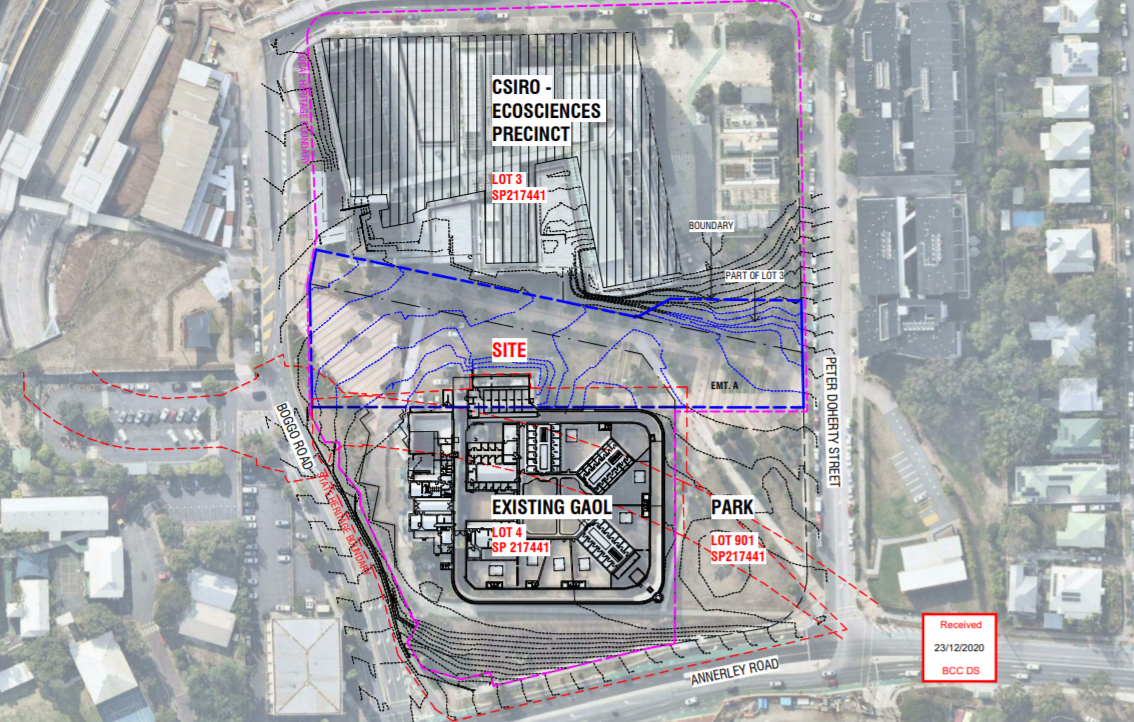
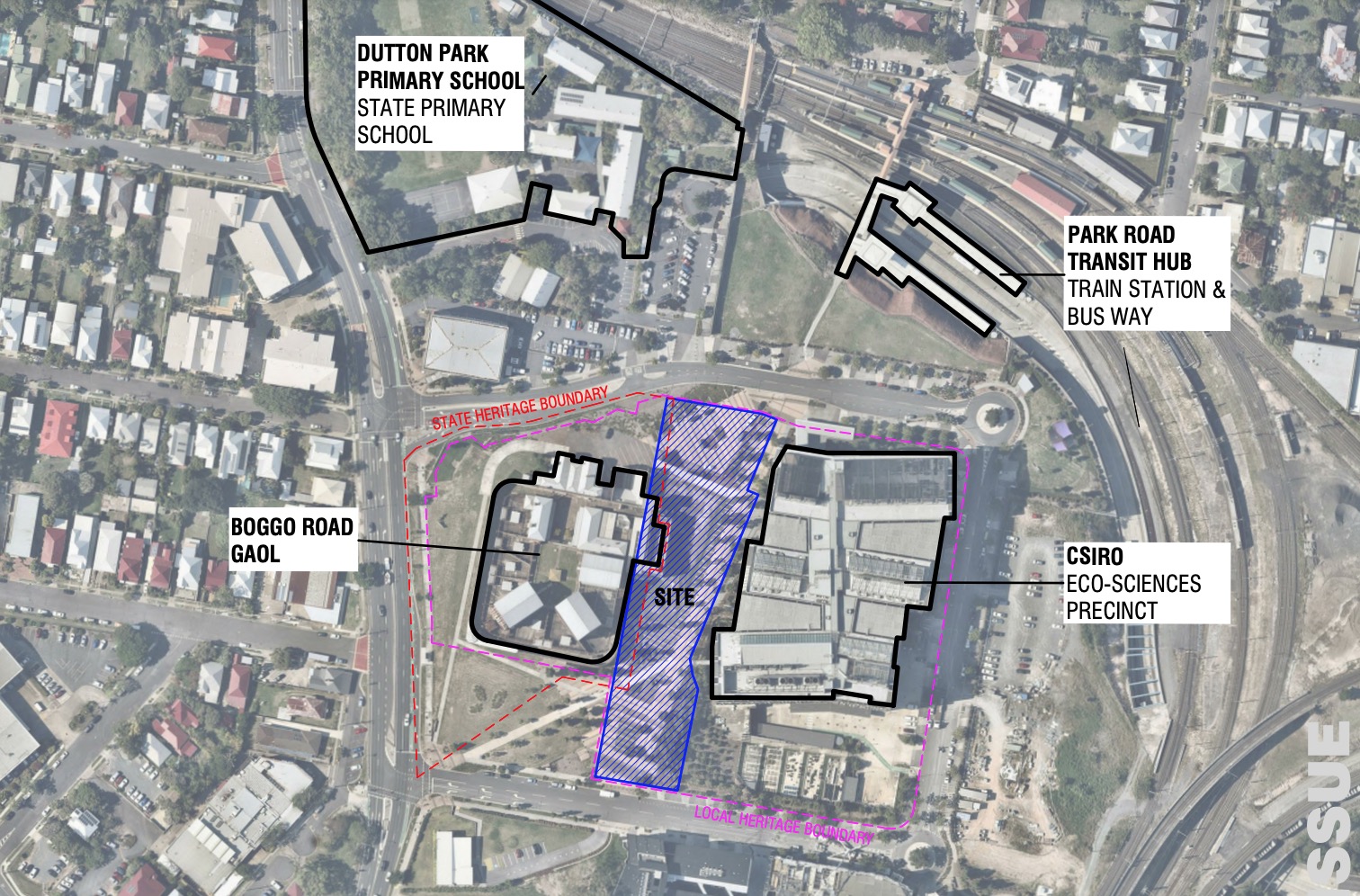
The site of the project is located between the gaol and the CSIRO building in Dutton Park, and Stockwell’s planned development is set to replace an 11.5 metre pedestrian and cycling boulevard. Annerley residents have complained that a commercial building had no place near Boggo Road Gaol, and that it was not appropriate given the site’s historical significance. One of the primary complaints was that 70% of the proposed development was going to be dedicated to a car park. 

Photo credit: PD Online/Brisbane City Council

Large chunks of historically-rich land would be demolished to pave the way for a busy and noisy commercial centre. Another large complaint was how the public never asked for this development, and that Stockwell had not consulted the community or gauged their interest. 

Photo credit: PD Online/Brisbane City Council

In order to meet the public’s demands, Stockwell has modified their proposal, widening pedestrian and cycling paths across the precinct. However, feedback from the community through the Facebook group Boggo Road Futures is still largely negative, with many insisting on no commercial development at all. 

Boggo Road Gaol’s Dark Origins

The Boggo Road Gaol has stood in Annerley since 1883, serving as a maximum-security prison that housed some of the most dangerous criminals in Queensland. Executions were commonplace for the inmates, who were typically convicted for heinous acts such as murder and other serious crimes. 

The jail was eventually closed in 1992, and almost three decades later, plans have been drawn to build a shopping centre right beside it. The new building, which is to be an office and retail development, proposed by Brisbane property company Stockwell has garnered negative attention from the public. 

Photo credit: CC-BY-SA/Ché Lydia Xyang/Wikimedia Commons

The proposed site can be found between Boggo Road Gaol at 21 Boggo Road, and the Ecosciences Precinct Dutton Park building at 41 Boggo Road.  

Boggo Road Gaol Urban Village: Residents Want Child-Friendly Green Space on Proposed Development

A development application for a proposed urban village/shopping center near the historic Boggo Road Gaol is drawing much dissent from Dutton Park residents. The planned $300 million urban village will apparently take up the green space currently used by pedestrians, families and cyclists.

Filed in 2019, the Boggo Road Gaol urban village will have 500 housing units and a shopping centre with a carpark (DA A005260979). The Department of Housing and Public Works and Leighton Holdings partnered for this project, which has the endorsement of the National Trust.

Photo Credit: Brisbane City Council

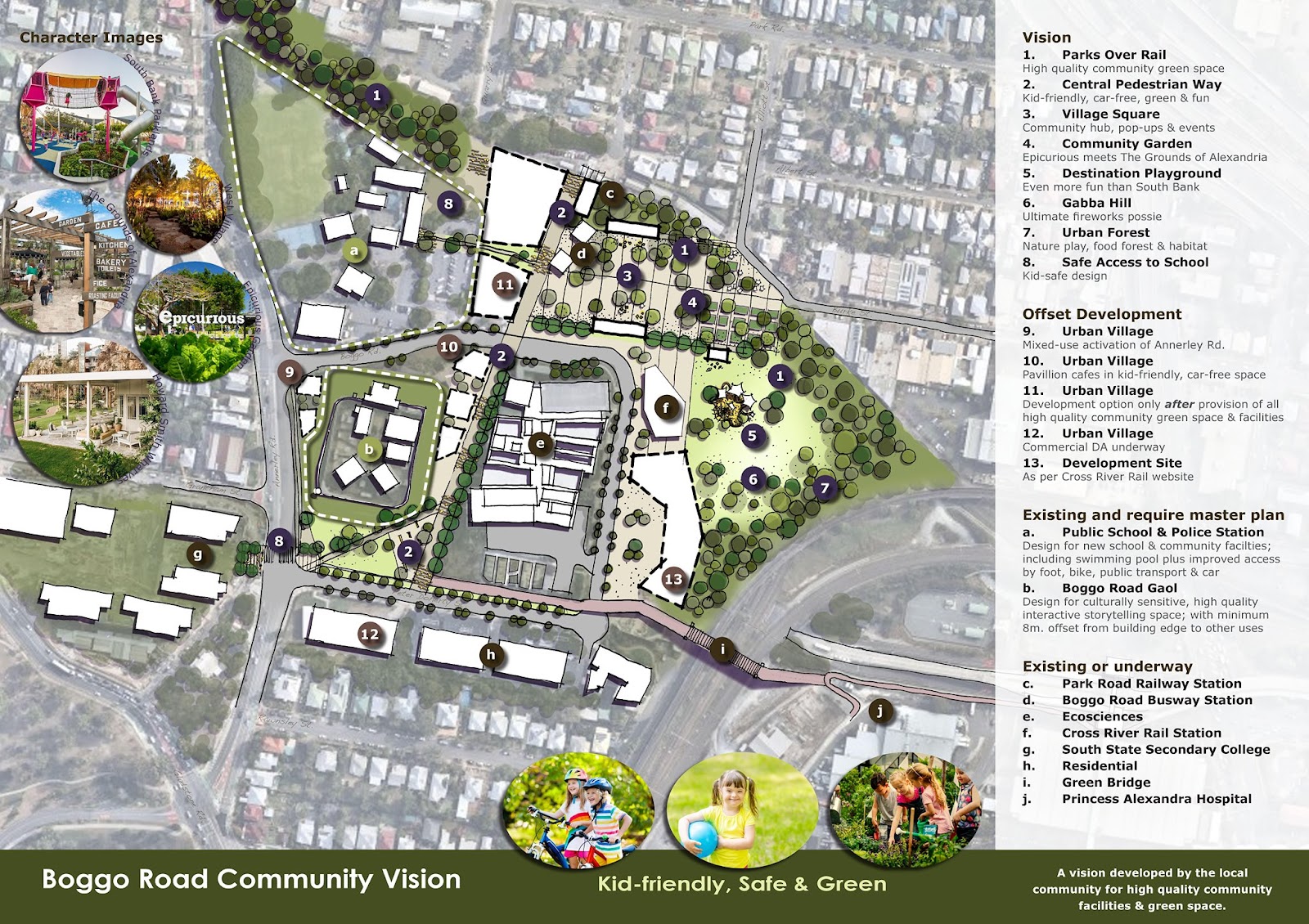
However, residents said that they want the green space especially once the planned Cross River Rail station is completed. With an expected 22,000 commuters a day, the locals said that the area between the Gaol and the Ecosciences building will be more rare and valuable to the community.


Brad Schultz, a resident of Wollonggaba, proposed a different plan to enhance the green space without turning the site into an urban village. 

“[Here are]some information on the issue and an amazing concept for what the precinct COULD be like if we all advocate for it,” he shared on Facebook.

Photo Credit: Brad Schultz/Facebook

The locals urged its South Brisbane officials to keep Boggo Road Gaol car-free and push the Minister for Housing and Public Works Mick de Brenni to “call-in” the development application. 

“The area is currently ideal for travelling by foot and bicycle, connecting bikeways, homes and workplaces. Cutting through that active transport path with a new road open to cars and promoting parking motor vehicle goes against everything we know concerning sustainability,” an unnamed resident said in the public notice.


“The developer wants to convert the existing safe pedestrian way into a shopping centre car park. This space will be used by thousands of students commuting by train, bus, foot, bike and scooter to the new State Secondary College, Dutton Park Primary School and UQ. The car park will put our children’s safety at risk. It also reduces community green space and ignores the cultural sensitivities of Goal site. These outcomes are unacceptable,” nearby Woollongabba resident Jeremy Kirby said.

A spokesperson for the Department of Housing and Public Works, however, said that the development approval will still hinge on some stipulated requirements, including pedestrian access and bikes or footpaths over private cars. 

Boggo Road Gaol: A Fascinating Part of Dutton Park History

Brisbane is dotted with several historical jails, but one of the truly controversial ones is Dutton Park’s Boggo Road Gaol, ill-famed for its poor conditions and many executions. Formerly called the “Brisbane Gaol,” it served as Queensland’s main jail for more than 100 years, before becoming the popular tourist destination that it is today. 

On 2 July 1883, Boggo Road Gaol received its first prisoners. It was built to replace the older prison at Petrie Terrace which operated from 1860 to 1883. Some materials from the demolished Petrie Terrace Jail were used to construct the gaol at Boggo Road.

Aerial view of Boggo Road Gaol, 1929 (Photo Credit: bishop.slq.qld.gov.au)

Despite all the efforts that went into it, the gaol on Petrie Terrace was badly designed. Nearby residents could see over the walls into the prison yards and exchange signals with the prisoners.

When the Boggo Road Gaol first opened, it had a single wing with 54 cells. It was used to hold short-term male inmates or those awaiting transfer to the St Helena Penal Establishment. The original block was extended in 1887, with the addition of two more cellblocks. The walls at Boggo Road Gaol were 20 ft. high and built on an 18 inch foundation of cut-solid rock. 


Female division of Boggo Road Gaol, 1916 (Photo Credit: bishop.slq.qld.gov.au)

Additional Divisions Within the Premises

In 1901, the construction of the women’s prison commenced. Also known as the Number Two Division, it was built in response to the 1887 Parliamentary Inquiry, which recommended that a “separate system” be introduced. This meant a separate cell for each prisoner. Later on, this division was used for the detention of St Helena’s long term prisoners and the female prison was relocated to a building on the southern end of the prison reserve. 

Around the 1960s, a new prison was built around the perimeter of No.1 division. Under the oval of the demolished area was where the underground punishment cells or the “black hole” was found. It served as a place for punishment until the late ‘80s. “To sentence men however bad they may be, to be locked away in these cells was barbaric to say the least, and their use should never again be contemplated,” said superintendent Roy Stephenson in the ‘80s.

Women’s prison at Boggo Road, 1903 (Photo credit: enc.slq.qld.gov.au)

Infamous inmates 

Some well-known individuals served time inside the gaol, including former President of the Australian Senate Gordon Brown, professional wrestler Nathan Jones, prisoner rights activist Debbie Kilroy, Queensland’s last bushranger Patrick Kenniff, and Australian surfing legend Michael Peterson.

Other notable inmates included Arthur Ernest Halliday who was called “Houdini of Boggo Road” because of his eight escape attempts. He managed to escape the Boggo Road Gaol twice. In his first escape, he used a 30-ft long rope of plaited coir and footholds that he had made using two wooden hammock sticks. In his next attempt, he had help from two other prisoners, Derwent Evans Arkinstall and Victor John Travis.

Records indicate that 42 prisoners have been hanged at the Gaol. Around 39 of them are men and two were teenagers. The other one is Ellen Thomson, the only woman executed under Queensland law. She was sentenced over the murder of her husband, William Thomson.

Three men were executed at the gaol in its first year of operation. It was the only triple execution to ever take place in Queensland. Two were Aboriginals named “Jango,” who murdered a woman named Eliza Mills and “George,” who raped a young girl at Rockhampton. The other one was a Scottish man named James Gardiner, sentenced to death for the murder of Ada Gardiner at Rockhampton.

The last man to be executed at the gaol was Ernest Austin, who was convicted for the rape and murder of 11-year-old Ivy Mitchell. He was also the last person to be executed in Queensland after the state abolished death penalty in 1922. Premier Edward Theodore introduced an abolition bill in 1915 because many prisoners were mentally ill and prisoners could not fully repent of their crime if executed. Other than these, Premier Theodore argued there was no evidence that capital punishment acted as a deterrent and that there was the possibility that innocent people could be executed.


End Times

Boggo Road Gaol two cell blocks (Photo Credit: Kgbo/Wikimedia Commons)

The era of the gaol came to an end when the Kennedy Report recommended its closure in May 1988. Commissioner Jim Kennedy noted that the ‘Prisons Act’ was outdated, drugs were entering prisons due to lax security, corruption was rife, officer training was poor, prisoners were not being rehabilitated, and the system was underfunded.

The only part of the prison left standing today is the No. 2 Division of Boggo Road. It was entered in the Queensland Heritage List on 15 February 1993 for demonstrating the evolution of Queensland’s history and for being a rare Australian example of a prison specifically built for women. Aside from being a tourist attraction in the present, the heritage-listed site may also be hired for events like parties and corporate functions. 

Photo Credit: boggoroadgaol.com


Tours of the Boggo Road Gaol

A selection of guided tours has been on offer since 2012, with themes that include ghosts and escapes. Learn about its rich past, including invaluable lesson about crime and punishment and stories of former prisoners and officers. 

Visit the official Boggo Road Gaol website to know more about each tour.

Boggo Road Urban Village in Dutton Park Proposed

A development application has been lodged for a mixed-use development that aims to activate the Boggo Road precinct and complement local tourism offers for the Boggo Road Gaol in Dutton Park.

The proposed Boggo Road Urban Village, designed by Buchan Group, will consist of retail and commercial tenancies within a two-storey building with basement and ground level parking, situated between Boggo Road Gaol and the CSIRO Ecosciences building.

Photo Credit: Brisbane City Council / pdonline.brisbane.qld.gov.au

Stockwell Development Group’s proposed development site is located at 21 and 41 Boggo Road, the area being referred to as “Boggo Road Boulevard,” covering a total of 2,712sqm. The ground level will contain the retail development whilst the commercial development will be at the first level.

 Boggo Road Gaol
Photo Credit: W.A. Stockwell Pty Ltd / stockwell.com.au

“The proposed development provides an exciting boutique commercial development to activate the Boggo Road precinct and create the Boggo Road Gaol site as a key destination in the Brisbane south landscape,” the John Gaskell Planning Consultants Assessment report said.

Proposed detail plan | Photo Credit: Brisbane City Council / pdonline.brisbane.qld.gov.au

“While there has been a significant amount of government infrastructure spending within the precinct to date, it currently lacks activity, is isolated from commercial activities, and lacks the activation expected of what will become a major transport hub in the future.”

Photo Credit: Brisbane City Council / pdonline.brisbane.qld.gov.au

Lift and staircases will  be provided between the two levels. There will be 163 car park spaces (155 cars, 3 PWC, 4 Van, 1 SRV). Vehicle access will be via two crossovers, one to Boggo Road and another one to Peter Doherty Street.  Also a separate driveway crossover will be provided on Boggo Road to facilitate vehicular access to the basement level car parking. 

Photo Credit: Brisbane City Council / pdonline.brisbane.qld.gov.au

The proposal will involve the demolition of the 1976 and 1987/88 Building 17 walkway and the detention units, adjoining the eastern side of the gaol, which do not form part of the gaol tours. 

 Boggo Road Gaol
Perspective view of northern corner | Photo Credit: Brisbane City Council / pdonline.brisbane.qld.gov.au 

The Heritage Impact report prepared by Ruth Woods, however, indicates that ‘these buildings are not currently maintained and demonstrate considerable issues with water penetration, concrete spalling and corrosion of the steelwork’’ and that the development will not diminish the cultural heritage significance of the place.

 Boggo Road Gaol
Heritage impact render – Annerley Road | Photo Credit: Brisbane City Council / pdonline.brisbane.qld.gov.au 

“The new building is contemporary in form yet sympathetic in scale to the gaol. The new works are reversible, and the bulk of the new mixed use retail and commercial building is outside the State heritage boundary for the site,” the Heritage Impact report said.


Explore Queensland’s Most Notorious Prison During The Winter School Holidays

Thinking of what to do with your kids during the winter holidays? Why not take them to a historic trip down at Dutton Park?

Boggo Road Gaol is offering special school holiday rates that you might want to grab every day starting 30 June until 7 July. The tour will start at 11:00 a.m. and last for over an hour. A tour guide who will take you through the Number 2 Division, around the gatehouse, yards, and the Circle. The tour will end at the F Wing cell block.

During this school holiday tour offer, you can get adult tickets at a concession price and a special family rate this July:

  • Adult – $24
  • Adult Concession: $20
  • Teens (12-17) – $17.50
  • Children (5-11) – $12.50
  • Children (under 5) – FREE
  • Family (2 adults & 2 children) – $55
  • Single family (1 adult + up to 3 children) – $50

The Boggo Road Gaol is known to be Queensland’s most notorious prison and is one of the most intriguing tourist attractions in Brisbane. It was built in 1883 and was closed in 1992.

Number Two Division

The Number Two Division is the only remaining section of the Gaol. It used to keep female inmates in 1903, but in 1921, the women were moved to make way for male prisoners from St Helena Island. It was also home to the state’s infamous inmates such as Arthur ‘Slim’ Halliday and Jane Finch.

The tour will let you in on the secrets within the brick walls and even beyond that. Get to hear about escapes, the inmates, and many more.

Get your tickets here for the tour.

Address: 21 Boggo Road, (Off Annerley Road) Dutton Park Queensland 4102 Australia