




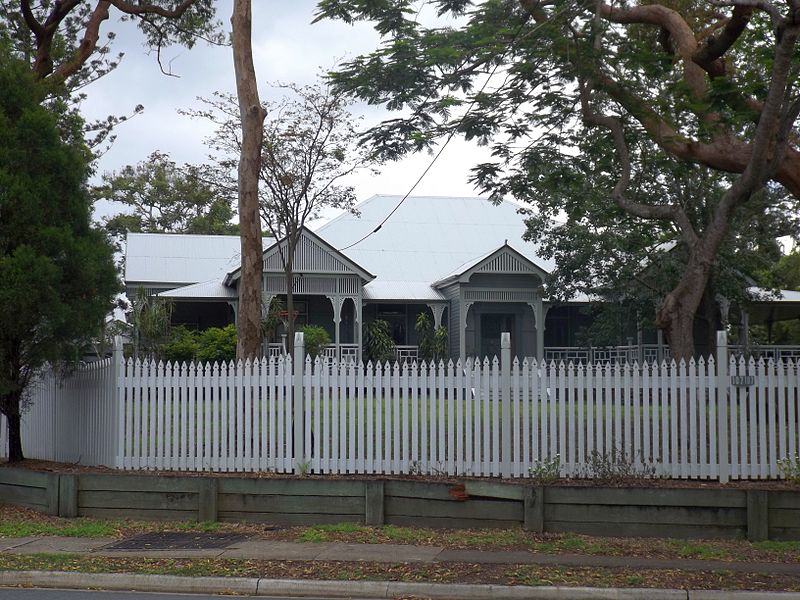
John Mills House in Kadumba Street is part of Queensland Heritage Register as one of the heritage places in Yeronga.
Did you know that as early as the start of the 20th century, Yeronga was already an established residential area in Brisbane?
Indeed, a number of middle-class families during that era found Yeronga a desirable place to live in. This includes a well-known Brisbane printer, named John Charles Mills.

Mills was trading as John Mills Himself in 1909 and his business continued to expand and flourish during and even after the First World War. After his death, his sons- John and Sam, continued the business up until the 1980s.

John Mills’ Residence
John Mills’ family house, located at 107 Kadumba Street in Yeronga, was built in 1914. Over the years, the Mills’ residence has been lauded by locals for to its striking beauty.
The timber-made villa with its intricate and ornate interior was originally placed on a two-acre land surrounded by tall tallowwood trees. Around the location, other grand Yeronga homes such as Cosmo and Astolat, can be seen.
John and his wife Sarah lived in this home up until their deaths in 1934 and 1953, respectively.The property was then passed on to the Queensland Trustees Ltd, but it was eventually sold in 1954 to Frederick William Filer and James Francis Swengley.
By 1958, the villa was reduced in size and was passed on to James Francis and Grace Agnes Swengley.

In 1962, the house was bought by Keith Eric Watt, making him the fourth homeowner of the property. And finally in 1989, Ian Evans, a heritage conservation writer, acquired and meticulously restored this historical house of John Mills.

Historical Significance
This residential property at Kadumba Street became an official heritage site in August 2000. As part of the Queensland Heritage Register, the property has successfully met the following criteria:
- The place is important in demonstrating the evolution or pattern of Queensland’s history: This property is considered as an evidence of the evolution of Yeronga as a middle-class residential suburb, having been established and sustained during the second half of the 20th century.
- The place has potential to yield information that will contribute to an understanding of Queensland’s history: This property can be of use for further research about late 19th-20th century Brisbane architects and their works.
- The place is important in demonstrating the principal characteristics of a particular class of cultural places: This property contains substantial and ornate interiors.
- The place is important because of its aesthetic significance: This property highly contributes to the streetscape of Kadumba and to the overall townscape of Yeronga.
- The place has a special association with the life or work of a particular person, group or organisation of importance in Queensland’s history: This property is associated with John Charles Mills, a well-known Brisbane printer during the early 20th century.