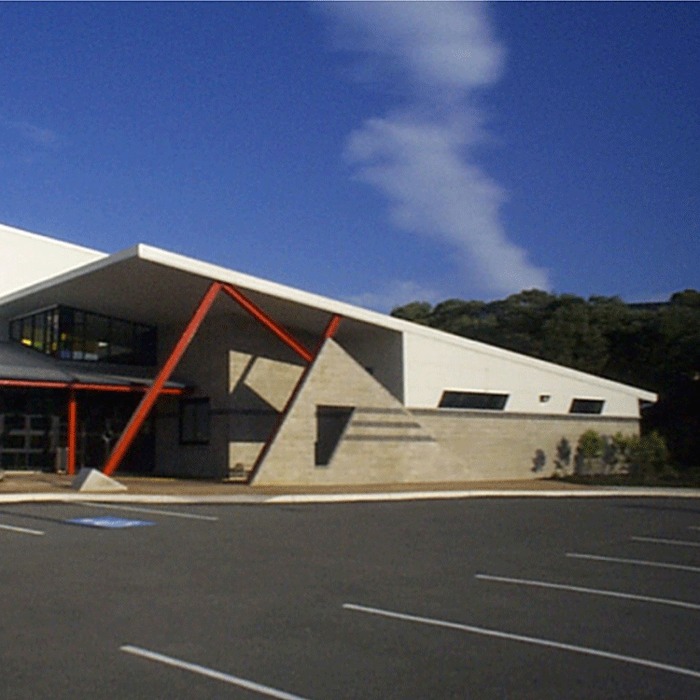
The Kurilpa Scout Group, located at the corner of Park Road and Villa Street in Yeronga, recently received $5,000 in funds from the Queensland government to develop a Conservation Management Plan (CMP) for the Baden Powell Memorial Hall at the Yeronga Memorial Park.
The money is part of the Community Sustainability Action Grants given to 30 recipients tasked to come up with ways to repair, restore and preserve important heritage buildings or sites in Queensland.
The Baden Powell Memorial Hall stands at the Yeronga Memorial Park, a state heritage landscape since 2005. As one of Brisbane’s oldest parks, it has several significant components as a historical, environmental and social hub thus care and consideration must be taken before any changes are done in the area.
As outlined in the guidelines of the Queensland Heritage Act 1992, a CMP would serve as a planning and expenditure guide whenever changes to a heritage site are proposed. The aim of the CMP is to lessen delays and study all undertaking before putting a plan into action.
“Heritage places are an important aspect of the community’s character and identity and they allow us to trace our history and feel connected to the important stories about our past,” Minister for Environment and the Arts Leeanne Enoch said.
“This round of funding is part of the Government’s $18 million Community Sustainability Action Grants Program, which helps conserve Queensland’s environment and heritage and protect wildlife.”
The Kurilpa Scout Group, which has various outdoor and scouting programs for children, teens and adults, regularly meets at the Baden Powell Memorial Hall. The space and its surrounding grounds are also available for hire for non-members.
Police have issued a reminder to Yeronga residents to take extra care after a number of instances of unlawful entry of vehicles and items being stolen in the area have been reported.
The incidents were reported to have occurred in late September 2019 during night time on the following streets: Yeronga Street, Nelson Street, Stevens Street, Overdean Street, Cook Street, Grosvenor Street, and Shottery Street. Since then, residents have been advised to be extra vigilant in securing their vehicles in the area.
Whilst many of these motor vehicles were secured, offenders managed to break in by smashing a window to steal items in sight, including bank cards, wallets, coins, cash, as well as registration plates.
Residents are therefore encouraged to park their vehicles in well lit areas and to remove GPS units, mobile phones, other entertainment devices, wallets/handbags, personal papers/documents, clothing, and sunglasses.
Furthermore, Queensland Police suggests the following tips to minimise the risk of vehicle theft:
If you have off street parking, use it. If possible, park behind locked gates or in a locked garage. Parking on the street greatly increases the risk of theft.
Remove temptation – always lock doors and close windows when your vehicle is unattended.
If you must leave valuables in your motor vehicle keep them out of sight.
For maximum protection, an engine immobiliser that meets Australian Standard 4601:1999 provides the most effective deterrent to opportunistic vehicle theft. However, it offers no protection if a thief has easy access to your car keys.
Have any information for police? Please contact Policelink on 131 444 or provide information using the online form. Or report information about crime anonymously to Crime Stoppers by calling 1800 333 000 or via crimestoppersqld.com.au.
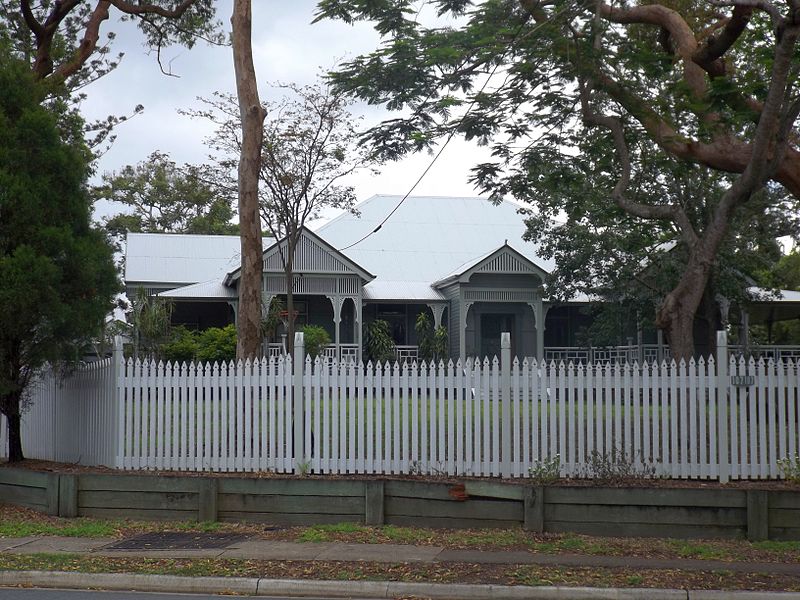
John Mills House in Kadumba Street is part of Queensland Heritage Register as one of the heritage places in Yeronga.
Did you know that as early as the start of the 20th century, Yeronga was already an established residential area in Brisbane?
Indeed, a number of middle-class families during that era found Yeronga a desirable place to live in. This includes a well-known Brisbane printer, named John Charles Mills.
Photo credit: johnmillshimself.com.au
Mills was trading as John Mills Himself in 1909 and his business continued to expand and flourish during and even after the First World War. After his death, his sons- John and Sam, continued the business up until the 1980s.
John Mills’ Residence
John Mills’ family house, located at 107 Kadumba Street in Yeronga, was built in 1914. Over the years, the Mills’ residence has been lauded by locals for to its striking beauty.
The timber-made villa with its intricate and ornate interior was originally placed on a two-acre land surrounded by tall tallowwood trees. Around the location, other grand Yeronga homes such as Cosmo and Astolat, can be seen.
John and his wife Sarah lived in this home up until their deaths in 1934 and 1953, respectively.The property was then passed on to the Queensland Trustees Ltd, but it was eventually sold in 1954 to Frederick William Filer and James Francis Swengley.
By 1958, the villa was reduced in size and was passed on to James Francis and Grace Agnes Swengley.
In 1962, the house was bought by Keith Eric Watt, making him the fourth homeowner of the property. And finally in 1989, Ian Evans, a heritage conservation writer, acquired and meticulously restored this historical house of John Mills.
Photo credit: mustdobrisbane.com
Historical Significance
This residential property at Kadumba Street became an official heritage site in August 2000. As part of the Queensland Heritage Register, the property has successfully met the following criteria:
The place is important in demonstrating the evolution or pattern of Queensland’s history: This property is considered as an evidence of the evolution of Yeronga as a middle-class residential suburb, having been established and sustained during the second half of the 20th century.
The place has potential to yield information that will contribute to an understanding of Queensland’s history: This property can be of use for further research about late 19th-20th century Brisbane architects and their works.
The place is important in demonstrating the principal characteristics of a particular class of cultural places: This property contains substantial and ornate interiors.
The place is important because of its aesthetic significance: This property highly contributes to the streetscape of Kadumba and to the overall townscape of Yeronga.
The place has a special association with the life or work of a particular person, group or organisation of importance in Queensland’s history: This property is associated with John Charles Mills, a well-known Brisbane printer during the early 20th century.
Did you know that one of Yeronga’s grandest heritage-listed houses, Rhyndarra, used to be a Salvation Army home for orphaned and wayward girls back in the 1900s?
Built from 1888-1938 by architect Andrea Stombuco, the looming two-storey brick mansion along Riverview Place at Yeronga was more than just a residence. Rhyndarra marked its role in Yeronga’s history when it served as a home for the Yeronga Girls’ Industrial School under the administration of the Salvation Army back in the early 1900s, and as a military hospital and training ground during the World War II and the Cold War.
Old picture of Rhyndarra, 1897. (Photo Credits:Queenslander/Wikimedia Commons)
In 1907, when owner William Williams was declared insolvent, the non-profit life insurance company AMP Society facilitated the sale of the residential Rhyndarra. It was then passed on to William Booth, the founder of the Salvation Army.
Booth opened Rhyndarra’s doors to girls who were orphaned, or who were deemed during those times to be “of questionable character.” He continued his campaign with the Salvos to help the poor and destitute, by establishing such homes.
The girls staying at Rhyndarra were taught household work and other similar domestic services until they were ready to leave the orphanage to seek employment.
The older girls, on the other hand, were tasked to look after the younger girls, and had the privilege of attending state schools within nearby suburbs.
Rhyndarra itself was restructured in a way to suit the lifestyle of its occupants, both as a school and as a residence. Rooms were combined and converted into a dormitory to accommodate the greater number of its occupants. The stable was used as a schoolroom for teaching the younger girls.
Perhaps the biggest change to Rhyndarra was a two-storey building extension at the back of the house that was constructed and funded by the government, and was used for recreation.
Old Stables, part of the residence, Rhynadarra, ca. 1931. The building was used as a schoolroom for the Salvation Army Home. (Photo Credit: The Queenslander, 12 November 1931
The number of occupants at Rhyndarra shifted along with the changing times as the institution continued to take in orphaned girls relinquished by parents who were in poverty, who were difficult to handle, or who ran away from home.
The economic depression increased Rhyndarra’s occupants in the 1930s, with girls ranging from babies to teenagers taken in by the institution.
Military Post and Hospital Accommodation
The Salvation Army continued its operation of the Yeronga Girls’ Industrial School until it was claimed by the Australian Army in 1942, and became a a training ground for the Australian Women’s Army Service (AAMWS). The girls and the rest of the occupants of the school had then been transferred to other institutions outside of Brisbane.
At the same year, a military hospital was put up for the Australian servicewomen on the grounds, and the rooms and halls of Rhyndarra accommodated the officers. In 1943-1944, the Australian Women’s Hospital at Yeronga, known as the 2 Women’s Hospital, was built northeast of Rhyndarra.
1st Military Hospital, 1970s. (Photo Credits: Rhyndarra/Paulatim-Mates Together Again)
When the war ended, the AAMWS was demobilised, and the 2 Women’s Hospital was taken over by the Department of Social Services and was used as a rehabilitation center. However, because of the housing shortage, Rhyndarra was given to the Queensland Housing Commission within the late 1940s to early 1950s to temporarily accommodate homeless people.
During the Cold War in the 1950s, Rhyndarra was once again used as a training and command post, as well as a hospital for the recruits and trainees. Called as the National Service Training Hospital in 1951, it was renamed in the 1960s as 1 Camp Hospital, then later on as 1 Military Hospital in the 1970s. The hospital’s operation continued until the mid 1990s, when it was decommissioned in June 1996.
Today, Rhyndarra still proudly stands and is listed as one of the heritage sites in Yeronga, because of the significant part it played in Australia’s history.
The Yeronga TAFE site has been declared a Priority Development Area (PDA) last month. Set on 3 hectares of land, the site will be transformed into an area that will be valuable to the community. Plans for a community centre along with residential and retail options are underway.
Since 2017, the Economic Development Queensland (EDQ) has been working with the local community, exploring the numerous opportunities that they can do to transform the site.
Four public consultations were held in August-September 2017 to ensure the best for the community.
The old TAFE site will be mainly transformed into a residential community that will provide various housing options to ensure that housing needs will be accommodated as much as possible. There will also be public open spaces along with retail and small business opportunities on-site.
The upcoming community centre is also a huge improvement for the community giving them to easily access the centre for services and functions.
How The PDA Works
The PDA is an identified land for specific development that will contribute to economic development and will be valuable to the community. Whilst the development scheme is being prepared, the Interim Land Use Plan (ILUP) will be in effect for up to 12 months. The ILUP will provide the planning framework to make way for early works that includes the demolition of existing buildings.
Now, with the plans set in motion, EDQ will work on the development scheme whilst the community will be given the chance to have their say early next year. Once the development scheme is finished, the development within the PDA will be regulated under the ILUP. Demolition will begin during the 2018/2019 school holidays.