The Ipswich Rd shopping strip in Annerley is facing a significant shift as Brandons Shoe Repairs, a family-owned establishment with a 100-year history, becomes the latest casualty in a wave of closures that includes even the Annerley police station!
Following the imminent closure of cult retailer Fats Comics and the anticipated closure of Southside Antiques Centre, Brandons Shoe Repairs, which has occupied the same shopfront for 65 years, will cease operations at the end of the year.
Francis Brandon, who co-owns the store with her husband Trevor, claimed that their age and the lack of interest from potential buyers were the main factors in their decision to retire.
The closure of Brandons Shoe Repairs, which Joe Brandon and his business partner founded in 1924, signals the end of an era for the Annerley neighbourhood. The shop has served generations of local families, with schoolchildren and their parents frequenting the store for decades.
The Brandon family also owns the Fat Comics premises and refutes claims that high rent was the cause of its closure. Fat Comics owner Norm Bardell confirmed this, citing his sister’s relocation to Western Australia as the primary reason. Fat Comics will continue operating its online business.
The closures of Brandons Shoe Repairs, Fat Comics, and Southside Antiques Centre have left residents lamenting the loss of what made Annerley unique.
Many have taken to social media to express their sadness, highlighting the disappearance of other businesses such as Pennisi Fine Foods, the German bakery, the Persian grocer, African shops, a music shop, and the community bookshop.
This retail exodus extends beyond shops, as even the Annerley police station is being relocated to Stones Corner. The once-bustling Ipswich Rd shopping strip is transforming, leaving residents concerned about the future character of their suburb.
Annerley vandalism victims are left grappling with unexpected out-of-pocket expenses due to an insurance policy condition requiring identification of the perpetrator for coverage, following a destructive spree that shattered the windows of 17 cars.
Early on a quiet Monday morning, on the 27th of May 2024, Annerley residents Amy Powell and Sam Sedgman discovered their cars’ windows smashed. They were among the 17 car owners affected by the vandalism that spread across Victoria Terrace, Prince Street, and Duke Street.
Powell’s and Sedgman’s vehicles were insured by Allianz and Budget Direct respectively; however, only Sedgman’s claim for windscreen repair was accepted. Powell was denied coverage because she could not provide details about the vandal, a stipulation in her policy with Allianz.
Allianz has stated that their policy covers malicious damage but requires an excess fee unless the perpetrator’s details are provided. This policy aims to prevent false claims and ensure recovery rights.
An Allianz spokesperson highlighted that customers must understand their policies, including any clauses about excess fees and conditions for coverage.
Photo for illustration purposes only Photo Credit: PXHere
The community expressed frustration and disappointment over the insurance hurdles. Martin Wells, another victim, echoed the sentiment, emphasising the lack of satisfaction vandals could derive from such pointless destruction. The incident has prompted some residents, like Bronwen, who also had her son’s car windows shattered, to consider additional security measures such as installing CCTV cameras.
Queensland Police are actively investigating the incident, having released CCTV footage of a vehicle of interest and calling for public assistance to identify the culprits.
Meanwhile, the Insurance Council of Australia advises Annerley vandalism victims to understand their insurance documents thoroughly. They stress the importance of knowing what is covered and the conditions tied to claims, which can be crucial during unexpected events like vandalism.
Police have released CCTV footage of a white SUV believed to be connected to the willful vandalism that targeted 17 vehicles along Victoria Terrace, Prince Street, and Duke Street in Annerley.
Police have released CCTV footage of a white SUV believed to be connected to the willful vandalism that targeted as many as 17 vehicles along Victoria Terrace, Prince Street, and Duke Street in Annerley.
Residents of the typically quiet Prince Street awoke to the aftermath of the overnight rampage, with cars bearing significant damage, including smashed windows. One resident described the shock of a young couple discovering their BMW had been completely vandalised.
A young couple experienced their car being completely smashed, which left them absolutely shocked. They sought assistance from their father who came over to help, undoubtedly adding to the stress of the situation.
Call for Public Assistance
Investigators are urging anyone with CCTV or dashcam footage from the area during the incident to come forward. Additionally, they are seeking information from anyone who may recognize the vehicle of interest captured in the released video.
The brazen act has left the Annerley community outraged and frustrated.
One resident expressed disappointment with the justice system, suggesting that even if the perpetrators are caught, the justice system might not take any significant action, making the situation seem inconsequential.
Police are continuing their investigations into the overnight vandalism spree, determined to bring those responsible to justice.
Birds on Bikes has transitioned to fully in-house production, prioritising quality and sustainable practices. With this move, the company ensures that every garment meets their exacting standards for craftsmanship and fit.
Their new premises in Annerley Arcade boast advanced equipment and a team of skilled local artisans.
Further demonstrating their commitment to the industry, the shop is opening its doors to other apparel brands seeking manufacturing solutions. They offer access to their honed production processes and expertise, fostering a community of innovation.
Barbara Spooner, Founder/CEO, expressed her enthusiasm for the Annerley move and the opportunities it brings.
“In-house manufacturing allows us to uphold the quality and integrity our customers value. By supporting other brands, we aim to cultivate an environment where innovation thrives in the apparel sector,” Ms Spooner said.
Birds on Bikes extends an invitation to visit their new Annerley Arcade facility. Witness where creativity takes flight and discover their exciting plans for the future.
About Birds on Bikes
The Annerley shop specialises in crafting high-quality, comfortable cycling apparel that caters to all body types, with a particular focus on curvy figures. Offering sizes ranging from 6 to 24, Birds on Bikes is committed to inclusivity and empowering more women to embrace the joy of cycling.
Developers have lodged plans for a 67-unit student accommodation complex at on Duke Street in Annerley, promising a modern living hub for the area’s tertiary scholars.
The proposal (DA A006427969), led by Elevation Architecture, aims to construct a 67-unit, three-story residential building for student housing, replacing the current multi-family homes on the 1,663-square-meter site zoned for low-medium density residential use.
The proposed project entails the construction of a basement car park equipped with 40 spaces for cars and bicycles. The car park would be accessible through Duke Street, fulfilling the needs of the students who would be residing in the development.
Photo Credit: DA A006427969
Moreover, the development features 158.2 square metres of communal areas distributed across all levels. These areas include indoor recreation and dining facilities as well as outdoor spaces.
The proposal’s breakdown reveals a 2,159.1-square-metre gross floor area (GFA), with a site cover of 986.4 square metres (59.3%) over the subject site. Other key features include 10% deep planting, refuse storage, and collection facilities.
Viva Property Group, the planners behind the project, have sought to allay concerns about the development’s scale and bulk.
“The development is vigilantly planned so as to provide some articulation to facades, pitched roof forms, and variation of materials as well as finishes across the site so as to decrease perceived building scale and bulk.”
Photo Credit: DA A006427969
However, residents in the area have filed submissions opposing the project.
“67 units PLUS a manager’s unit will be built. It is entirely probable that 100+ people could live on this parcel of land. The sheer density of this proposed development does definitely not suit an LMR2 zoned area. By any description, the number of proposed residents on this allotment this would be a HIGH DENSITY development,” One local wrote.
“Ideally this development would not go ahead in its current form, but if it is approved there must be screening installed OR the units reorientated so that the apartment bathrooms are facing the western side so people’s living area is not overlooking and looking into my private space,” the local added.
“The addition of 67 accommodation units will transform the area into a hotel-like setting, and the current parking infrastructure is insufficient to support this influx. Additionally, a three-story building will obstruct sunlight and natural light access to surrounding houses,” another concerned resident said.
“The proposed development could have adverse effects on the quality of life for residents in the area. The increased traffic congestion, noise pollution are major concerns.”
“Bird life, particularly Bush Turkeys, has been a longstanding presence in the Duke Street premises, spanning at least the 17 years I’ve resided in the neighbouring property. Generations of Bush Turkeys have made our local backyards their habitat and nesting grounds, with a mound at the rear of the Duke Street premises likely existing for over 20 years,” a neighbour in the area stated.
“There are also huge tropical fruit trees (lychee and mango) and other trees on these lots that are decades old. These trees are where native birds have nested for years and possums have lived for generations. There has been no consideration of the current ecosystem in the DA. These trees will be destroyed if this development is approved by Council therefore destroying the habitat of the local wildlife.”
With the launch of Pradella’s newest residential project, Jardinia, for 2024, Brisbane’s thriving real estate market is a hive of activity. Tucked away in the energetic Yeronga suburb, Jardinia is a stunning new urban living space with lots of greenery, modern conveniences, and exquisite design.
The name Jardinia comes from the Spanish word for garden. This building is a great example of how modern design and nature can live together. This five-story building at 26–36 Shottery Street has 87 well-designed flats and is in a great spot, close to Yeronga Station and all the great things to do on Fairfield Road.
The well-known architecture company Wiltshire Stevens made Jardinia. Its unique living green facade makes it blend in perfectly with its surroundings. Private foyers welcome visitors as they enter their homes and lead to sizable, open-plan living rooms that effortlessly flow onto sizable terraces. This creates a sense of community and openness.
The flats at Jardinia have the best SMEG appliances on the market and have sleek stone countertops with sinks set into island benches. The large master suites have walk-in closets that are a good size and luxurious baths with double vanities, freestanding bathtubs, and separate showers. If you have different living needs, the extra bedrooms can fit them with built-in closets and easy access to the main bathroom.
Some homes also have rooms that can be used for more than one thing, like an office, a media room, or an extra bedroom, based on what a modern family needs.
Residents of Jardinia can choose from two current colour schemes that let them express themselves and make their homes unique.
The rooftop terrace at Jardinia, which draws inspiration from the riad gardens of exotic palaces, makes life even better. With entertainment areas, chairs, and a resort-style pool, it’s a peaceful haven in the middle of the city’s chaos.
Health and well-being are important to Jardinia, so they have features like a fully-stocked gym and a media room that can be used for different things. These let residents stay busy and calm in the comfort of their own homes.
Position Property is in charge of Jardinia’s marketing effort. At $559,900, it’s a great choice for picky buyers who want to live in style in Brisbane’s inner-ring areas.
Pradella has been an important part of Brisbane’s growth since its start in 1956, when Kim Pradella was in charge. The company is known for big projects like the $1 billion Montague Markets area in the West End. They are excited about their newest project in Toowong and are working on a development application right now.
Jardinia is the best example of Pradella’s commitment to quality. It is a lush oasis in the middle of the city where people can live, work, and enjoy a refined and peaceful way of life.
Corinne Kelleher, a resilient mother from Annerley, draws strength from her daughters as she navigates her battle with breast cancer. Her touching story of courage and determination resonates with thousands as she prepares to participate in the 2024 International Women’s Day Fun Run, proudly presented by Queensland X-ray.
The anticipated event, set to unfold on Sunday, 10th March 2024, will witness a remarkable gathering of 23,000 individuals on the streets of Brisbane. Their collective efforts aim to raise crucial funds for breast cancer services, equipment, and research at Mater Hospital.
While the CBD event is already at capacity, Ms Kelleher invites fellow Queenslanders to partake in virtual fun runs within their communities. This inclusive initiative promotes awareness and fosters solidarity in the fight against breast cancer.
Ms Kelleher, 40, candidly shares her journey, describing her initial diagnosis as “scary as hell.” However, her daughters, Harper, aged 7, and Sloane, aged 3, serve as inspiration, propelling her forward with unwavering resolve.
“The girls absolutely inspired me to keep positive, to keep going, and to keep at the forefront of my mind that I can and will get through this,” Ms Kelleher affirmed, reflecting on the unwavering support of her family.
Corinne Kelleher, Steve Kelleher with Harper, 7, and Sloane, 3 pictured at their home in Annerley, Brisbane 6th of February 2024. Photo Credit: Supplied/Josh Woning
Despite the challenges of treatment, the Annerley mum remains transparent with her daughters about her condition, navigating their inquiries with grace and honesty. She emphasises the importance of raising awareness, particularly among women in her age group who may not undergo routine mammograms.
Her participation in the fun run marks a personal milestone, symbolizing her commitment to the cause. Alongside her supportive husband, she endeavours to complete the run, buoyed by the cheers of her daughters awaiting the finish line.
Ms Kelleher’s journey underscores the critical role of early detection and intervention in combating breast cancer. Despite the absence of a family history, she underwent extensive treatment, including a bilateral mastectomy and chemotherapy.
Guided by the expertise of Mater Private Hospital‘s dedicated healthcare professionals, Ms Kelleher remains steadfast in her fight against invasive ductal carcinoma. With six cycles of chemotherapy remaining, she embraces each day with resilience and optimism.
Reflecting on her journey, M. Kelleher acknowledges the profound impact of her support network, including family, friends, and healthcare providers. Her determination to maintain a semblance of normalcy amidst treatment speaks volumes about her strength of character.
Photo Credit: Supplied/Josh Woning Corinne Kelleher pictured at their home in Annerley, Brisbane 6th of February 2024.
Mater Foundation Chief Executive Andrew Thomas aptly observes that the outpouring of support for the virtual challenge underscores a collective commitment to effecting change. Through grassroots initiatives and community engagement, individuals across Queensland unite in solidarity against breast cancer.
Funds from the event will facilitate groundbreaking research and provide vital support services for breast cancer patients across Mater hospitals statewide. Participants reaffirm their dedication to improving outcomes and fostering hope for those affected by this pervasive disease with each step taken.
For those eager to contribute to the cause, registration for the virtual event remains open at www.womensdayfunrun.com.au. Together, Queenslanders embark on a shared journey of resilience, compassion, and empowerment, epitomizing the enduring spirit of unity in the face of adversity.
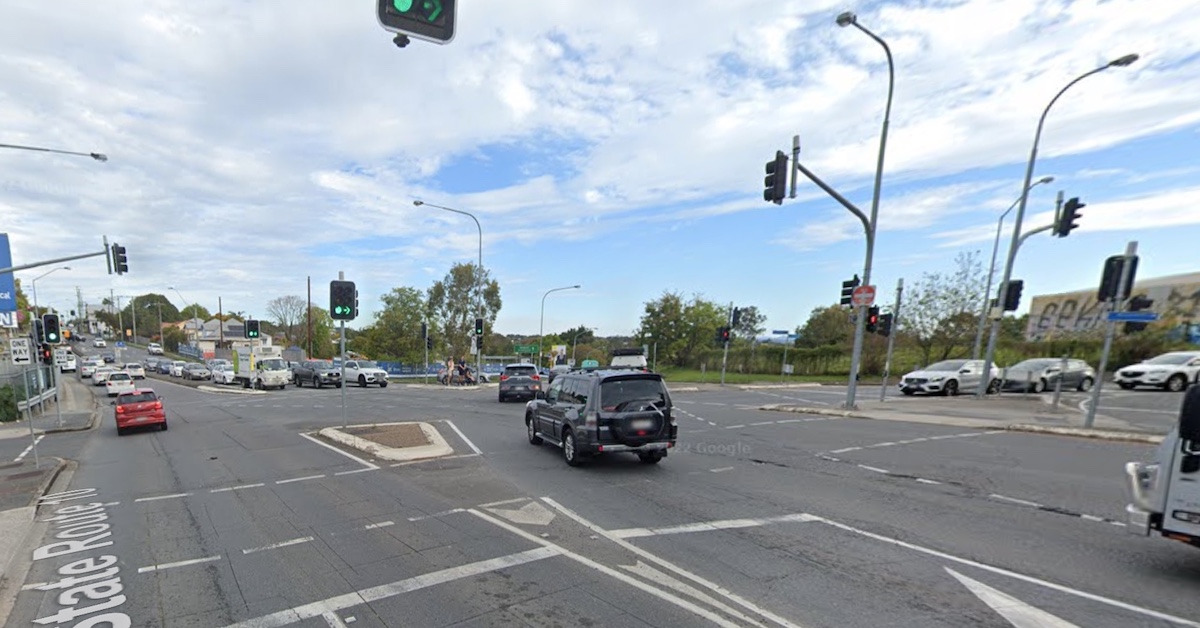
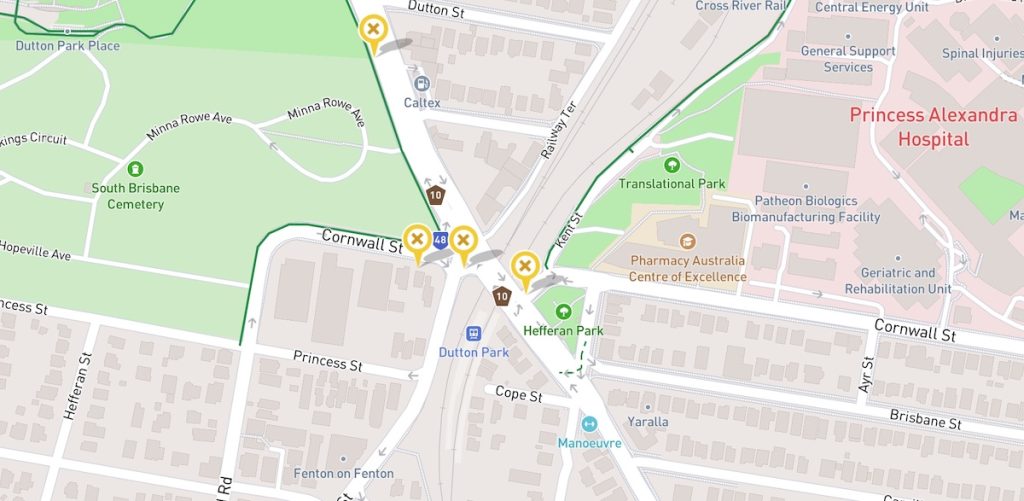
The Cornwall Street and Annerley Road intersection in Annerley now ranks 8th among BikeSpot app users as an unsafe spot for cycling in Brisbane due to the glaring absence of bike lanes in the area.
Since its introduction in October, BikeSpot has captured the opinions of over 4,000 Queenslanders who have highlighted areas they perceive as high-risk for both cyclists and drivers and provided vital insights to road safety.
The community rallied together to transform this problematic intersection to make the area not only safer but more accessible for all, ensuring that pedestrians, cyclists, and motorists can coexist harmoniously. Their vision included reduced speed limits, closing slip lanes, and the creation of safer crossings and dedicated bike lanes.
In March 2023, local MP Amy Macmahon highlighted the pressing need to address the treacherous Annerley Road-Cornwall Street intersection. A headache for motorists and a danger zone for pedestrians and cyclists, this intersection’s issues were poised to escalate with the upgrade of Dutton Park Station.
A Vision for Safer Roads
The BikeSpot map, which originated in Victoria and has become live nationwide, is not just a tool for identifying problems but a mechanism for catalysing change. It was born in response to the tragic death of cyclist Amy Gillett in 2005.
Users are encouraged to mark locations they deem in need of improvement, whether it be for narrow lanes, excessive traffic speed, or missing connections. Amy Gillett Foundation Chief Executive Dan Kneipp emphasises the importance of addressing “bad road design” and underscores the app’s potential to guide Brisbane City Council in preparation for the upcoming Olympic and Paralympic Games.
Photo Credit: BikeSpot
Topping the list of danger zones in Brisbane is Sylvan Road in Toowong and it’s followed closely by the intersection of Western Freeway Bikeway and Dean Street, within the same suburb.
BikeSpot is part of the Australian Government’s Safe Roads for Safe Cycling Program. Its mission aligns with the broader goal of ensuring safer, more accessible roads for all.
Did you know that a team of scientists has documented over 1,000 species of fauna at a suburban backyard in Annerley, highlighting the unexpected biodiversity thriving even in urban landscapes?
During the COVID-19 lockdowns of 2020, a shared house in Annerley, home to three University of Queensland researchers, became the focal point of an unexpected scientific discovery.
Mathematician Matt Holden, ecologist Andrew Rogers, and taxonomist Russell Yong embarked on a year-long journey to catalogue the biodiversity in their backyard. What they found was nothing short of remarkable.
“We asked a large number of ecologists and conservation scientists how many species they’d expect to find in this setting and they predicted only 200,” said Dr Holden. “But after 60 days of surveying, we’d already discovered 777 species.”
A Diverse Ecosystem at Home
Their findings, published in the journal Ecology, revealed a rich tapestry of life, including 436 moth and butterfly species, 56 different spiders, eight types of reptiles, and 56 birds. The bird species catalogued included local favourites like the tawny frogmouths, laughing kookaburras, blue-faced honeyeaters, and rainbow lorikeets.
“Blue-tongued skinks hibernated under the garage and at night blue-banded and teddy-bear bees slept in the hedges under the front window,” Dr Holden added, underscoring the complexity of the ecosystem right outside their door.
The team also uncovered species not previously recorded in Australia’s leading biodiversity database, Atlas of Living Australia. This included a new mosquito species, a sandfly, and an invasive flatworm, Platydemus manokwari.
“It shows suburban houses and apartments could have far more biodiversity than ever imagined, especially when it comes to insects,” Dr Holden emphasised the implications of their findings for urban biodiversity.
Urban Biodiversity: A Call to Action
The study not only sheds light on the rich biodiversity that can exist in urban areas but also serves as a call to action. Dr Holden suggests that the way people tend to their homes and gardens, such as keeping low-maintenance trees and shrubs and avoiding manicured lawns and pesticides, can significantly boost the number of species found.
This groundbreaking research from Annerley is a reminder of the natural wonders that can be found in our own backyards, urging us to rethink how we interact with our immediate environment.
The incident took place on Tuesday, 14 Nov 2023, on Caroline Street, with the suspect approaching a woman sitting in her white Toyota Prius. The man grabbed the keys from the woman and, after a brief struggle, forced her out of the vehicle. He then narrowly avoided hitting her as he sped away towards Denham Street.
Police have released CCTV footage of the man, who is described as having a fair complexion and proportionate build. He was seen wearing a black baseball cap, sunglasses, a black singlet, and black shorts with a distinctive black sport-style armband on his right arm.
Anyone who recognizes the man or has seen the stolen Prius, which was last seen heading towards the Go-Between Bridge on the morning of 14 November, is urged to contact police immediately.