


Annerley Roads Await Vital Repairs as Brisbane Homeowners Face Incoming Rate Hike

Drivers navigating the heavily damaged surface of Ipswich Road in Annerley are finally in line for smoother trips as local officials prepare a massive transport infrastructure package funded by incoming rate hikes.


The Cost of Smooth Roads
rate hike
Photo Credit: Brisbane City Council

Homeowners across the city will soon experience a property rate increase of at least 3.97 percent, with certain suburbs facing jumps as high as 7.5 percent. The minimum council rate for residents will be set at $948.64, though the exact average for each suburb will be confirmed when the city budget is officially released on Wednesday.

Leaders have described the upcoming budget as an exercise in tight financial management, highlighting a recent debt reduction of $200 million. The Lord Mayor noted that lowering the city’s debt has successfully reduced interest payments, which allows local rates to remain lower compared to neighbouring regions. 

Paving the Way Forward
rate hike
Photo Credit: Brisbane City Council

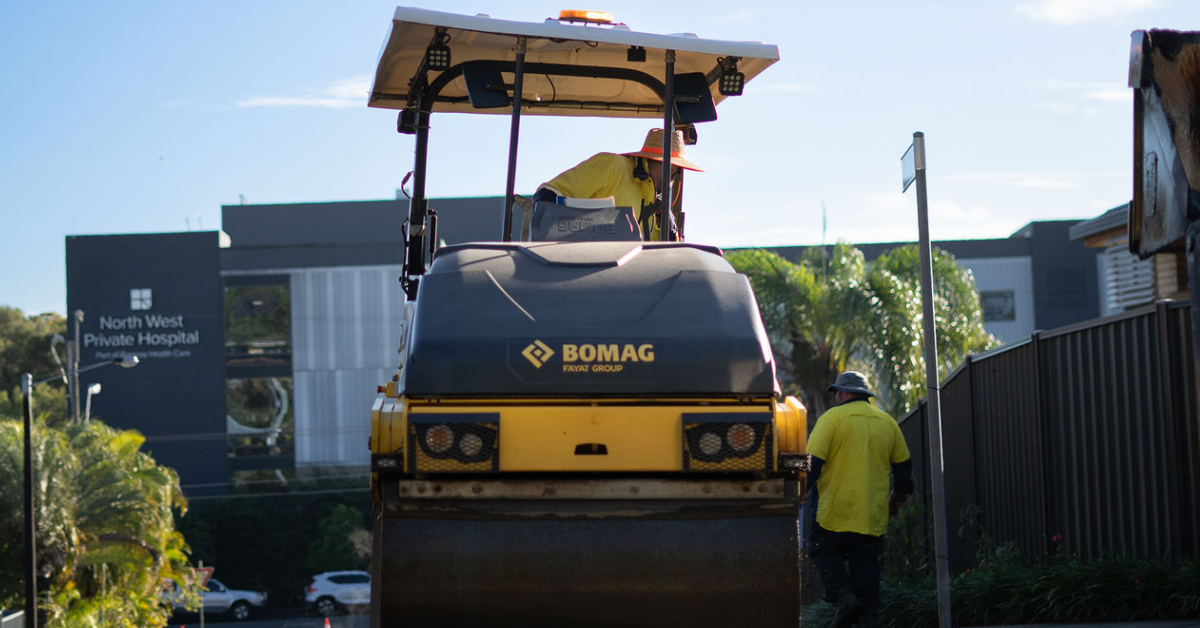
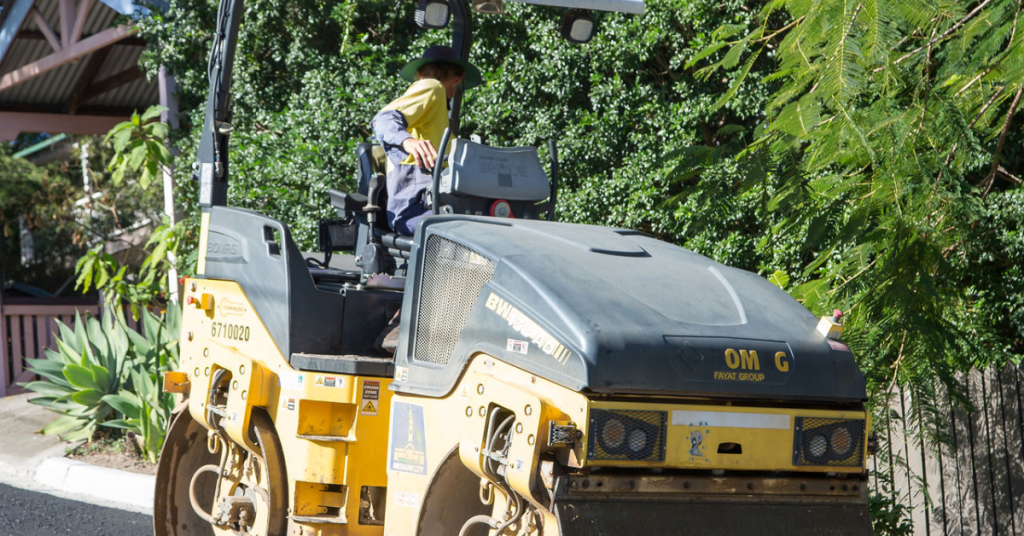
A major highlight of the new financial plan is a $110 million road improvement project aimed at repairing the city’s deteriorating street surfaces. This initiative is expected to bring significant relief to busy corridors like Ipswich Road in Annerley, which currently suffers from severe wear and tear due to high daily traffic volumes. 

The new resurfacing project builds on a recent pothole repair campaign that managed to fix a street defect every two minutes during its peak. Another urgent priority for the road crews is the southern approach to the Story Bridge. The council recently had to take emergency action and close the bridge’s footpaths out of fear that loose concrete chunks might fall onto boats passing below in the river. 

Easing Suburban Congestion
rate hike
Photo Credit: Brisbane City Council

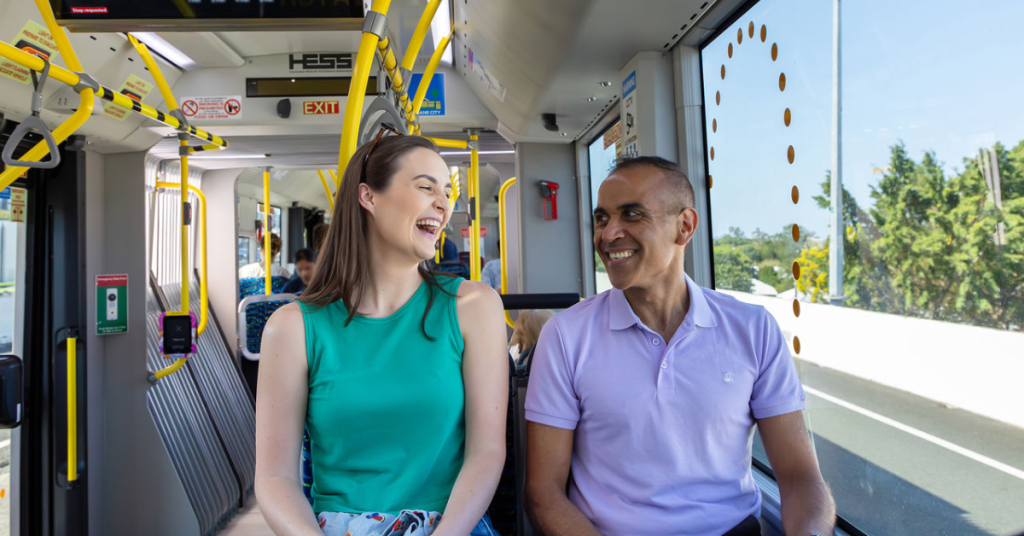
The local government is pouring a total of $1.9 billion into overall transport and infrastructure improvements. The investment covers major suburban upgrades, including intersection works in Inala and Coorparoo, a new pedestrian crossing in Bald Hills, and continued progress on the Beams Road corridor. To further ease traffic, Vulture Street in West End will be converted into a clearway, banning street parking during peak travel times. 

While officials state that similar clearway zones have saved drivers thousands of hours in delays, some local business owners have reported a drop in daily trade. Public and active transport are also receiving a major funding boost. A record $213 million will be used to support bus, ferry, and Brisbane Metro services, while another $63 million is set aside for new bikeways and footpaths. Millions more will be dedicated to creating safer school zones in several suburbs. 


Calls for Greater Support

Despite the massive local investment, city leaders are actively calling for more financial help from the federal government. The Lord Mayor expressed frustration that local councils collect only a tiny fraction of the nation’s tax money yet are responsible for delivering a large portion of daily community services. 

He pointed out that while Brisbane and Perth are the only capital cities seeing a large influx of new residents from other states, federal infrastructure dollars are flowing to other locations. Opposition representatives challenged the council’s spending history, suggesting the road repair project is a recycled idea from several years ago and questioning the local government’s ability to fix traffic congestion after two decades in charge. 

Published Date 18-June-2026
Annerley Among Brisbane Suburbs Under the Spotlight in Illegal Dumping Crackdown

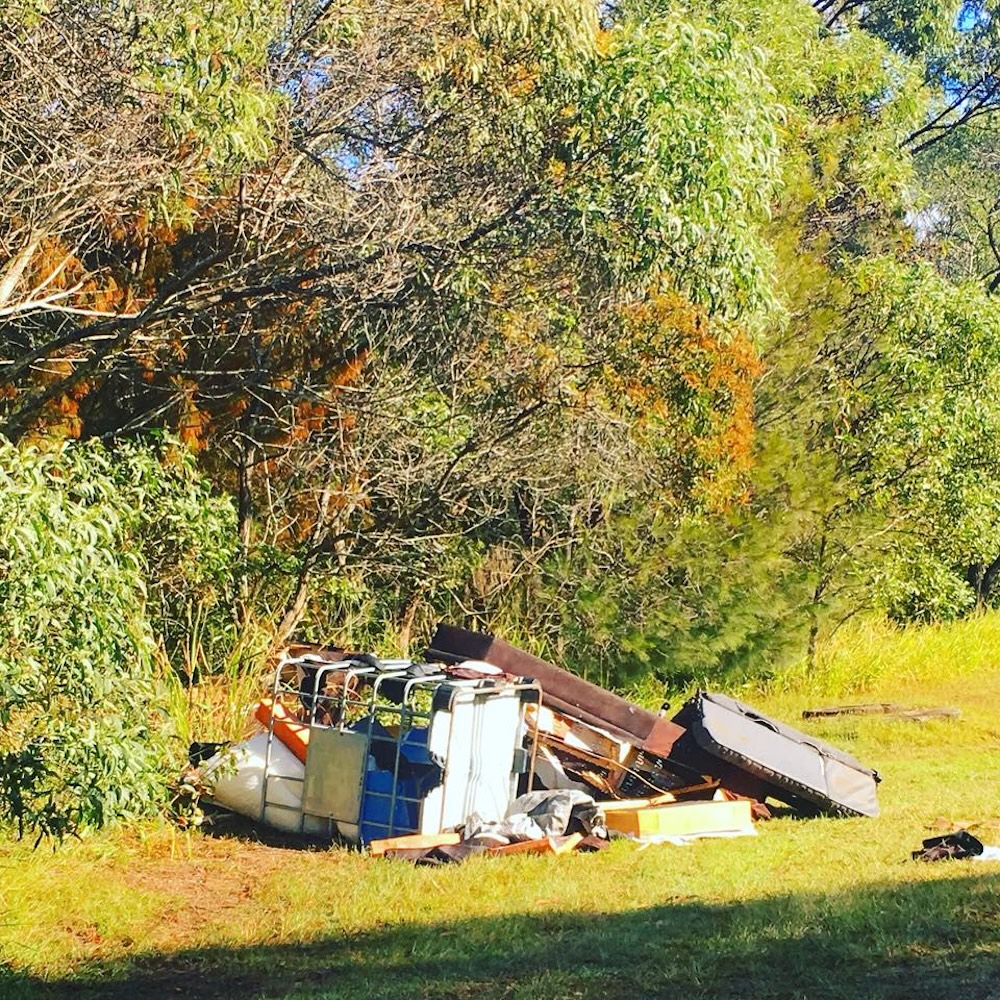
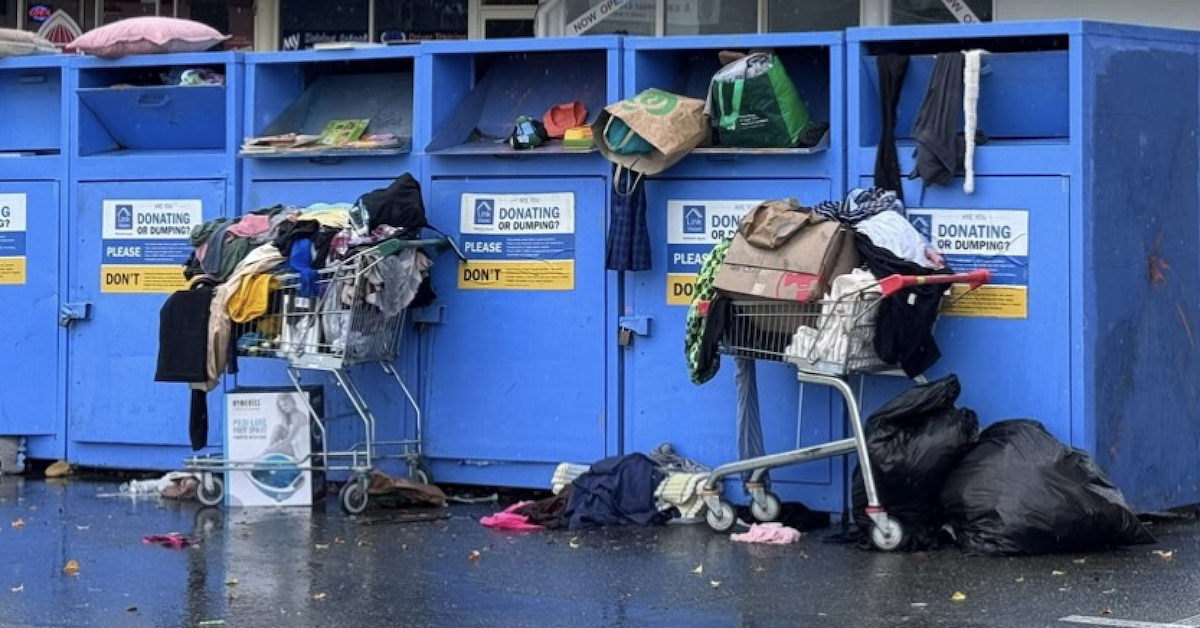
As household waste and dumped furniture continue to clutter Brisbane streets, Annerley has emerged as one of the city’s top dumping hotspots. Illegal dumping is a problem authorities hope to fix using a new network of 200+ AI-assisted cameras designed to monitor trouble spots and catch offenders.


Additional motion-activated cameras are now operating at known dumping hotspots and high-risk locations, helping authorities identify vehicles, number plates, people and discarded items. This brings the total to more than 200 devices operating across the city.

A Growing Network of Cameras Across Brisbane

Illegal dumping often happens away from public view, with offenders leaving furniture, household rubbish, building materials and other waste in parks, roadside areas and industrial precincts. 

To combat the problem, Brisbane City Council has steadily expanded its surveillance network. The technology forms part of a wider crackdown on illegal dumping, a problem that has been estimated to cost ratepayers about $500,000 each year in clean-up expenses alone.

The cameras are activated by movement and can capture footage that assists council officers during investigations. The latest figures show the effort is producing results. More than 850 infringement notices and warnings have been issued so far in 2026, with penalties exceeding $525,000.

The surveillance network is supported by new warning signs installed in multiple languages, including Arabic, simplified Chinese, traditional Chinese, Hindi and Vietnamese.

South Brisbane Features Prominently in Complaint Data

While the crackdown is taking place across Brisbane, several South Brisbane suburbs featured prominently in Council’s latest hotspot rankings.

Moorooka recorded the highest number of illegal dumping complaints in Brisbane during 2026. Sunnybank Hills ranked second, while Forest Lake, Runcorn, Sunnybank and Annerley also appeared among the city’s top complaint locations.

This reflects the reports received from residents and community members who have alerted Council to dumped rubbish and abandoned items. The figures suggest illegal dumping remains a visible issue across parts of South Brisbane, particularly in areas where residential neighbourhoods sit alongside commercial, industrial or bushland corridors.

Richlands and Willawong Among Areas Where Offenders Were Caught

The list also highlights locations where infringement notices and warnings have been issued.

Richlands recorded 49 notices, placing it among Brisbane’s leading enforcement locations. Willawong also appeared on the list, while nearby Doolandella was linked to areas receiving increased enforcement attention.

In some cases, areas with fewer complaints may generate more notices if surveillance cameras capture evidence that leads to successful investigations.

2026Most Illegal Dumping Complaints Most Infringement & Warning Notices Notices Issued
1MoorookaMount Coot-tha318
2Sunnybank HillsMount Gravatt125
3New FarmRichlands49
4CoorparooBald Hills45
5Forest LakeCannon Hill38
6MorningsideBulwer35
7CarinaDoolandella25
8RuncornWillawong22
9SunnybankChandler19
10AnnerleyNathan19

From Mattresses to Building Waste

Illegal dumping takes many forms. Council reports commonly involve mattresses, furniture, whitegoods, tyres, green waste and construction materials. Some incidents involve household items that residents no longer want, while others involve larger quantities of waste left in public spaces.

Apart from creating an eyesore, dumped materials can affect local waterways, damage vegetation and create hazards for people using parks, footpaths and public land. The environmental impacts can be particularly significant when hazardous materials or chemicals are involved.

Options Available for Residents

Council is encouraging residents to use legal disposal options rather than leaving unwanted items in public places. Regular household waste can be placed in standard collection bins, while larger items can be taken to resource recovery centres and transfer stations. Waste vouchers, hazardous waste drop-off events and other disposal programs are also available throughout the year.

Items that remain in good condition may be suitable for donation through charities, community groups or reuse organisations. Residents who witness illegal dumping can report incidents by phoning Council on 07 3403 8888. Information such as locations, photographs and descriptions of dumped materials can assist investigations.


With more cameras operating across the city and additional enforcement activity underway, authorities are hoping fewer mattresses, fridges, tyres and piles of rubbish end up where they should never have been left in the first place.

Published 3-June-2026

Annerley Rail Travellers Face School Holiday Service Changes 

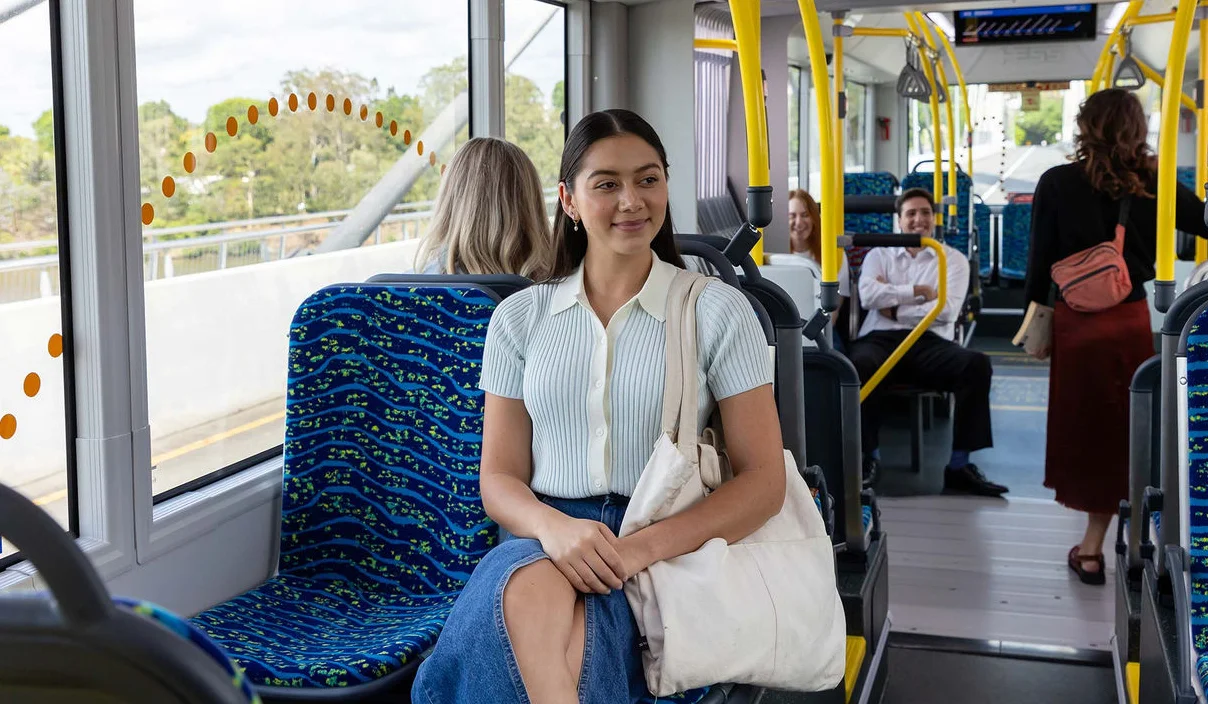
Annerley rail travellers using nearby southside connections are being encouraged to plan ahead, with school holiday track closures on the Beenleigh and Gold Coast lines to affect services, connections and replacement bus arrangements across parts of the network. 


Annerley Rail Travel Set For School Holiday Changes

Annerley commuters who rely on nearby southside rail links will need to check their journeys carefully during upcoming school holiday track closures affecting the Beenleigh and Gold Coast lines.

The main closure period is scheduled from 27 June to 19 July, with rail replacement buses to operate across affected sections. An earlier closure will also take place on 20 and 21 June, when buses replace trains between Varsity Lakes and Boggo Road on the Beenleigh and Gold Coast lines.

For travellers moving through Boggo Road, Moorooka, Yeerongpilly or connecting routes, the changes may affect regular travel patterns. Passengers have been advised to plan ahead, consider other transport options and allow extra time, particularly when making connections across the southside network.

Why The Closures Are Happening

The closures will allow rail crews to carry out work across several major projects while trains are not running in affected sections of the corridor.

The work program includes stabling yard and station upgrades linked to Cross River Rail, installation of a new digital signalling system between Beenleigh and Varsity Lakes, early works for track duplication, station upgrades and level crossing removals on the Logan and Gold Coast Faster Rail project, and platform, signalling and track works for the Loganlea Station Relocation project.

Several works are also scheduled around Clapham Yard, Moorooka station, the Yeerongpilly-Moorooka corridor and Merrimac station. For Annerley commuters, the main relevance is the effect on nearby rail movements and connections through the wider southside network.

Annerley rail travellers
Photo Credit: BCC

Replacement Buses Across Key Sections

On 20 and 21 June, buses will replace trains between Varsity Lakes and Boggo Road on the Beenleigh and Gold Coast lines.

The same arrangement will apply on 27 and 28 June. During that weekend, Ferny Grove and Airport line services will terminate at Boggo Road, which may affect passengers transferring through the station.

From 29 June to 3 July, buses will again replace Beenleigh and Gold Coast line trains between Varsity Lakes and Boggo Road. Airport line trains will run between Domestic Airport and Boggo Road stations or connect with the Cleveland line during peak times.

During the same period, Doomben services will terminate at Roma Street, while Ferny Grove services will terminate at Boggo Road. Cleveland services will connect with the Airport line during peak times before returning to their usual Shorncliffe line connection. Shorncliffe services will run between Sandgate and Roma Street during peak periods, then link with the Cleveland line outside peak times.

On 4 and 5 July, buses will again replace trains between Varsity Lakes and Boggo Road on the Beenleigh and Gold Coast lines. Airport line trains will operate between Domestic Airport and Boggo Road or connect with the Cleveland line during peak times, while Ferny Grove services will terminate at Boggo Road.

Timetable Changes For Southside Connections

From 6 to 10 July, and again from 13 to 17 July, buses will replace trains between Boggo Road and Banoon on the Beenleigh and Gold Coast lines.

During these periods, Beenleigh and Gold Coast line trains will run as a combined all-stops service between Varsity Lakes and Banoon. Minor timetable changes will apply, and express trains will not operate.

Airport line trains will run between Domestic Airport and Boggo Road stations or connect with the Cleveland line during peak times. Cleveland services will link with the Airport line during peak periods, then connect with the Shorncliffe line as usual.

Doomben services will terminate at Roma Street and operate with three-car trains only. Ferny Grove services will terminate at Boggo Road, while Shorncliffe services will run between Sandgate and Roma Street during peak periods before linking with the Cleveland line outside peak times.

On 11 and 12 July, and again on 18 and 19 July, buses will replace trains between Boggo Road and Banoon on the Beenleigh and Gold Coast lines. Trains will continue as a combined all-stops service between Varsity Lakes and Banoon, with minor timetable changes and no express trains.

Airport and Ferny Grove services will terminate at Boggo Road during those weekend closures.

Annerley Commuters Told To Plan Ahead

The closure schedule means Annerley travellers using nearby rail links may need to adjust regular routines across several weeks, especially when heading through Boggo Road or connecting to the Beenleigh, Gold Coast, Airport, Cleveland, Ferny Grove, Doomben or Shorncliffe lines.


Rail replacement buses are expected to help passengers complete affected journeys, but passengers are being encouraged to check current service information before leaving. Train services on the Beenleigh and Gold Coast lines are scheduled to recommence from 19 July, although arrangements may change if the planned works are adjusted.

Published 5-June-2026

Woolloongabba PA Hospital Expansion Marks Major Building Achievement 

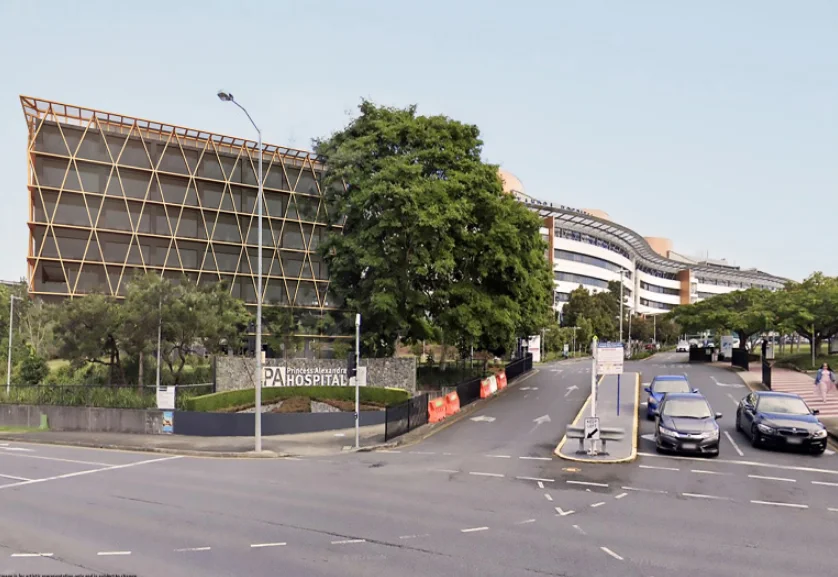
A major stage in the Princess Alexandra Hospital expansion has been reached in Woolloongabba, with expanded Building 1 now structurally complete after the final concrete pour marked a key moment in the hospital’s growth. 


Woolloongabba Expansion Reaches Its Highest Point

The Princess Alexandra Hospital expansion has reached a significant construction achievement in Woolloongabba, with expanded Building 1 now structurally complete.

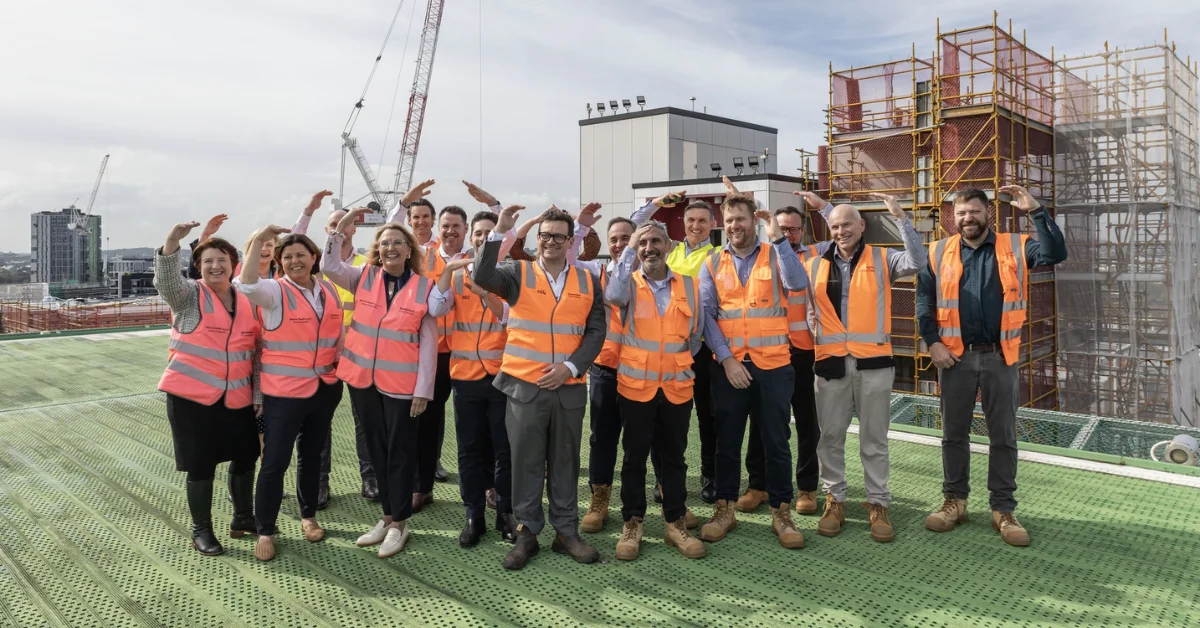
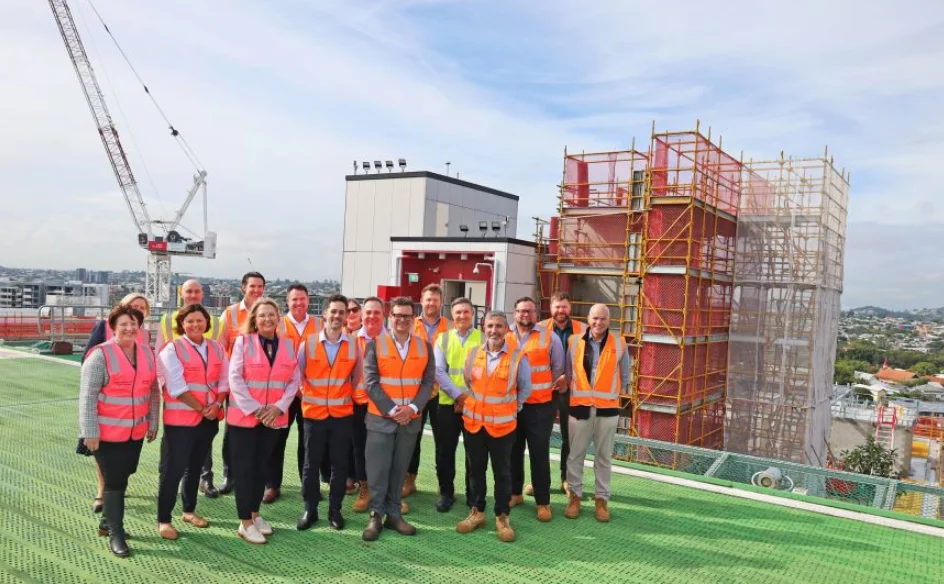
The milestone was marked by a topping out ceremony on 26 May, following the final concrete pour on the building. It signals a major shift in the project, with work now moving further into the internal fit-out stage as new hospital spaces begin to take shape.

The more than $748 million expansion is being built above the existing emergency department and will add four new floors to the hospital. Once complete, the project is expected to deliver 249 new inpatient beds, 13 cancer treatment bays, expanded pharmacy and medical imaging services, and a refurbished admission and recovery area for the cardiac catheter lab.

PA Hospital expansion
Photo Credit: Metro South Health

A Visible Step Forward For PA Hospital

For patients, staff and visitors moving through the PA Hospital campus, the structural completion of expanded Building 1 marks one of the clearest signs yet of the scale of the upgrade.

The project is designed to support growing demand for specialist, emergency and acute healthcare services across south-east Queensland. PA Hospital is one of the busiest hospitals in the network and provides specialist care for patients from across Queensland.

The expansion will also include 30 extra intensive care bed and treatment areas, new cancer and kidney disease treatment services, and upgrades to essential support areas. Pharmacy, medical imaging and kitchen services are among the areas being expanded to support the additional beds and clinical spaces.

Building New Capacity Above An Existing Emergency Department

One of the defining features of the PA Hospital expansion is that the new floors are being built above the existing emergency department, allowing the hospital campus to grow while continuing to operate.

The completion of the building structure moves the project closer to its next phase, where internal spaces will be fitted out for future clinical and support use. Practical completion is expected in mid-2027.

Planning for the upgrade has been shaped by clinical service needs, population growth, patient and community feedback, and advice from construction and design specialists. Clinical and public spaces have also been developed with input from clinicians, architects and user groups.

Metro South Health
Photo Credit: Metro South Health

What Patients And Visitors May Notice

Construction activity remains part of daily life around the PA Hospital campus. Patients and visitors may continue to notice construction noise, altered entry and exit points, and changes to traffic flow or parking.

People travelling to the hospital have been advised to allow extra time for their visit. Public transport may also be a practical option where possible while works continue.

Visitors are also being asked to follow safety signs and directions from traffic controllers or construction workers during the construction period.

The milestone marks more than progress on a building. It represents a concrete step towards additional hospital capacity, more treatment areas and expanded services at one of south-east Queensland’s major health facilities.


With the structure of expanded Building 1 now complete, the focus turns to preparing the new floors and support areas for use, bringing the PA Hospital expansion closer to its expected completion in mid-2027.

Published 27-May-2026

Big Change For Annerley: Our Lady’s College Going Co-Ed, Neighbouring Primary School To Close

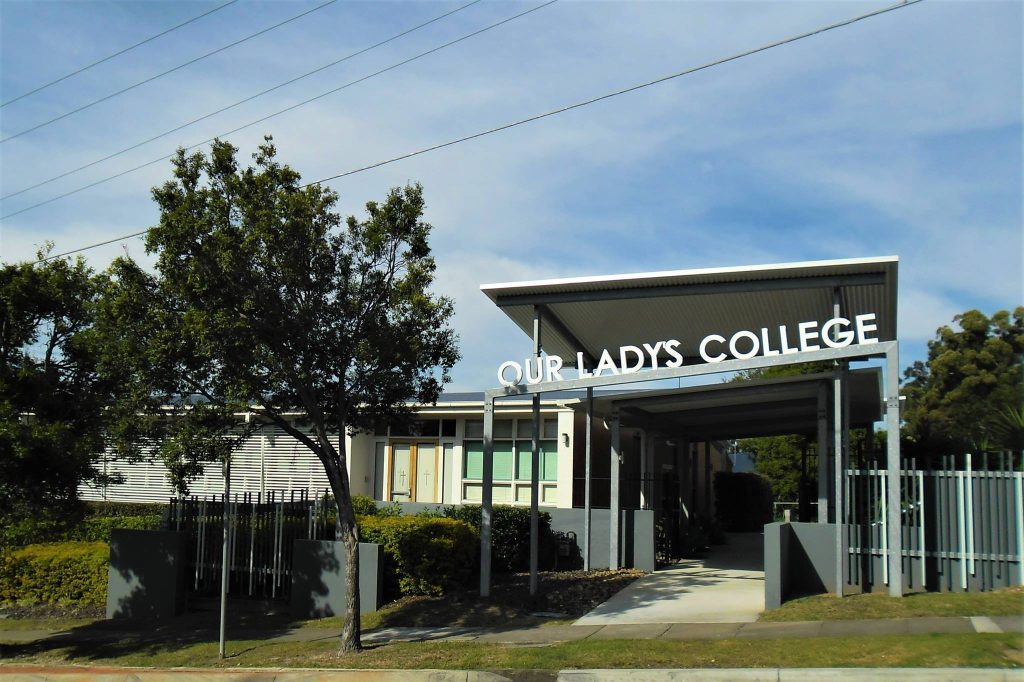
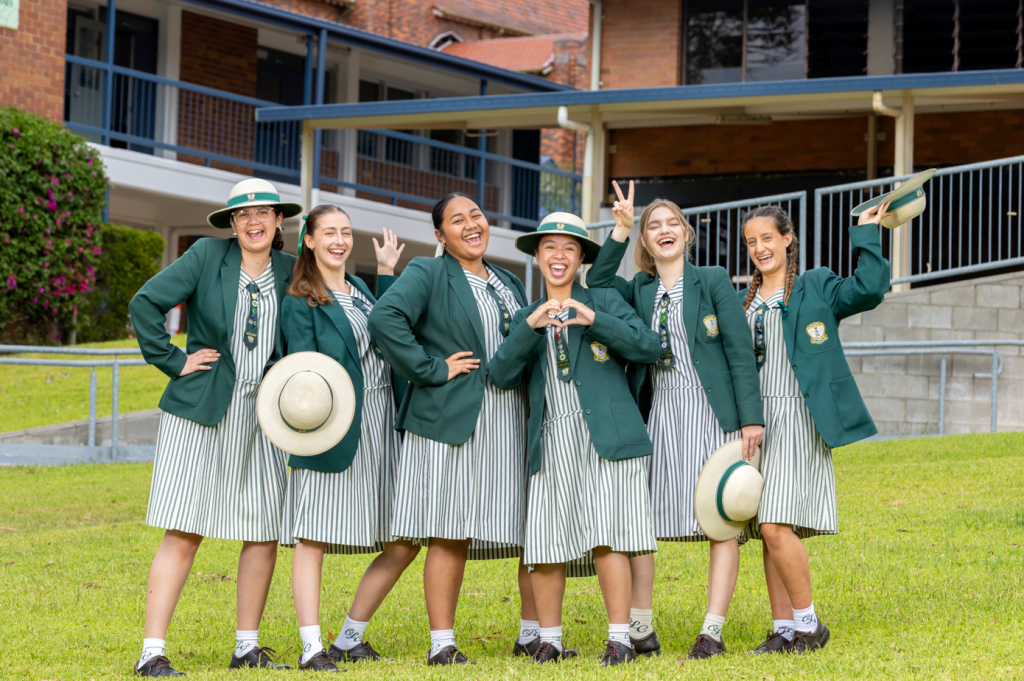
After decades as an all-girls secondary school, Our Lady’s College in Annerley is set for a major transformation, with boys to be welcomed from Term 1 2030 while neighbouring Mary Immaculate Primary School closes at the end of 2026.


Read: Our Lady’s College Links with Annerley FC


Our Lady’s College: a new chapter

Photo credit: Facebook/Our Lady’s College, Annerley

In a recent announcement, Brisbane Catholic Education (BCE) says the shift to co-education reflects strong community interest in mixed-gender Catholic schooling in the area.

The transition will be staged, with the first cohort of Year 7 boys expected to begin in Term 1, 2030, subject to relevant planning and approval processes. The college, which currently enrols around 350 students, is also set to expand as part of the move.

BCE’s acting executive director Ross Tarlinton OAM pointed to the success of Holy Spirit College at Fitzgibbon as a signal of where demand is heading. That school, which opened as a co-educational secondary in 2022, reached its full Year 7 intake capacity this year and is preparing for its first graduating cohort in 2027.

Photo credit: Facebook/Our Lady’s College, Annerley

BCE also announced last year that a new co-ed secondary school would be built at Windsor on the site of the former St Mary of the Cross primary school. Expressions of interest for that school have already exceeded 600 enquiries.

Mr Tarlinton said BCE anticipated similar interest for Annerley from 2030. He described demand for co-educational schooling as a sign of the community’s appetite for quality Catholic education in inner-city Brisbane.

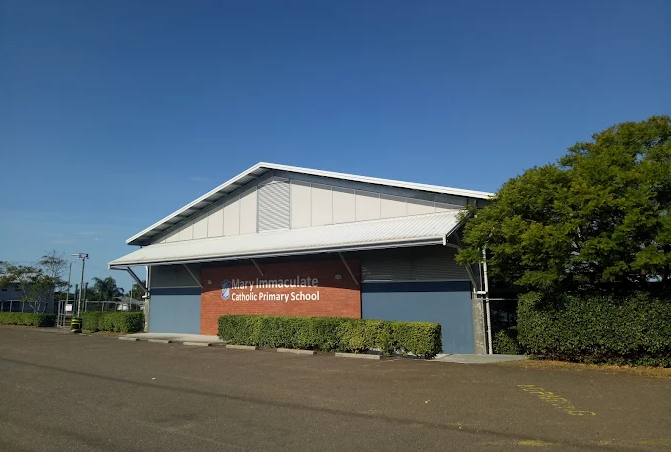
The Mary Immaculate buildings back directly onto the Our Lady’s College campus, and BCE has flagged they could potentially be absorbed into the expanded secondary school, though no formal decisions have been made about the land.

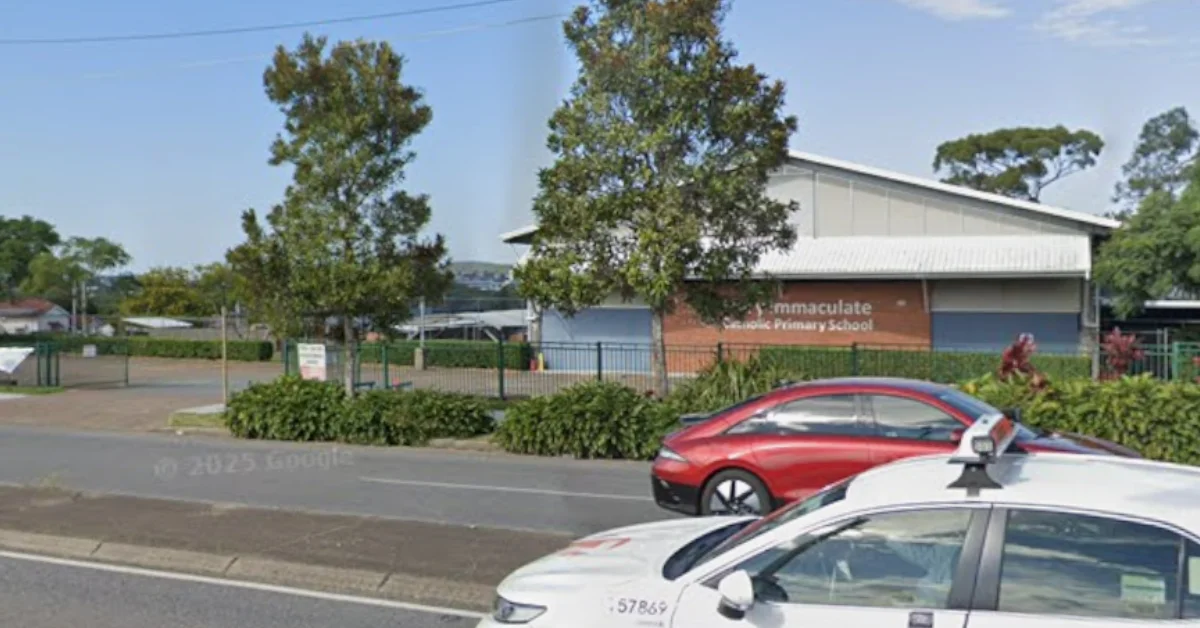
Mary Immaculate Primary School: end of an era

Photo credit: Google Maps/Jean Seah

For families currently enrolled at Mary Immaculate Primary School, the closure marks the end of a long chapter in local Catholic education. The school adjoins the Our Lady’s College grounds and will close at the conclusion of Term 4, 2026.

BCE cited demographic shifts as the driving factor. Combined enrolments at Mary Immaculate and St Brendan’s Primary School in nearby Moorooka have fallen by roughly one third since 2021, with each school now enrolling fewer than 75 students.

Families at Mary Immaculate will be offered places at other BCE schools in the area. BCE has pointed to St Sebastian’s Catholic Primary School at Yeronga and St Pius X Catholic Primary School at Salisbury as nearby options. The organisation says it is working closely with affected families and staff to support them through the transition in the months ahead.


Read: Celebrating 100 years of Mary Immaculate School, Annerley


What it means for the community

The announcements mark a significant shift in how BCE delivers Catholic education on Brisbane’s inner southside. BCE runs 146 schools across south-east Queensland, serving around 80,000 students, and says the decisions reflect a commitment to maintaining a strong and sustainable Catholic education presence in inner-city Brisbane.

For the Annerley community, the co-education announcement points to a long-term future for Our Lady’s College in the suburb, while families and staff at Mary Immaculate navigate the months ahead.

BCE said student and staff wellbeing remains its priority as the organisation moves through the remainder of 2026 and begins planning for the changes ahead.

Published 15-May-2026

Annerley Case Offers a Look at Queensland’s Tree Dispute Process

Tree disputes are a regular source of tension for Queensland neighbours, with complaints ranging from overhanging branches and falling debris to blocked sunlight, property damage and lost views. One recent Annerley case shows how a disagreement over a mature tree can move from neighbour talks to the Queensland Civil and Administrative Tribunal.


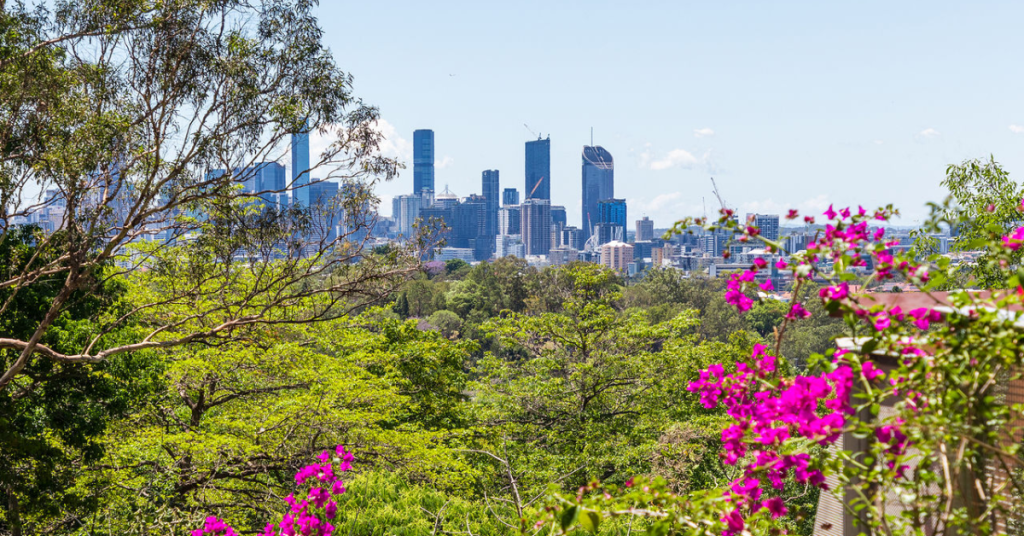
When an Annerley couple bought a townhouse on Villa Street in 2019, they could see Brisbane’s CBD skyline from the upper level. On New Year’s Eve and during Riverfire, the balcony gave them a direct line towards the city lights and fireworks.

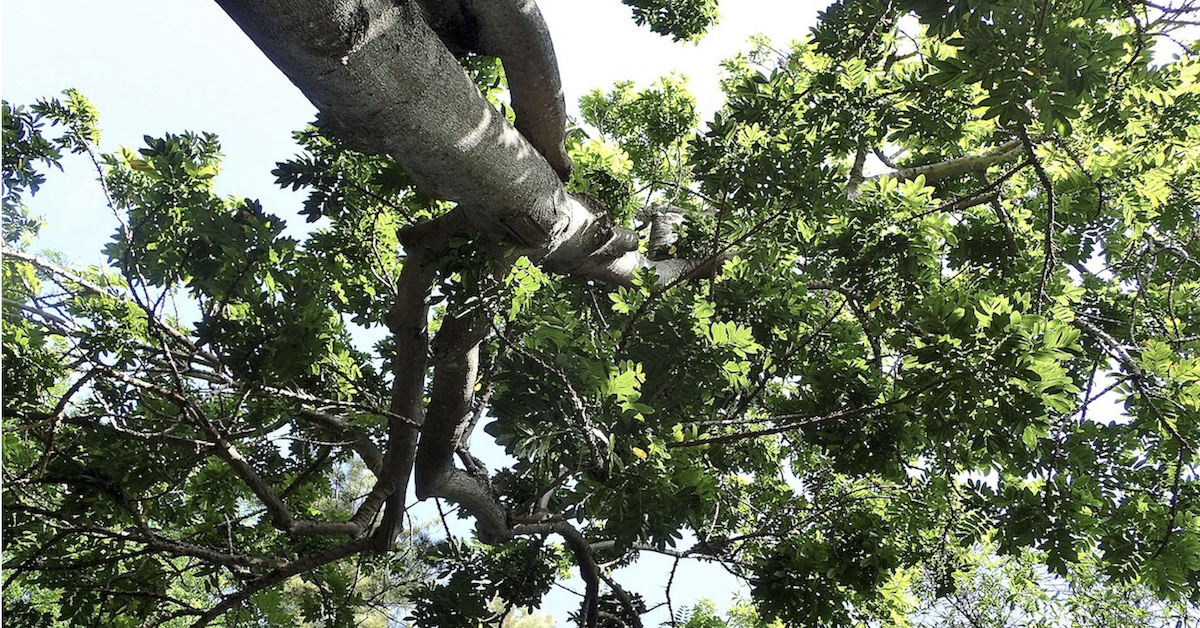
Within a few years, that view had narrowed behind the branches of a large Moreton Bay chestnut tree growing on a neighbouring property.

What began as a discussion between neighbours later ended in QCAT, where tribunal member Chris Carrigan ordered regular pruning of the tree to regain and maintain the view described during the proceeding.

An Annerley Skyline Became the Centre of a Neighbour Dispute

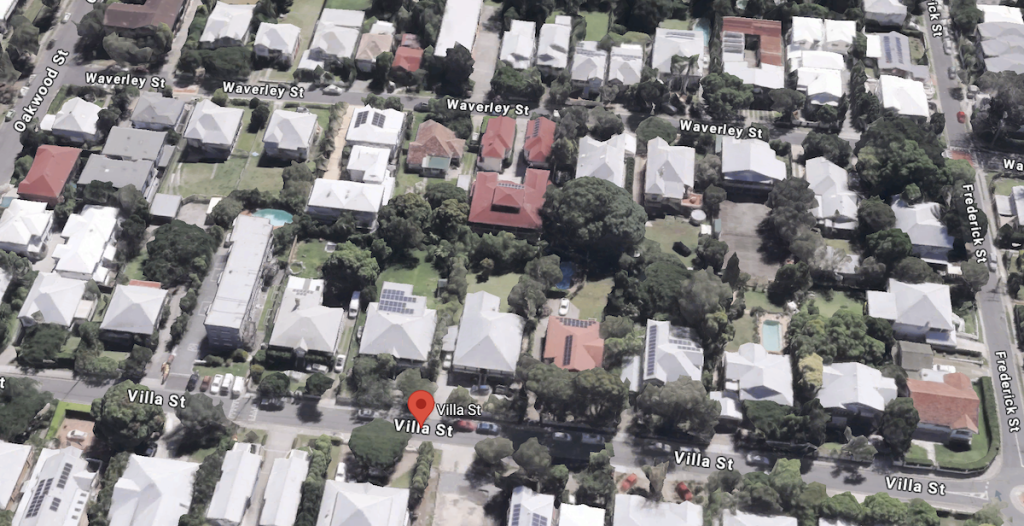
The townhouse sits behind an older cottage on Villa Street, next to neighbouring flats on Waverley Street. At the centre of the case is a black bean tree, also known as a Moreton Bay chestnut, planted near the rear corner of the Waverley Street property.

According to material examined during the tribunal hearing, the townhouse owners first approached their neighbours in late 2021 with an offer to split the cost of pruning the tree. The following year, they offered to pay the full amount themselves.

The matter remained unresolved and was later taken to QCAT under Queensland’s Neighbourhood Disputes (Dividing Fences and Trees) Act 2011.

The tribunal heard that the tree had grown significantly over three years, reducing what was once a broad skyline outlook to a narrow glimpse visible only from part of the balcony.

An arborist report prepared for the case described the Moreton Bay chestnut as a fast-growing native species known for its broad canopy and extensive root system. The report also stated that city views can contribute to property value in elevated inner-Brisbane suburbs.

Photo Credit: Google Maps

When Tree Complaints Reach QCAT

In suburbs such as Annerley, Holland Park and Camp Hill, older homes often sit beside newer multi-level housing. In many streets, residents share boundaries with neighbours whose homes overlook trees, fences and established backyards. Mature trees can also provide shade, cooling and habitat in built-up neighbourhoods, creating competing concerns between property use and tree retention.

QCAT provides a formal process when neighbours cannot resolve concerns about trees affecting land, including disputes over branches, roots, safety, damage and interference with the use of property.

Information published by the Queensland Government states that residents can apply to QCAT if a tree is seriously interfering with the use and enjoyment of their land. QCAT also maintains a public tree orders register, where residents can search orders made under Queensland’s neighbourhood dispute laws.

Queensland Law Does Not Guarantee a Protected View

Under Queensland law, property owners do not automatically have a legal right to preserve a scenic view. However, QCAT can intervene if it decides a tree has caused substantial, ongoing and unreasonable interference with a neighbour’s enjoyment of their property.

In the Annerley case, the tribunal found that the tree had substantially affected the townhouse owners’ enjoyment of their property and ordered the owners of the neighbouring flats to arrange pruning by 19 June this year.

The ruling also stated that maintenance pruning should continue at least once every year to preserve the restored view. If the work is not completed by the deadline, the townhouse owners can arrange the pruning themselves and recover the costs from the neighbouring property owners.

While the tribunal sided with the townhouse owners on the question of the blocked view, it stopped short of ordering the tree’s removal. The ruling recognised the environmental value of the mature native tree, including its role in providing shade and habitat for birds. The decision also noted that the tree contributes to local greenery.


Published 13-May-2026

Yeerongpilly Program Creates Space For Connection After Veteran Parent Loss

For Queenslanders living with disability who have lost a veteran parent, connection can be more than a social need. It can be a way to rebuild confidence, find companionship and take part in a community that understands the importance of long-term support.


In Yeerongpilly, the Legacy Club of Brisbane will deliver the Seasons program in 2026 with support from the Bupa Foundation, creating new opportunities for participants to take part in social activities, art workshops and music workshops.

A Local Program With A Personal Focus

The Legacy Club of Brisbane is based at 665 Fairfield Road, Yeerongpilly, placing the program within a local community setting while supporting people from across Queensland.

The Seasons program is aimed at Queenslanders living with disability who have lost a veteran parent. It is designed as a safe, stigma-free space where participants can connect with others, take part in group activities and develop new skills through creative workshops.

Rather than focusing only on formal assistance, the program centres on companionship and participation. Its activities are intended to help build community, confidence and friendships among people within veteran families.

Yeerongpilly Seasons program
Photo Credit: Bupa Foundation

Art, Music And Companionship In Yeerongpilly

Art and music workshops will form part of the Seasons program, alongside broader social activities. These sessions provide a structured way for participants to be involved, learn, create and spend time with others in a supported environment.

Legacy Brisbane’s broader work includes long-term social, emotional and financial assistance for families of Australian veterans. The Seasons program sits within that wider role, with a specific focus on people with disability who have experienced the loss of a veteran parent.

The Bupa Foundation has supported the Legacy Club of Brisbane since 2024, funding programs connected to families of Australian veterans. Its backing of the 2026 Seasons program continues that support.

Legacy Brisbane
Photo Credit: Supplied

Support That Extends Beyond One Activity

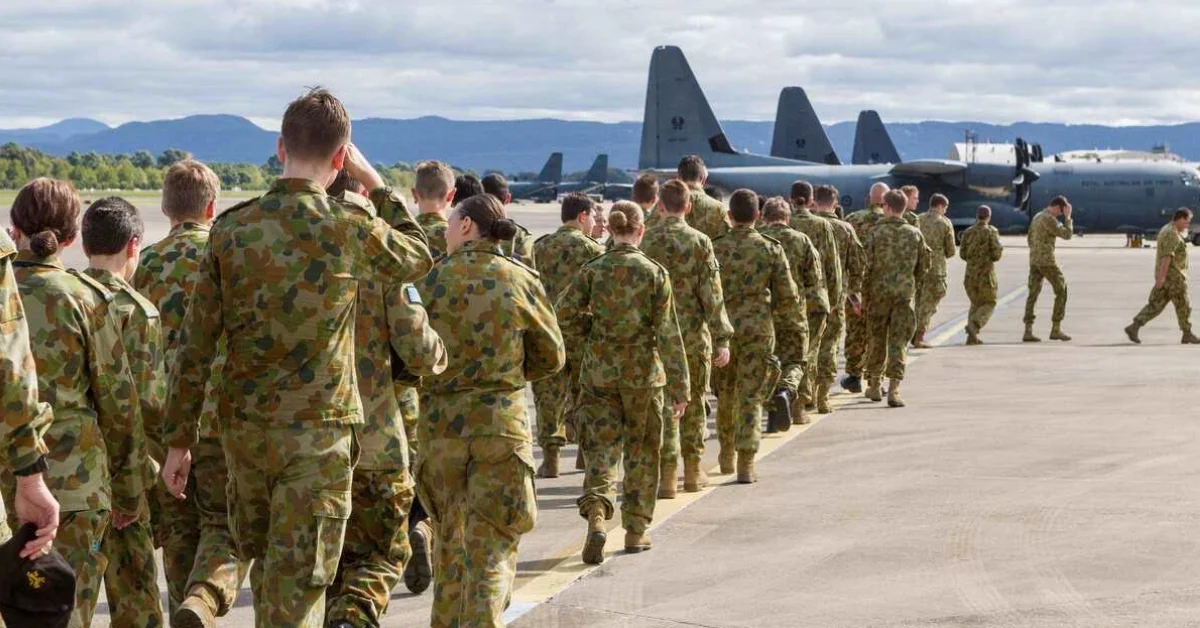
The partnership is part of broader support for Australian Defence Force members, active reservists, veterans and their families. Bupa has delivered health services for the Australian Defence Force since 2019 and works across more than 50 on-base health services around Australia.


Through social activities and creative workshops, the Seasons program gives Queenslanders living with disability after the loss of a veteran parent another way to find connection, confidence and companionship.

Published 11-May-2026

Six Terrace Houses Proposed for a Villa Street Address That Knows Its Own History

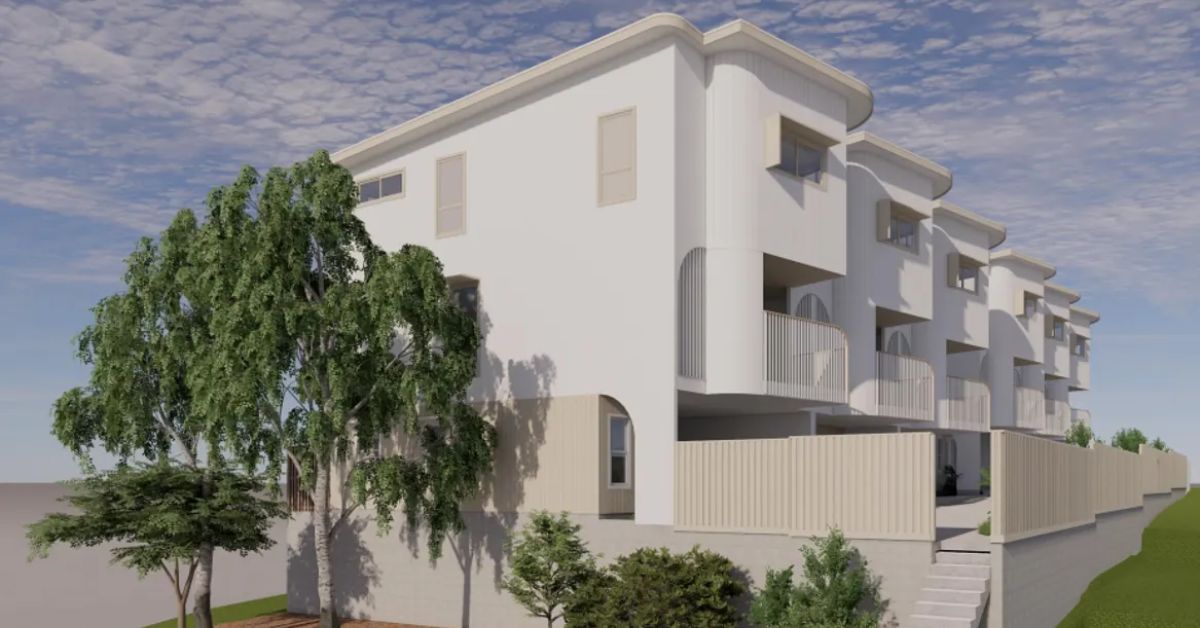
A development application to demolish a house at 15 Villa Street in Annerley and replace it with six three-storey terrace homes has put one of Brisbane’s most historically layered streets at the centre of a familiar inner-south tension between character and density.


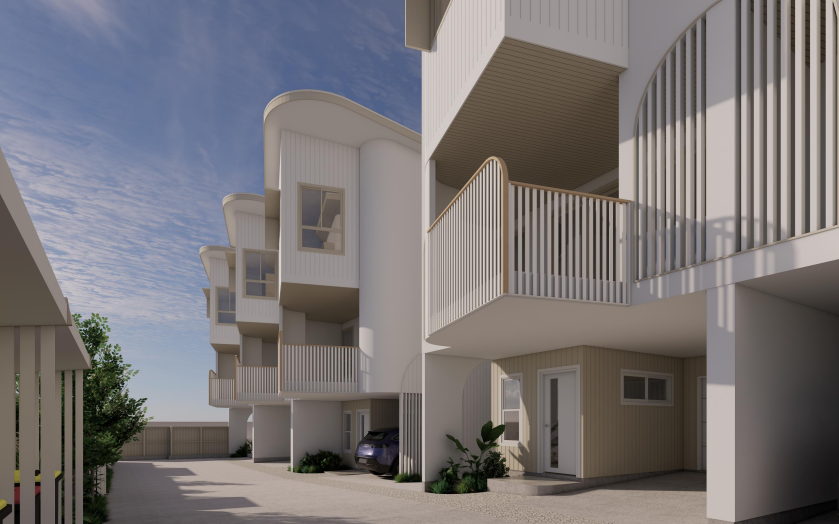
The proposal, lodged with Brisbane City Plan authorities last March 2026 under reference A006982385, seeks approval for six three-bedroom townhouses, each with private outdoor space, a garage and a large balcony. The northern end of the terrace strip could offer city skyline views, given the property’s position about five kilometres from the CBD. The estimated construction cost is $5 million, with completion targeted for 2027.

The site is covered by a traditional building character overlay and zoned low-to-medium residential, making the development impact assessable. Demolition of the existing house was separately approved in a prior application, meaning the building itself is not a barrier to the proposal proceeding. 

While the block can be cleared under a prior permit, the new design is not a done deal. Because the project is impact assessable, the community has a formal say, meaning every local objection must be weighed before the first brick is laid 

A street that carries a lot of memory

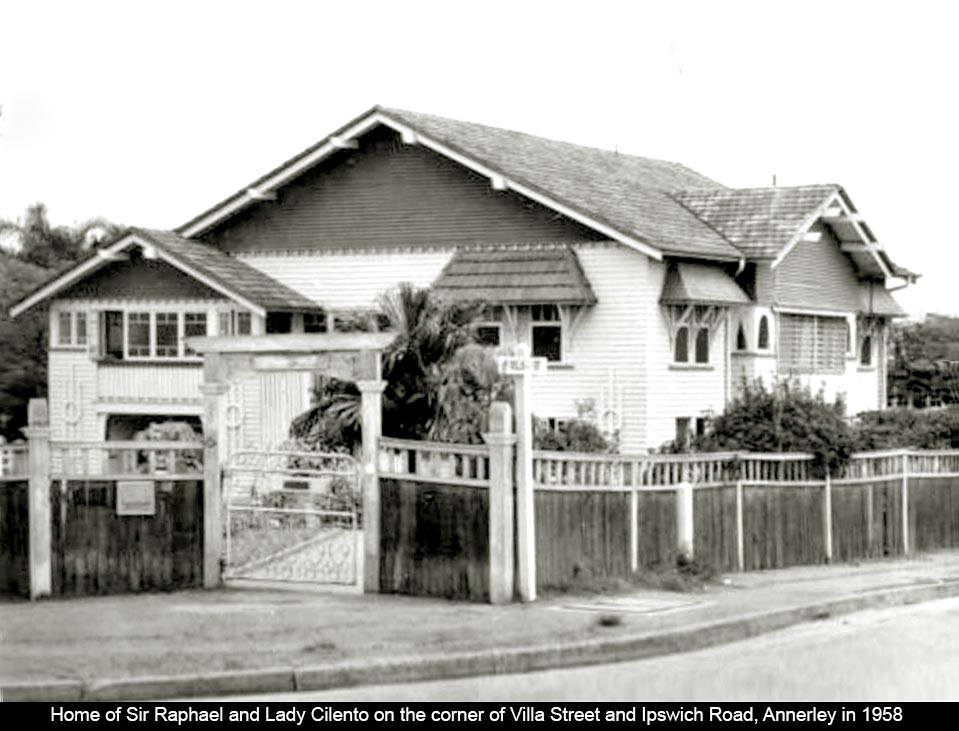
Villa Street is not just any Annerley address. The Cilento family home sat on the corner of Villa Street and Ipswich Road, and was the family home from the 1930s to the 1960s. Lady Phyllis Cilento had a medical practice attached to the residence and was a respected gynaecologist, obstetrician and paediatrician.

Sir Raphael Cilento was an expert in tropical medicine who became the first Queensland Director-General of Health and Medical Services in September 1934. Their daughter, actor Diane Cilento, later married Sean Connery.

The street’s literary connection runs just as deep. Australian author Jessica Anderson, whose novel Tirra Lirra by the River won the Miles Franklin Award in 1978, grew up at 56 Villa Street in the 1920s and early 1930s, drawing on her Annerley childhood throughout her writing life.

In 1951, Kath Walker, later known as Oodgeroo Noonuccal and the first Aboriginal Australian to publish a book of poetry, became the housekeeper for the Cilento family at the corner of Villa Street and Ipswich Road.

It is a street that knows it matters. In 2025, the Annerley-Stephens History Group published Villa Street Revealed, a dedicated history of the strip. The group, which has been researching and publishing local history since 2013, meets monthly at the History Room in nearby Yeronga.

The design argument the developer is making

The developer describes Annerley as a growing area close to the CBD, the University of Queensland and the Princess Alexandra Hospital, framing the six terrace homes as providing much-needed family housing in an accessible inner-city location.

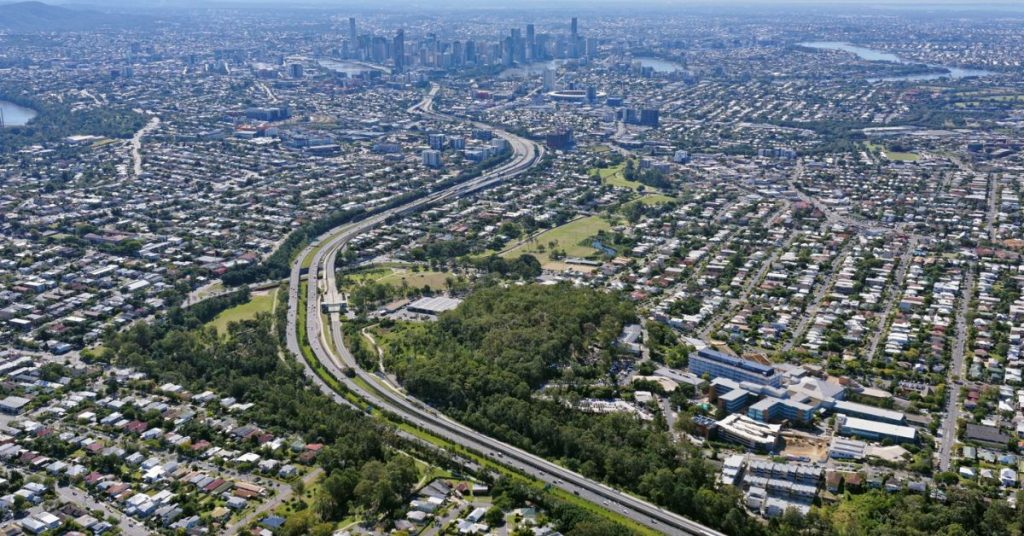
Photo Credit: Airview Online

On the question of character compatibility, the application points to specific design elements, particularly the skillion roof, as evidence that the proposal is sympathetic to the traditional character of the area.

The terrace format itself is also relevant: the traditional building character overlay is intended to ensure that new development is appropriate in scale, character and design to the existing neighbourhood, and terrace housing has historical precedent in Brisbane’s inner suburbs.

Photo Credit: DA A006982385

The developer also notes the proposal is consistent with the direction of Brisbane’s residential planning framework. Low-to-medium residential areas, which account for around 14 per cent of the city, are flagged for an increase in allowable height from two storeys to at least three storeys. The developer says the Villa Street proposal lays the groundwork for construction ahead of those changes.

Where the community concern sits

The development has drawn concern from local residents focused on what would be lost rather than what would be gained. The worry is straightforward: Villa Street is not a generic inner-city street, and the removal of a character home from a block covered by a traditional building character overlay chips away at something that cannot easily be replaced.

Community voices have pointed to nearby examples where developers have kept the character home on the street frontage while building new units behind it, a layout that preserves the visual continuity of the streetscape while still achieving density.

That approach has been used elsewhere along Villa Street itself, and plans lodged earlier this year for 391 Ipswich Road, about a kilometre away, propose a similar configuration.

“The loss of character homes would be a hard blow to the community,” one resident said in response to the proposal. “It would be better if the character home on this block could be kept with townhouses to the rear, as has happened in other parts of the street.”

The application remains under assessment. Members of the public can view the full application documentation under reference A006982385.


Published 30-April-2026

“It Makes Life Easier”: The Hospital Bathroom Designed by a Patient Who Pushed for Change

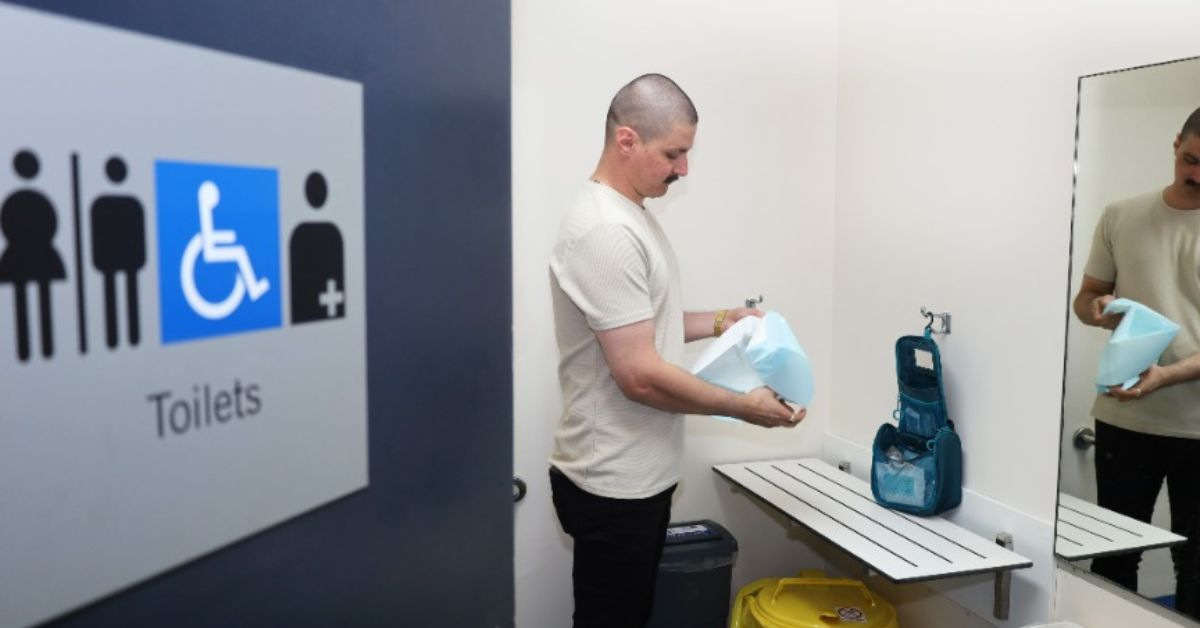
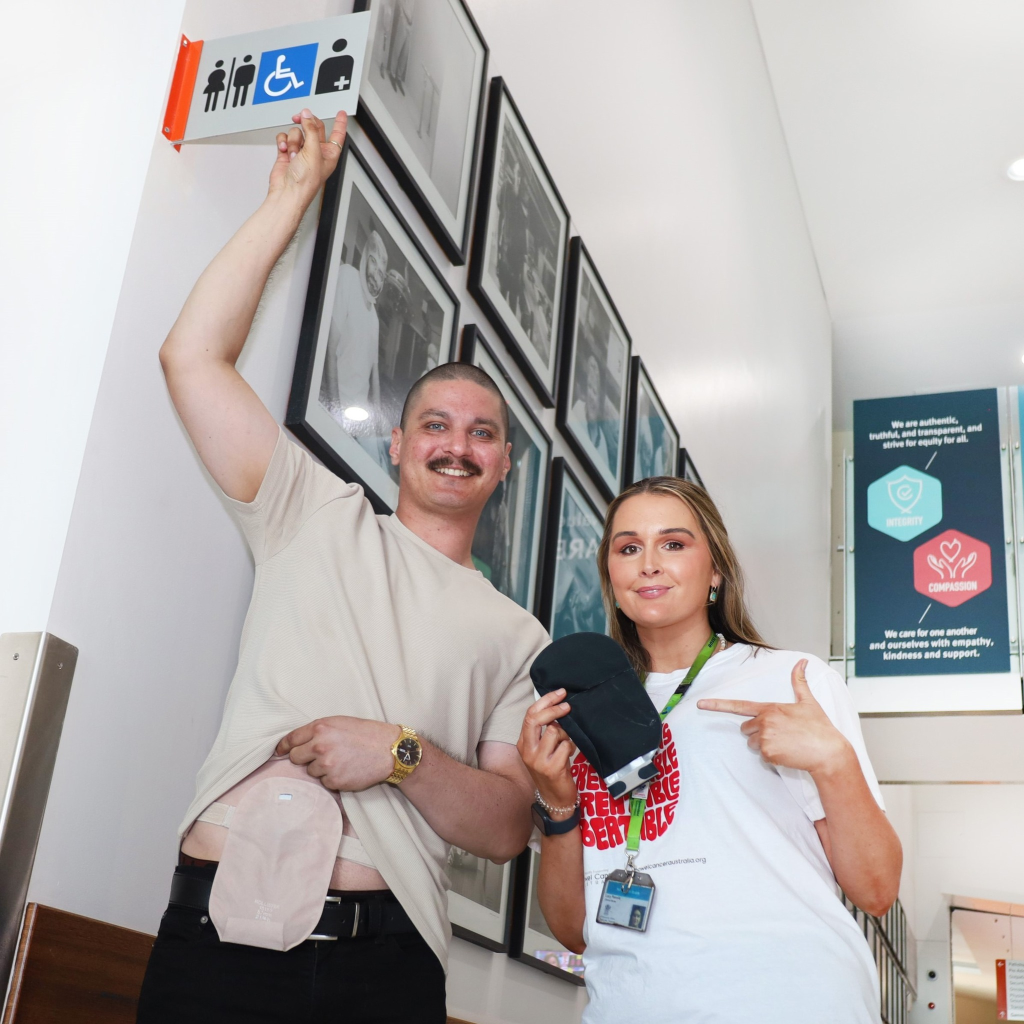
Princess Alexandra Hospital has unveiled the first ostomy-friendly toilet in Metro South Health, a purpose-built accessible bathroom on the ground floor of the main building designed specifically for people living with a stoma, brought to life by a patient named Jordan who raised the idea after his own surgery last year.


The bathroom sits alongside the standard wheelchair accessible toilet symbol and carries a new Ostomy Friendly Bathroom sign. This makes the space immediately identifiable to the 50,000 Australians who manage an ileostomy, colostomy or urostomy every day. Jordan identified the gap himself during his own treatment at the PA.

After a cancer diagnosis led to surgery and an ileostomy last year, he took his observations directly to the clinical team to find a solution.

“Living with the ileostomy is actually not bad, I mean it saved my life,” Jordan said. “But using the bathrooms anywhere, not just at the hospital, was a struggle and it was messy.”

Designed for Real Life, Not Just Accessibility Boxes 

The modifications are targeted and practical. Clinical Nurse Consultant Lucy Perovic from the PA’s Stomal Therapy team outlined exactly what the upgrade involved.

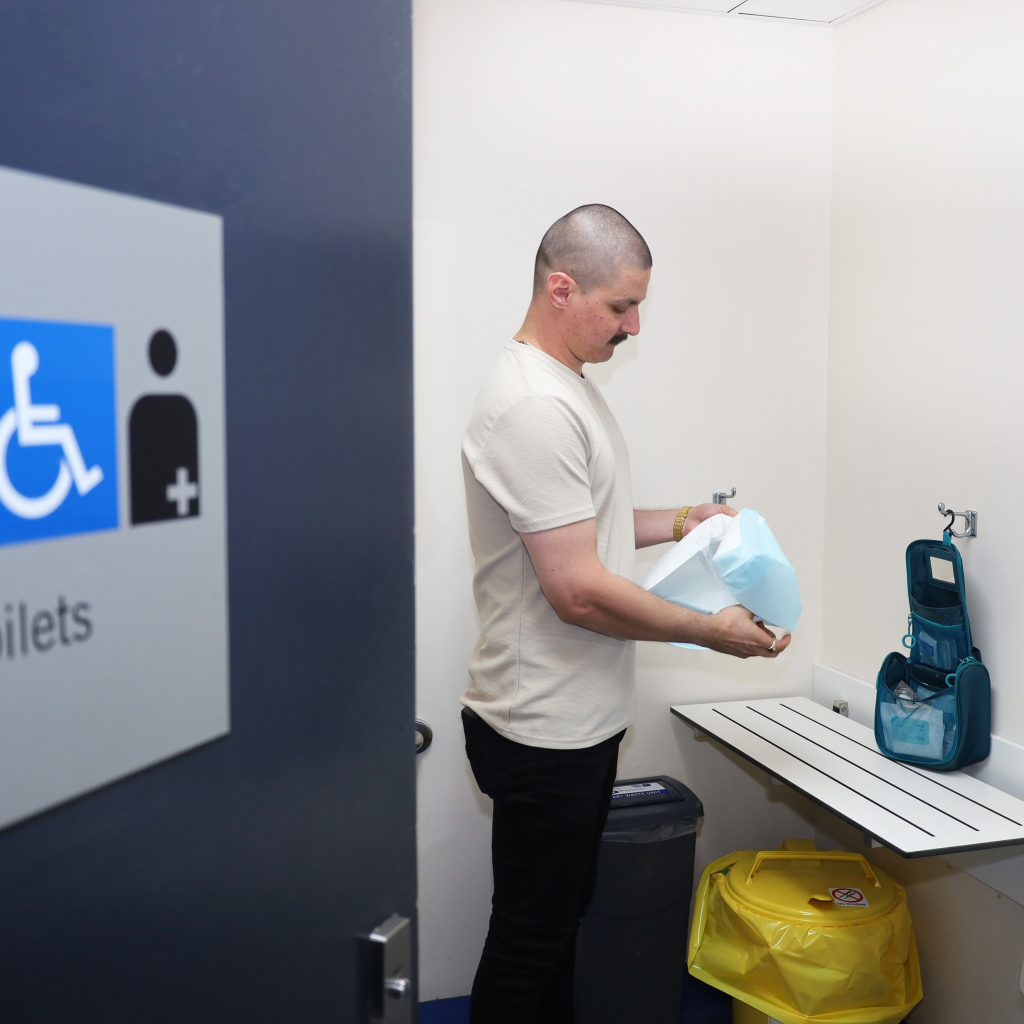
“This modification includes an Ostomy Friendly Bathroom sign alongside the wheelchair logo, accessible hand hygiene, a bench for people to place their ostomy products on for changes, and a clinical waste bin as well as the ability to use the mirrors for changes,” Perovic said.

Each of those details addresses a specific, real problem. The bench means a person changing their ostomy pouch has a clean surface to work from rather than balancing products precariously or placing them on the floor.

The clinical waste bin handles disposal correctly and discreetly. The accessible mirror positioning allows for changes that require visual guidance. The signage both identifies the space and, Jordan hopes, does something broader.

“I’m hoping even the sign itself will catch people’s attention as they walk past and create some curiosity or education,” he said.

The response when Jordan used the bathroom for the first time told him the design had landed exactly right.

“I used it last time I came for chemo and it’s awesome,” he said. “It’s exactly what I wanted it to be and makes me feel super proud to be at PAH. This is great for the community.”

A Daily Challenge Most People Never See 

Thousands of Australians live with a stoma, an opening in the abdomen that allows bodily waste to exit into an external collection bag after surgery to the bowel or bladder. Stomas are created to treat conditions including colorectal cancer, Crohn’s disease, ulcerative colitis and bladder cancer, among others.

Some are temporary; others are permanent. The Princess Alexandra Hospital, as Queensland’s principal academic and tertiary health centre for colorectal and bowel surgery, treats a significant proportion of the state’s ostomy patients.

Managing an ostomy in a public bathroom has always been one of the more practically challenging aspects of living with the condition. Standard accessible toilets were not designed with ostomy care in mind, and the absence of a bench, appropriate waste disposal and usable mirror means people are often forced to manage a bag change in awkward and undignified conditions.

Those living with an ostomy long-term frequently describe scanning every public bathroom they encounter before committing to any outing.

The community voices that followed the announcement made clear just how widely this gap is felt. People who have lived with colostomies for decades said they often rely on parents’ rooms in shopping centres for the privacy and usable surfaces they need.

Others described the looks they receive when using accessible toilets, unsure whether their needs are seen as legitimate. One commenter said it had taken years of living with an ileostomy before they came across a space actually designed for them.

The facilities are common in parts of Europe and the United Kingdom, where dedicated ostomy-accessible bathrooms have been advocated for by patient groups and in some cases mandated in public buildings. Australia has lagged in this area, making the PA Hospital’s installation, and Jordan’s role in making it happen, genuinely pioneering for Metro South Health.

A Patient Advocate Who Made It Count

What is notable about this outcome is not just the facility itself but the path that produced it. Jordan raised the idea from lived experience, took it to the hospital’s clinical team, and the PA listened. Clinical Nurse Consultant Perovic and the Stomal Therapy team worked to make it a reality.

“Well done to everyone involved, and thank you to Jordan for being an incredible advocate for patients,” Metro South Health said in acknowledging the achievement.

For patients coming to the PA for treatment who live with an ostomy, the ground floor ostomy-friendly bathroom in the main building is now available. For more information about stomal therapy services at Princess Alexandra Hospital, call (07) 3176 2111 or visit metrosouth.health.qld.gov.au.


Published 29-April-2026

Dutton Park’s Newest School Hits Its Stride, but Brisbane’s South Still Hungers for More Secondary Places

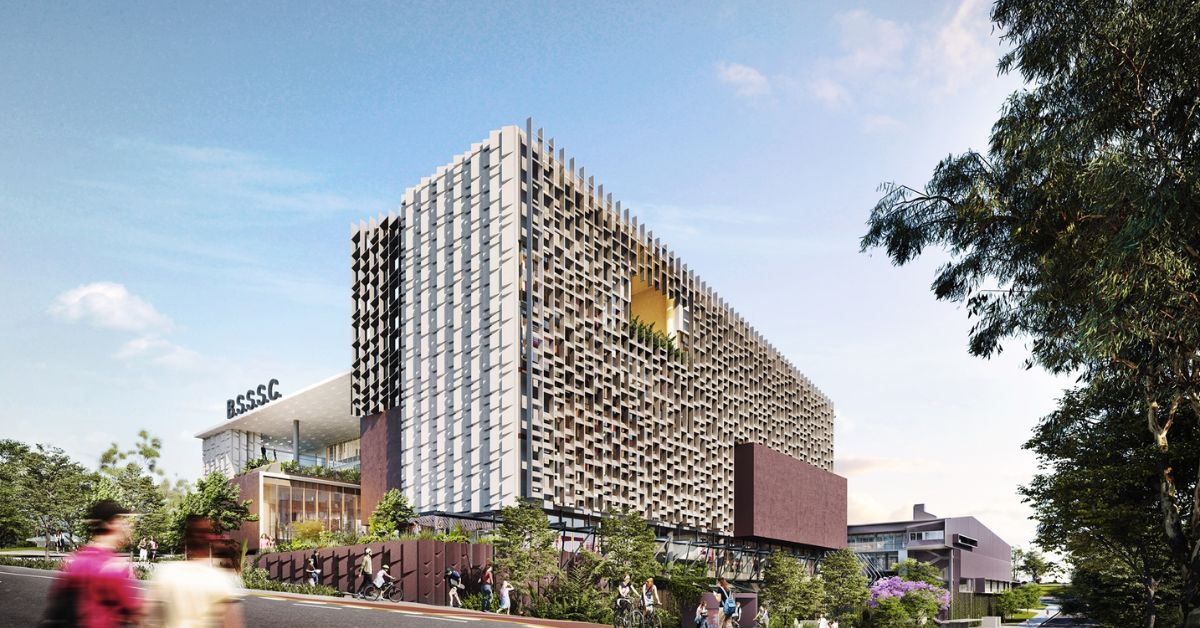
Brisbane South State Secondary College has reached a milestone in 2026, with its first cohort of students completing Year 12, and enrolments growing faster this year than at any established school in the region. But the wider pressure on secondary education across Brisbane’s inner south remains unresolved.


The school, which opened in 2021 as one of Queensland’s most distinctive secondary campuses, recorded 1,444 students in February 2026, representing growth of 201 students in a single year, more than any established state high school in the area managed over the same period. It sits at 94.8 per cent of its current built capacity, with room to grow further as construction of its final stage completes.

For families like Ellen Rigbye’s, the school has become an increasingly compelling alternative to the private and selective options that have long dominated inner-south Brisbane’s educational conversation.

A School Built on Two Big Ideas

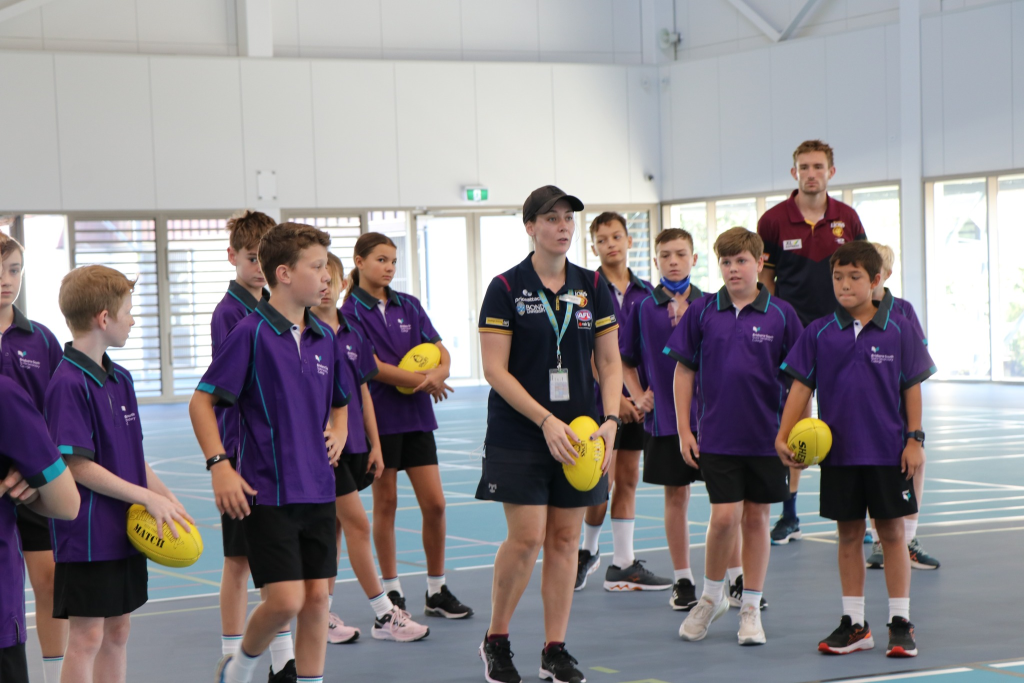
Ellen withdrew her daughter Charlotte from a western Brisbane private school in 2025, drawn across the river by something she hadn’t expected to find in a state school: a genuinely elite AFL pathway. Charlotte, a competitive AFL player, had won selective entry through the school’s AFL Academy, which operates in partnership with AFL Queensland and the Brisbane Lions, providing high-performance training alongside academic study. The combination of structured elite sport and a mainstream schooling environment was rare, and it showed.

Photo Credit: BSSSC/Facebook

“We went along to an AFL Academy open night, where they do a presentation about the school and about the academy, and it just sounded really good,” Ellen said.

Charlotte, now in Year 10, said the AFL program was a significant drawcard among her peer group too, including several students who had previously attended Brisbane State High School before making the switch.

The school’s second selective entry pathway, the Biomedical Science Academy, draws students aiming for careers in medicine and research. Developed in collaboration with the University of Queensland, the program sits within what planners have long called Brisbane’s knowledge corridor: the stretch of inner-south Brisbane that takes in UQ’s St Lucia campus, the Translational Research Institute, the PA Hospital and the CSIRO Ecosciences Precinct. For a school that only graduated its first Year 12 cohort this year, the calibre of its institutional partnerships is unusual by any measure.

What the School Was Built to Do, and What It Hasn’t

When the $140 million Dutton Park campus was announced in 2017, it was pitched as the primary solution to the overcrowding at Brisbane State High School (BSHS). Situated just over a kilometre away, BSHS remains the nation’s largest public high school and continues to warn families that local residency doesn’t guarantee a spot.

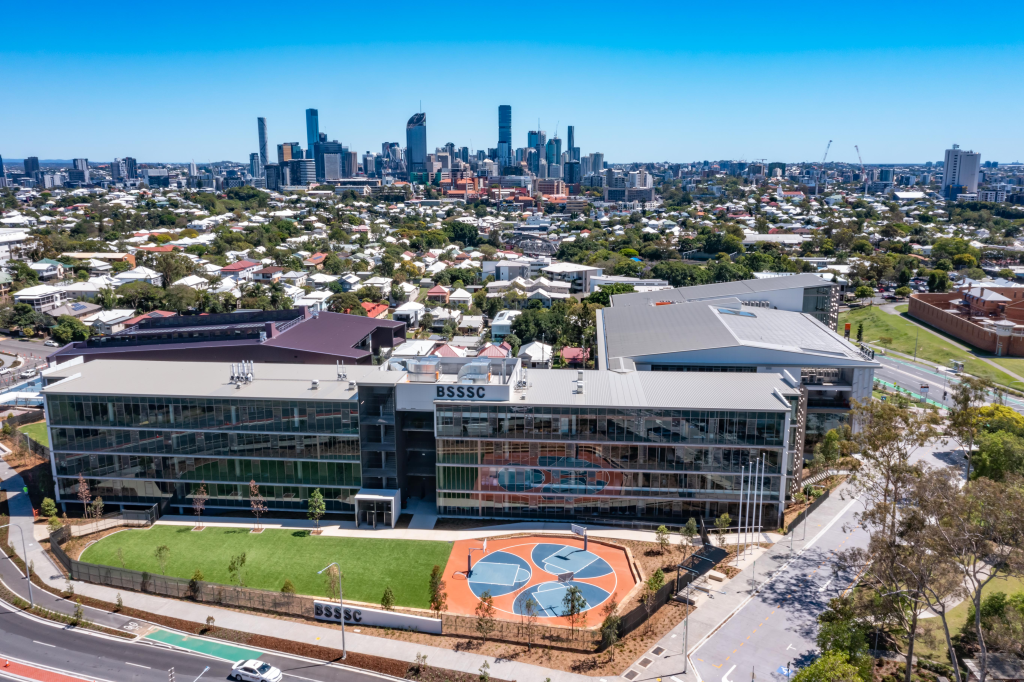
Brisbane South State Secondary College
Photo Credit: BSSSC

Five years later, community advocates argue that relief remains a mirage. Seleneah More, a member of the West End Community Alliance, notes that the college’s catchment was flawed from the start. By placing BSSSC outside the State High boundary and making only minor tweaks to neighbouring schools like Yeronga and Coorparoo, planners failed to tackle the core congestion.

Yet, raw data suggests BSSSC is serving as a critical pressure valve. By housing 1,444 students in its vertical campus, the college has mopped up demand that would have otherwise flooded the inner south. While these students might not be direct defectors from State High, the new school is undeniably doing the heavy lifting for a saturated region.

The 2026 figures highlight the ongoing struggle. BSHS enrolments dropped by only 19 students this year, missing the 100 student reduction predicted by official modelling. The school currently redlines at nearly 120 per cent capacity, operating 588 students above its intended design.

This creates a stark gap between nominal capacity and the reality of operational capacity. While BSSSC tracks toward its own limits, State High relies on aggressive split timetabling and staggered breaks to remain functional. With 92 per cent of local catchment students choosing BSHS alongside 1,000 selective entry places, the infrastructure remains under immense strain.

Filling Up, Tightening Up

Back at BSSSC, the path in for out-of-catchment students is narrowing. Charlotte noted that younger year levels at the school are already showing a lower proportion of out-of-catchment students, a shift that reflects the school’s own enrolment management plan as in-catchment demand grows year by year. Ellen confirmed the school is enforcing its catchment rules more strictly.

“Really, the way in is through the AFL Academy or the Biomedical Science Academy,” she said.

That tightening is by design. BSSSC’s enrolment management plan makes clear that selective entry places for out-of-catchment students are only available once in-catchment demand has been met and sufficient capacity has been reserved for future local growth. As the school’s first cohort moves through and the catchment population of the inner south continues to grow, those out-of-catchment selective entry windows will narrow further.

The school opened its 2027 selective entry application round for the Biomedical Science Academy in Term 2, 2026. Families interested in the AFL Academy or Biomedical Science Academy can find information at brisbanesouthssc.eq.edu.au.


Published 20-April-2026