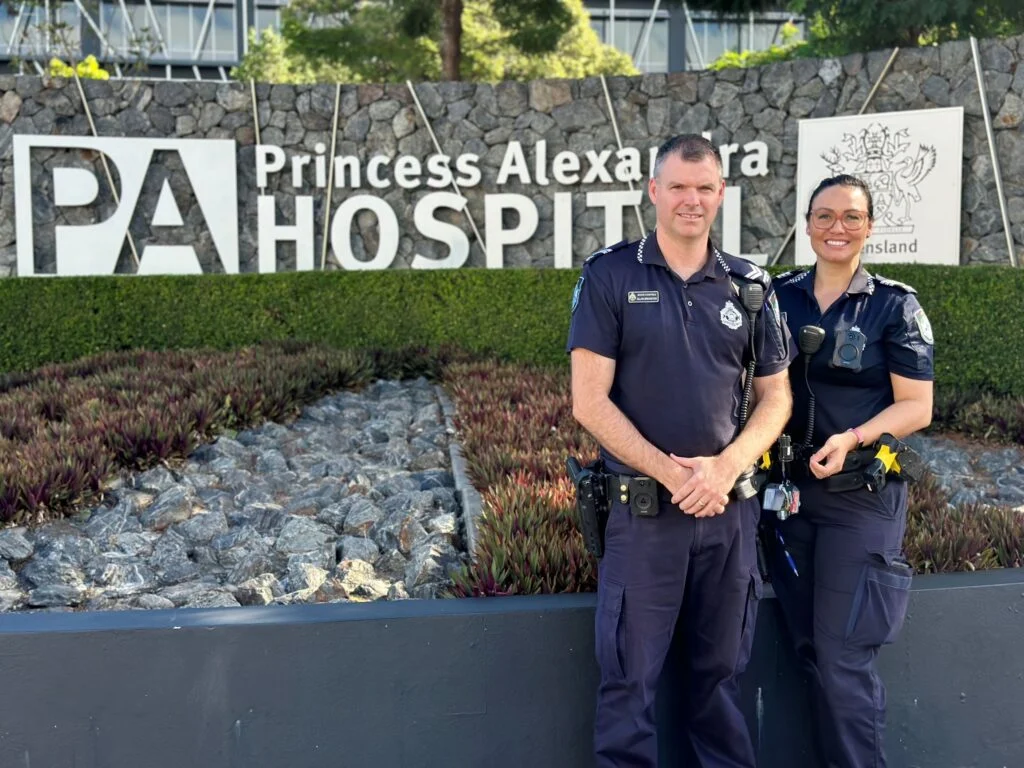
Princess Alexandra Hospital is marking 20 years since the launch of its on-site police beat, a first-of-its-kind initiative that reshaped how police and hospitals work together in Queensland.
The PA Hospital Police Beat started as a trial in November 2005 to handle the steady flow of road trauma and assault cases coming through the emergency department. The idea was simple: having police permanently stationed at the hospital would speed up response times for patient needs, investigations, coronial matters and criminal cases.

Twenty years later, the model has proven successful enough that Logan Hospital and Royal Brisbane and Women’s Hospital both established their own campus police beats in 2025.
How It Works
The team has grown from its initial trial size to six police officers plus an administration officer. This allows better coverage for calls within the hospital, particularly in the emergency department where occupational violence and aggressive patients can create unpredictable situations.

Acting Sergeant Simone Beckett, who has worked at the beat for five and a half years, says demand for police services at the hospital has steadily increased over the past 20 years. The focus remains on partnership and efficiency between two large government organisations with different priorities.
The officers handle coronial and information requests, work with social workers and intensive care staff, and deal with mental health presentations involving police. They’ve also built strong relationships with Metro South Health’s legal team and the Information Access Unit to ensure evidence gets collected quickly for court proceedings.
Beyond immediate police work, the police beat runs education sessions for nursing and medical staff, participates in community activities on campus, and collaborates on research projects about acute injuries from e-transport devices.
Why It Matters
Having police permanently based at a major hospital addresses a practical problem. Emergency departments regularly see patients who are victims or perpetrators of crime, and investigations often need to happen quickly while evidence is still fresh and witnesses are available.


The model bridges the gap between healthcare and law enforcement, allowing faster responses without pulling police away from other duties across the city. Staff at PA Hospital’s emergency department have developed what Beckett describes as an exceptional working relationship with the police team given the dynamic environment they share.
What This Means For Annerley and Woolloongabba
Princess Alexandra Hospital sits on the border of Annerley and Woolloongabba, serving as the major trauma centre for Brisbane’s southside and beyond. The police beat contributes to safety both within the hospital and in the surrounding community.

The team’s work extends beyond just responding to incidents. By maintaining a visible presence and building relationships with hospital staff, they help prevent problems before they escalate and ensure victims of crime get appropriate support.
The 20-year milestone recognises several long-serving team members. Founding Sergeant Chris Hale dedicated 17 years to the PA Police Beat. Administration Officer Upali Vithana retired in January 2026 after serving all 20 years with the team. Acting Sergeant Simone Beckett is now the longest-serving current member.
The success of the model shows how collaboration between health services and police can improve both patient care and community safety when organisations work through their different priorities to focus on shared goals.
Published 5-February-2026.