




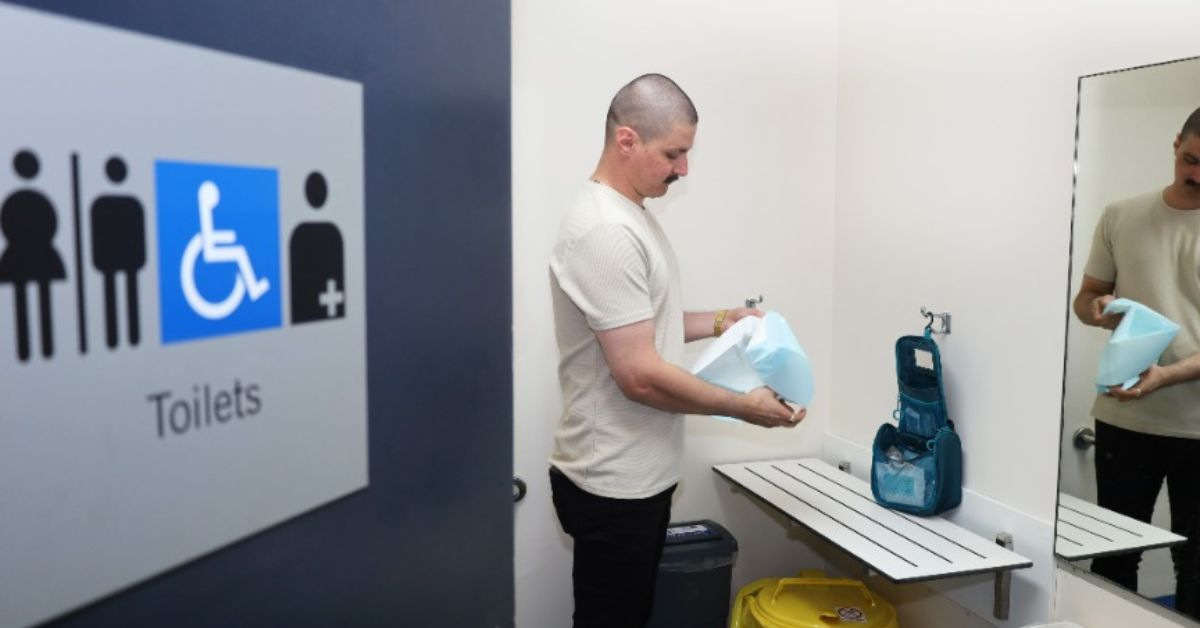
Princess Alexandra Hospital has unveiled the first ostomy-friendly toilet in Metro South Health, a purpose-built accessible bathroom on the ground floor of the main building designed specifically for people living with a stoma, brought to life by a patient named Jordan who raised the idea after his own surgery last year.
The bathroom sits alongside the standard wheelchair accessible toilet symbol and carries a new Ostomy Friendly Bathroom sign. This makes the space immediately identifiable to the 50,000 Australians who manage an ileostomy, colostomy or urostomy every day. Jordan identified the gap himself during his own treatment at the PA.

After a cancer diagnosis led to surgery and an ileostomy last year, he took his observations directly to the clinical team to find a solution.
“Living with the ileostomy is actually not bad, I mean it saved my life,” Jordan said. “But using the bathrooms anywhere, not just at the hospital, was a struggle and it was messy.”
Designed for Real Life, Not Just Accessibility Boxes
The modifications are targeted and practical. Clinical Nurse Consultant Lucy Perovic from the PA’s Stomal Therapy team outlined exactly what the upgrade involved.
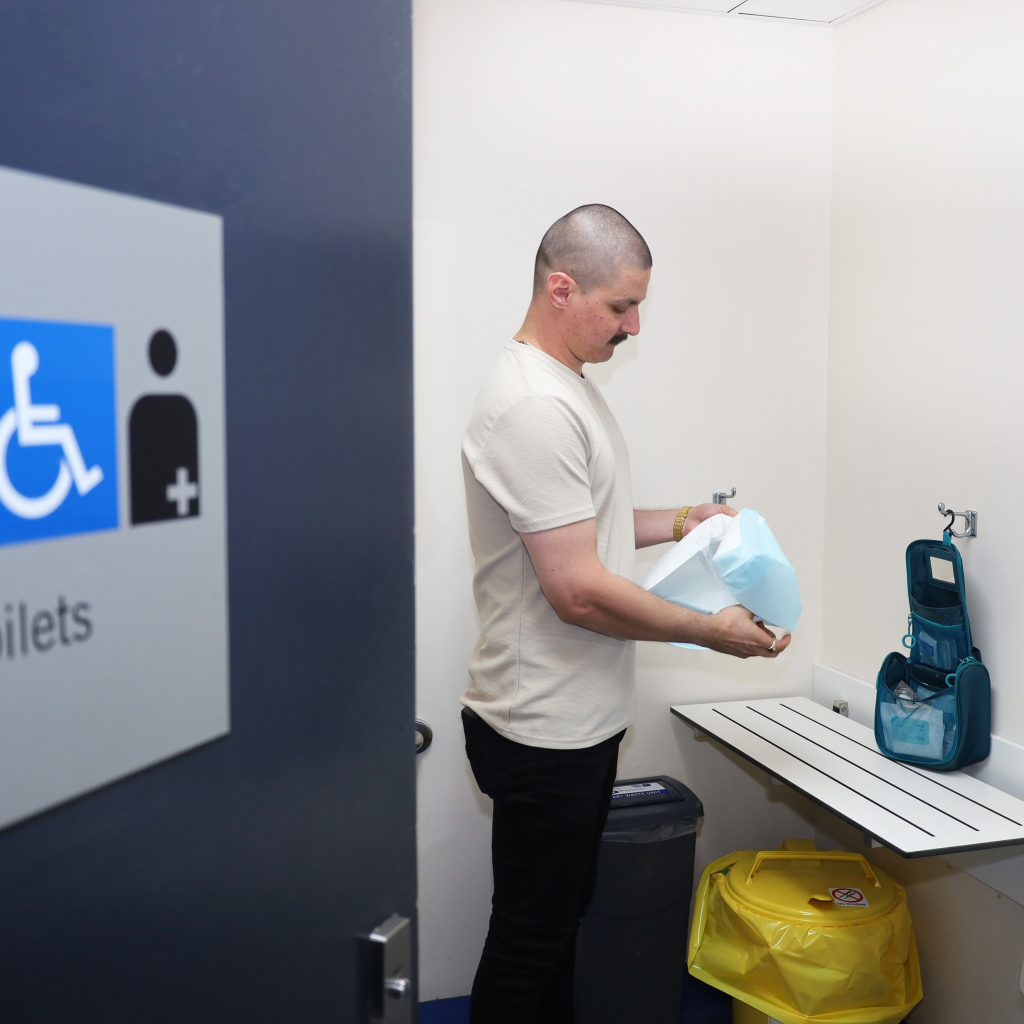
“This modification includes an Ostomy Friendly Bathroom sign alongside the wheelchair logo, accessible hand hygiene, a bench for people to place their ostomy products on for changes, and a clinical waste bin as well as the ability to use the mirrors for changes,” Perovic said.

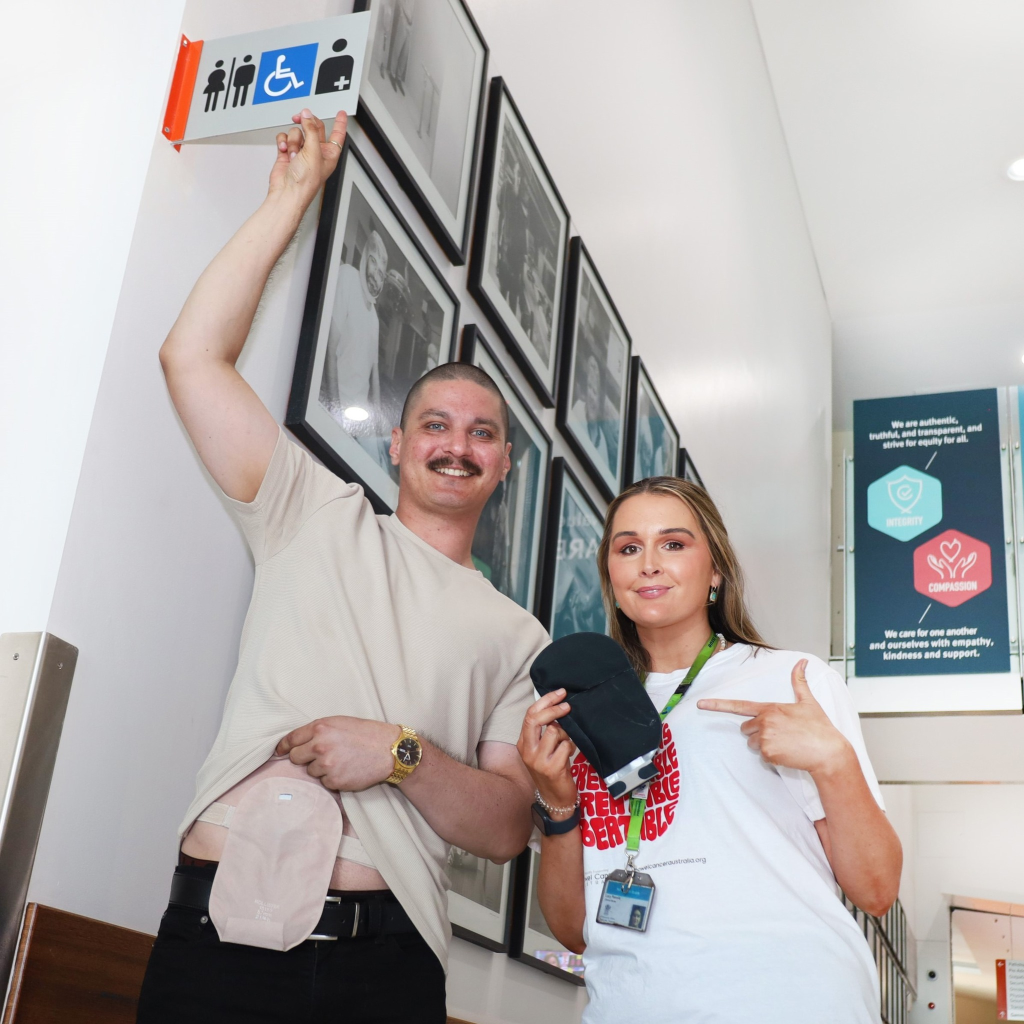
Each of those details addresses a specific, real problem. The bench means a person changing their ostomy pouch has a clean surface to work from rather than balancing products precariously or placing them on the floor.
The clinical waste bin handles disposal correctly and discreetly. The accessible mirror positioning allows for changes that require visual guidance. The signage both identifies the space and, Jordan hopes, does something broader.
“I’m hoping even the sign itself will catch people’s attention as they walk past and create some curiosity or education,” he said.
The response when Jordan used the bathroom for the first time told him the design had landed exactly right.
“I used it last time I came for chemo and it’s awesome,” he said. “It’s exactly what I wanted it to be and makes me feel super proud to be at PAH. This is great for the community.”
A Daily Challenge Most People Never See
Thousands of Australians live with a stoma, an opening in the abdomen that allows bodily waste to exit into an external collection bag after surgery to the bowel or bladder. Stomas are created to treat conditions including colorectal cancer, Crohn’s disease, ulcerative colitis and bladder cancer, among others.
Some are temporary; others are permanent. The Princess Alexandra Hospital, as Queensland’s principal academic and tertiary health centre for colorectal and bowel surgery, treats a significant proportion of the state’s ostomy patients.
Managing an ostomy in a public bathroom has always been one of the more practically challenging aspects of living with the condition. Standard accessible toilets were not designed with ostomy care in mind, and the absence of a bench, appropriate waste disposal and usable mirror means people are often forced to manage a bag change in awkward and undignified conditions.
Those living with an ostomy long-term frequently describe scanning every public bathroom they encounter before committing to any outing.
The community voices that followed the announcement made clear just how widely this gap is felt. People who have lived with colostomies for decades said they often rely on parents’ rooms in shopping centres for the privacy and usable surfaces they need.
Others described the looks they receive when using accessible toilets, unsure whether their needs are seen as legitimate. One commenter said it had taken years of living with an ileostomy before they came across a space actually designed for them.
The facilities are common in parts of Europe and the United Kingdom, where dedicated ostomy-accessible bathrooms have been advocated for by patient groups and in some cases mandated in public buildings. Australia has lagged in this area, making the PA Hospital’s installation, and Jordan’s role in making it happen, genuinely pioneering for Metro South Health.
A Patient Advocate Who Made It Count
What is notable about this outcome is not just the facility itself but the path that produced it. Jordan raised the idea from lived experience, took it to the hospital’s clinical team, and the PA listened. Clinical Nurse Consultant Perovic and the Stomal Therapy team worked to make it a reality.
“Well done to everyone involved, and thank you to Jordan for being an incredible advocate for patients,” Metro South Health said in acknowledging the achievement.
For patients coming to the PA for treatment who live with an ostomy, the ground floor ostomy-friendly bathroom in the main building is now available. For more information about stomal therapy services at Princess Alexandra Hospital, call (07) 3176 2111 or visit metrosouth.health.qld.gov.au.
Published 29-April-2026