




Princess Alexandra Hospital’s Woolloongabba campus is emerging as a major centre for cancer research, combining clinical trials, specialist treatment, biobanking and laboratory science within one health precinct. A new experimental cell therapy for aggressive leukaemia is the latest project drawing on that research and clinical infrastructure.
Metro South Health identifies PA Hospital as its major research precinct, with the campus hosting the Translational Research Institute, one of Australia’s most advanced medical research facilities. Research programs based at the hospital span cancer, surgery, intensive care, rehabilitation, allied health and other specialties.

New AML project adds to precinct research
Among the latest projects is a nearly $4 million effort to develop an off-the-shelf immune-cell therapy for acute myeloid leukaemia, or AML. The research is led by TRI chief executive Professor Maher Gandhi, with PA Hospital haematologist Dr Victoria Ling serving as clinical lead.
The project involves Metro South Health, Mater Research, the University of Queensland, Queensland University of Technology and other Australian research, hospital and industry partners. Researchers are preparing for a national Phase I clinical trial involving 15 people with relapsed or refractory AML who have exhausted other treatment options.
AML is an aggressive blood cancer that is particularly common in older adults. Treatment options can become limited when the disease returns or fails to respond to standard therapies.
The experimental therapy will use immune cells derived from donated umbilical cord blood rather than manufacturing treatment from each patient’s own cells. Researchers plan to genetically engineer, expand and freeze the cells in advance, with the aim of reducing manufacturing delays associated with personalised cell therapies.

Clinical trials operate alongside hospital care
Cancer research at PA Hospital extends well beyond the new AML project. The hospital’s Cancer Trials Unit has operated since the early 2000s and runs studies across medical oncology, haematology and radiation oncology.
The unit sits within PA Hospital’s Division of Cancer Services and provides clinical research treatments to participating patients. Its location within a major tertiary hospital allows trial participants to remain connected to established specialist and emergency services.
PA Hospital also houses the Cancer Collaborative Biobank, which stores biological samples donated with consent by patients diagnosed with blood cancers. Samples can be used in approved research into diseases including leukaemia, lymphoma and myeloma.
Research infrastructure on the campus also includes the Clinical Research Facility. Since opening in December 2014, the facility has supported more than 250 studies involving thousands of participants.
Advanced therapies move closer to routine care
PA Hospital has built experience with advanced cell therapies for blood cancers. In 2023, it became Queensland’s first research site to provide allogeneic CAR-T treatment for lymphoma, using immune cells from healthy donors.
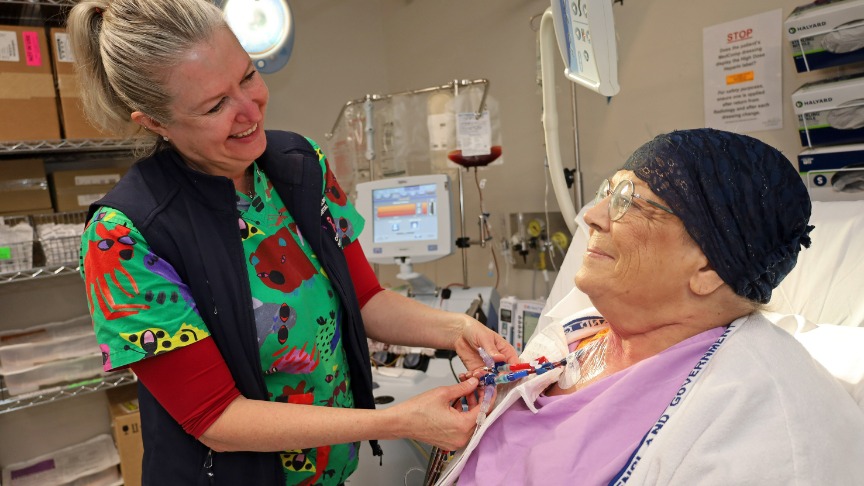
CAR-T treatment later became part of standard care at PA Hospital for eligible lymphoma patients in 2025. The standard-care program is distinct from the earlier experimental allogeneic research, but both have contributed to the hospital’s experience in delivering specialised cell therapies.
Cancer research at the hospital has also extended into advanced prostate cancer. PA Hospital hosted a world-first targeted alpha therapy trial designed to direct radiation towards cancer cells while minimising damage to surrounding healthy tissue.
Research precinct extends beyond PA Hospital
PA Hospital is also a partner in the 39-hectare Boggo Road Innovation Junction, which brings together organisations working across healthcare, biotechnology, research and science. TRI’s location on the PA Hospital campus gives researchers access to nearby clinical-trial and hospital infrastructure while supporting collaboration between scientists and clinicians.
The new AML therapy remains at an early stage and has not been established as an effective treatment. Its planned Phase I study will primarily assess safety, dosing and administration before larger trials can determine whether the therapy works.
For PA Hospital, the project adds to an existing program of cancer research spanning clinical trials, biobanking and advanced treatment. Its next test will come when the cord-blood therapy moves from laboratory development into its first small clinical trial.
Published 2-Sept-2026