The Horizons Women’s Hub at Yeronga State High School was recently recognised as an Excellence Awardee for Best Co-curricular Program at the Australian Education Awards 2025, highlighting the school’s dedication to empowering women through its current students and past graduates.
The Horizons Women’s Hub at Yeronga State High School in Brisbane is a special initiative designed for current students and past graduates. The hub focuses on engaging young women with important social issues, including racism, misogyny, gender equality, women’s rights, and overall empowerment.
Its main goal is to provide a safe and encouraging environment where students can learn, develop, and become advocates for positive change both within their school and the wider community.
The hub runs various programs and activities catering to the holistic development of young women. These include workshops covering building self-esteem, understanding body image, fostering healthy relationships, exploring career pathways, and learning about women’s history.
Additionally, the hub creates a space for important discussions around intersectional identities, helping students understand how different aspects of their identity, like race, gender, and socio-economic background, influence their experiences.
Yeronga State High School strongly supports the Horizons Women’s Hub as part of its commitment to providing an inclusive education where diversity is valued. The school has a history of encouraging student voices and wellbeing through initiatives like Student Summits, which have addressed significant topics such as Black Lives Matter, uniform policies, school rules, and intercultural leadership.
The Women’s Hub evolved from the school’s annual Women’s Summit, demonstrating a long-standing commitment to these issues. The Queensland Government’s Celebrating Multicultural Queensland Program recognised the hub’s value by providing $19,000 in funding for 2024-2025, showing external acknowledgement and support for its work within the community.
The recognition at the Curriculum Awards and the upcoming Australian Education Awards in August 2025 underscore the significant impact of the Horizons Women’s Hub. These accolades highlight Yeronga State High School’s dedication to fostering an environment where young women are empowered to learn, grow, and contribute positively to society.
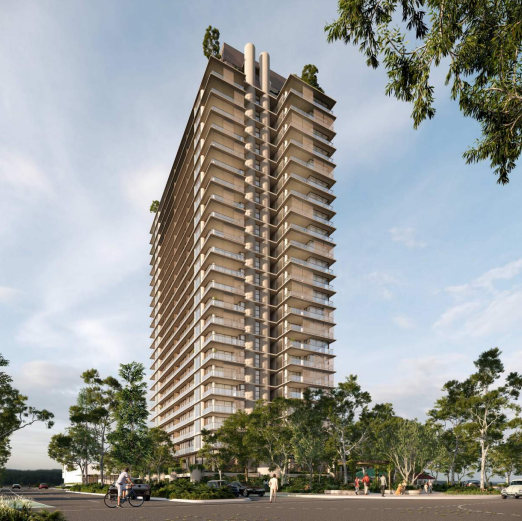
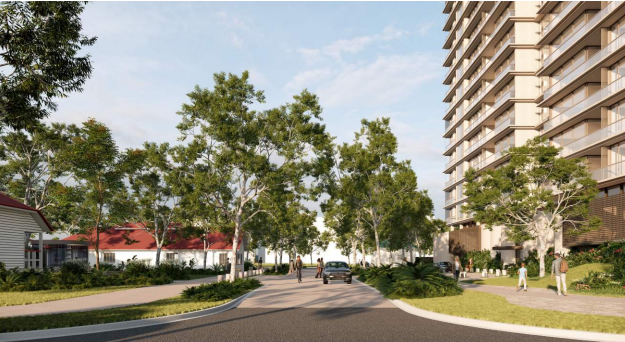
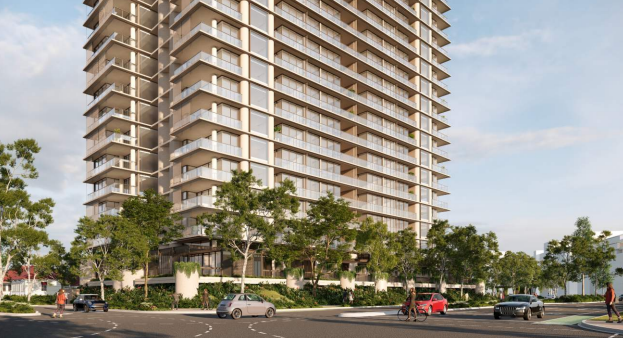
The proposed site spans 30 Bedivere Street, King Arthur Terrace and Queens Way, Yeerongpilly and has been designed by Rothelowman Architecture.
Photo credit: Brisbane PD Online (A006748034)
The proposal includes 181 medium-density residential units—comprising 90 two-bedroom and 91 three-bedroom apartments. The apartments will offer between 15 and 87 square metres of private open space.
Shared amenities outlined in the plans include a swimming pool and lounging area, private dining rooms, lawn spaces, a library, a kids’ room, and spaces for social and recreational use. Parking provision includes 300 resident spaces and 28 for visitors.
Restoration and Use of Heritage Building
Photo credit: Brisbane PD Online (A006748034)
A key element of the proposal for the Yeerongpilly site involves the retention and repurposing of the existing heritage-listed morgue building located on the site. Plans detail the demolition of internal features, including shelving and sinks, as well as lightweight additions connected to the main structure.
Photo credit: Brisbane PD Online (A006748034)
Part of the existing roof, fascia and gutters would also be removed. Restoration work is proposed for the roof ventilator and the internal and external windows. The skylight is to be replaced, and a new portal window added to the western facade.
Photo credit: Brisbane PD Online (A006748034)
In the short term, the restored building is intended to be used for an internal art initiative, with displays of artwork and associated cultural activities. The space is proposed to operate daily from 6:00 a.m. to 10:00 p.m. The application also allows for the building to accommodate future community, shop, or retail uses.
To enable construction, the site’s existing ponding and vegetation would be removed. If approved, the development would introduce a mix of residential units and community-oriented space, incorporating the adaptation of a heritage structure within a higher-density context. The application is currently under assessment.
Annerley Community Centre is quietly transforming everyday lives in the heart of Brisbane’s southside, offering locals a welcoming space to connect, learn and get support, all at no cost. From morning teas to tech help, the centre is putting community needs first with a packed month of activities this May.
The centre on Ipswich Road runs an “Open House” four mornings a week, offering tea, referrals, computers and conversation. Regular hands-on programs like jewellery making, Tai Chi and craft groups keep locals coming back. Community Plus+ says its goal is to strengthen community through simple, consistent activities that help people feel connected.
Residents can access free legal advice through Reignite Legal and get help with phones, apps and laptops at fortnightly IT sessions. In April, a MyGov and MyID session showed locals how to set up digital IDs, a practical way the centre helps people manage everyday tasks.
The month’s calendar includes a range of regular and one-off events, each offering a chance to connect, unwind, or learn:
2, 16, 30 May (Fridays) – Jewellery Making Workshop (3–5 p.m.)
6, 20 May (Tuesdays) – Tai Chi and Legal Advice Clinic
7 May (Wednesday) – Centre closed for staff training
8 May (Thursday) – Pancake Day (from 10 a.m.) and IT Support
13 May (Tuesday) – Neighbourhood Centre Week Morning Tea (9:30 a.m.)
21 May (Wednesday) – Centre closes early at 11 a.m. for Volunteer Event
22 May (Thursday) – IT Support
26 May (Monday) – National Sorry Day Elders Excursion; Centre opens late
27 May – 3 June – National Reconciliation Week “Bridging Now to Next”
2 June (Monday) – My Place community presentation by Dr Michael Macklin (7 p.m. at Yeronga Community Centre)
Commemorating History And Culture
This month includes time for reflection, with the centre marking National Sorry Day on 26 May and opening late for an Elders Excursion. This leads into National Reconciliation Week, from 27 May to 3 June, with the theme “Bridging Now to Next.”
Locals interested in learning more about Aboriginal history in the area can also pick up a copy of A Forgotten History — the story of Auntie Sue Hansen-Richards’ childhood at the Moorooka Aboriginal Camp, available for sale at the centre.
Looking Ahead And Staying Involved
On 2 June, Dr Michael Macklin will present My Place, sharing the history of a Yeronga home and its ties to both Indigenous and settler communities. The centre encourages locals to get involved, through volunteering, joining a group or starting their own.
With doors open Monday to Thursday from 8 a.m. to noon, the Annerley Community Centre remains a constant presence in an ever-changing neighbourhood, a place where community connection still matters.
A 105-year-old Queenslander in Annerley has sold at auction for $1.8 million, exceeding expectations amid strong demand for original homes on large blocks.
Historic Annerley Home Draws Strong Auction Interest
A classic Queenslander at 48 Junction Terrace, Annerley, sold under the hammer on 26 April 2025 for $1.8 million. The home, sitting on a rare 810-square-metre double block, attracted seven registered bidders, with final competition coming down to a local investor and an owner-occupier from central Queensland.
The auction opened at $1.4 million and progressed in $50,000 increments before reaching a sale price $50,000 above the reserve. The property had remained largely untouched for two decades and was one of the few remaining original Queenslanders in the suburb.
Photo Credit: Atlas by LJ Hooker/Instagram
Period Charm and Rare Block Size in Annerley
The three-bedroom, two-bathroom home featured heritage details including ornate ceilings, leadlight bay windows, and French doors. The property includes an enclosed verandah, a family-sized rear deck, and multipurpose spaces downstairs such as a study and rumpus. While the downstairs section did not meet legal height requirements, the overall presentation retained its historic value.
Located within 2 kilometres of Greenslopes Private and Princess Alexandra Hospitals, and inside the Brisbane South State Secondary College catchment, the property also offers a double carport and additional parking for a caravan or trailer. The 22-metre frontage spans two titles.
Photo Credit: Atlas by LJ Hooker/Instagram
Surging Demand for Queenslanders in Annerley
Selling agent Matt Slater reported over 100 attendees and more than 70,000 online views throughout the campaign, attributing the strong result to limited stock and increasing interest in Annerley’s remaining heritage homes.
The latest House Price Report recorded an 11 per cent increase in Annerley’s median house price over the past year, rising to $1.305 million. The auction result for 48 Junction Terrace significantly surpassed that figure.
With most original Queenslanders in Annerley already renovated or redeveloped, the sale of this largely untouched property highlights ongoing buyer interest in rare, character-filled homes on large inner-city blocks.
Aubigny Street in Annerley stands as both a residential thoroughfare and a poignant reminder of Australia’s military history. This quiet street, tucked away in Brisbane’s inner south, has maintained a stable community presence while honoring an important connection to World War One.
With 65% of properties being owner-occupied and residents staying an average of 13 years and 1 month, the street demonstrates significant community stability. This commitment to the area is further evidenced by the fact that 50% of residents have called Aubigny Street home for more than a decade. The street’s history of property transactions provides fascinating insights into Brisbane’s property evolution, with 47 Aubigny Street selling for just $143,000 in December 1998 – a figure that highlights the remarkable transformation of the area’s real estate market over the decades.
Remembrance Connection
Aubigny Street is one of Brisbane’s significant Streets of Remembrance, named to honor the Anzac spirit and Queensland’s service personnel. The street commemorates Aubigny-en-Artois, a town on the Somme in France that played a crucial role during World War One. Initially positioned in the area of the French Tenth Army, Aubigny became an important Allied base from 1916 onward. The area was home to the 1st Australian Division Battery Park, the 1st Australian Dermatological Hospital, and the 42nd Casualty Clearing Station, which provided critical first aid services.
The Aubigny British Cemetery in France contains 95 World War One burials, including one unidentified soldier. Additionally, an extension created by Australian units in 1918 contains 2,771 Commonwealth burials, underscoring the significant Australian presence and sacrifice in the region. Through its name, Aubigny Street ensures that the memory of these contributions and sacrifices remains woven into the fabric of Brisbane’s suburban landscape.
Aubigny St, Annerley Residents
NUMBER OF PROPERTIES: 46 (5 townhouses, 30 houses, 11 others) % OF OWNER OCCUPIERS ON STREET: 65% AVERAGE TIME FOR OWNER OCCUPIERS: 13 years, 1 month % OF PEOPLE 10+ YEARS: 50%
Aubigny St, Annerley – As It Looked In 1936
Aubigny St, Annerley in 1936
SOME RECENT SALES ON AUBIGNY ST, ANNERLEY
Property Address
Sale Price
Sale Date
1/34 Aubigny Street, Annerley
$850,000
Feb 2025
57 Aubigny Street, Annerley
$1,250,000
Aug 2024
SOME TYPICAL PROPERTY SALES ON AUBIGNY ST FROM YESTERYEAR
Property Address
Sale Price
Sale Date
30 Aubigny Street, Annerley
$210,250
Nov 2001
20 Aubigny Street, Annerley
$193,000
Mar 2001
47 Aubigny Street, Annerley
$143,000
Dec 1998
SUBURB PROFILE
The median price of a 2 Bedroom House in Annerley in 2025 was $1,130,000 The median price of a 2 Bedroom House in Annerley in 2021 was $638,000 TYPICAL INCREASE OF A 2-BEDROOM HOUSE IN ANNERLEY SINCE 2021: $492,000
The median price of a 3 Bedroom House in Annerley in 2025 was $1,230,000 The median price of a 3 Bedroom House in Annerley in 2021 was $783,000 TYPICAL INCREASE OF A 3 BEDROOM HOUSE IN ANNERLEY SINCE 2021: $447,000
The median price of a 4 Bedroom House in Annerley in 2025 was $1,560,000 The median price of a 4 Bedroom House in Annerley in 2021 was $871,000 TYPICAL INCREASE OF A 4 BEDROOM HOUSE IN ANNERLEY SINCE 2021: $689,000
The median price of a 2 Bedroom Unit in Annerley in 2025 was $650,000 The median price of a 2 Bedroom Unit in Annerley in 2021 was $360,000 TYPICAL INCREASE OF A 2 BEDROOM UNIT IN ANNERLEY SINCE 2021: $290,000
The median price of a 3 Bedroom Unit in Annerley in 2025 was $895,000 The median price of a 3 Bedroom Unit in Annerley in 2021 was $569,000 TYPICAL INCREASE OF A 3 BEDROOM UNIT IN ANNERLEY SINCE 2021: $326,000
A heartwarming new addition to Princess Alexandra Hospital’s Geriatric and Rehabilitation Unit has brought smiles to the faces of staff and patients alike this month. The Bunya and Cassia Ward deck was filled with excitement as the life-sized metal ibis mascot was unveiled—a remarkable creation that stands as a symbol of resilience and solidarity for the ward’s amputee patients.
The striking sculpture, featuring an ibis with a prosthetic leg, was crafted by local artist Ryan Forster of Sethius Art. The piece was inspired by Ryan’s longstanding tradition of donating his artwork to the community, and it quickly became a symbol of hope for those facing adversity.
Photo credit: Travis Hetherington/Google Maps
Ryan explained that he has a history of contributing his art to public spaces and finds great satisfaction in doing so. After donating a piece to the Children’s Hospital, PAH physiotherapist Bec Heape contacted him with the idea of creating a similar artwork for the hospital. He found the idea compelling, as it could bring joy to many people, and that was all the motivation he needed to proceed with the project.
Ryan, who has created a growing collection of over 150 metal ibises, has seen many of his sculptures find homes atop businesses and residences around Brisbane. These quirky pieces have even become part of the Bin Chicken Trail, drawing curious birdwatchers across the city. However, this latest creation holds a special place at the hospital, where it captures the enduring spirit of the Geriatric and Rehabilitation Unit (GARU) patients.
Ryan shared that the piece felt like a perfect fit for the ward, especially since many patients face difficult circumstances. He noted that Queenslanders are known for their resilience and ability to find humour in tough situations, and he hoped the sculpture would help lift spirits while also offering a bit of levity to the hardworking staff.
The unveiling of the ibis sculpture has sparked a wave of positivity among both patients and healthcare professionals. Senior Phy
siotherapist Heather Batten expressed how the art has been particularly encouraging for patients, as it reflects their own experiences. She added that it was a thoughtful gesture from the community and that everyone at the hospital was grateful for Ryan’s generous donation.
Though the ibis may not join the public Bin Chicken Trail, it is certainly making its mark on those who visit the Bunya and Cassia Ward deck. As the team continues to debate the perfect name for the mascot, the sculpture remains a permanent reminder of the kindness and creativity that can help lift spirits during difficult times.
With its whimsical design and meaningful symbolism, this donation will undoubtedly continue to bring joy to the hospital’s patients and staff for years to come.
The steady rhythm of powerful strokes cuts through the water at Yeronga Park Pool, marking the relentless dedication of Victoria Belando Nicholson. She’s a teenage para-swimmer making waves on the national and international stage, but her journey to the starting block began years earlier, shaped by events far from any swimming pool.
It was only in 2023 that Victoria channelled her energy into competitive swimming at the welcoming Yeronga Park Swimming Club in Brisbane. Born with Fibular Hemimelia, she lacks a fibula bone in her left leg, making it 14 centimetres shorter than her right. This places her in the S9 para-swimming classification.
Taking to the high-performance lanes, she trained alongside esteemed athletes like triple Paralympic champion Rowan Crothers, guided by experienced coaches such as Toby Fitzgerald and Kate Sparkes. This supportive environment at Yeronga became the launchpad for a swift rise in the sport.
Victoria’s determination in the pool echoes an extraordinary personal history. Her life began amidst profound tragedy. In 2008, as a baby just six months old, she was on a refugee boat near Malta when it capsized. While Victoria survived, her mother tragically did not.
Following this devastating event, she and her sister spent two years in an orphanage before finding a permanent home and loving family with Ewan and Susanna Belando-Nicholson in Brisbane. Before dedicating herself fully to swimming, Victoria also explored her athletic talents as a keen water polo player, showcasing an early affinity for aquatic sports.
The transition to competitive swimming unleashed impressive potential. Within roughly a year of starting, Victoria’s talent shone brightly. In 2024, at just 16 years old, she travelled to Portugal for the European Para Swimming Championships and returned with two international medals, announcing her arrival on the world scene.
Back home, she continued her winning ways at the 2024 Australian Age Championships. Competing in the Girls’ 16- 18 multi-class events, she captured gold in both the 100 metre and 400 metre freestyle and bronze in the 50 metre freestyle for good measure.
This success earned her recognition, including being named Yeronga Park’s “Para Potential Swimmer” for her age group by Swimming Brisbane and selection for Swimming Australia’s “Future Phins” program, which identifies promising junior swimmers.
With a growing collection of medals and accolades, Victoria Belando Nicholson now looks towards even bigger goals. The bright lights of the Paralympic Games beckon, specifically the 2028 Games in Los Angeles and, significantly, the 2032 Games set to be hosted in her home city of Brisbane.
Supported by her family and her Yeronga Park Swimming Club community, this remarkable young athlete continues to train, driven by a unique blend of talent, hard work, and a spirit that has already overcome so much. Her journey is a powerful story unfolding right here in the heart of Yeronga.
St Sebastian’s Catholic Primary School in Yeronga will host an upcoming Open Week event inviting local families and residents to explore its distinctive community spirit and research-supported learning environment.
Staff and students are preparing to showcase their school between 8 April and 4 May 2025. This initiative is part of the broader Brisbane Catholic Education (BCE) Open Week, which sees over 100 schools across the region opening their gates. St Sebastian’s encourages interested community members to experience the school firsthand.
Principal Angela Moore stated that a special aspect of the school is the strong working relationship between its dedicated staff and its involved parent community, which create a supportive educational setting.
She explained that parents and caregivers are considered partners in education and are frequently present in the school. Examples include joining staff for tea after assemblies or taking turns to run the weekly Friday sausage sizzle, helping families feel connected to the school and their child’s learning journey.
The school places a high priority on student wellbeing. Primary Learning Leader Kathleen Jenkins indicated that the school recognises learning is most effective when students feel secure and supported.
She mentioned that teachers are given time to consider each child’s development and work closely with their families. Jenkins added that the school’s open relationship with parents allows teachers to easily communicate concerns and ensure families actively participate in their child’s education.
Research-Based Teaching Approach
St Sebastian’s approach to teaching is informed by evidence, ensuring classroom activities are grounded in scientific research. Principal Moore reported that using evidence-informed teaching practices has led to noticeable improvements in student performance and increased teacher job satisfaction.
During the Open Week, the school plans to host specific events for the community, including a coffee morning and an information session for parents focused on how reading is taught. Moore acknowledged that methods for teaching reading have changed significantly since many current parents were students.
She expressed the school’s desire for parents and community members to understand the current, research-based, structured literacy techniques used in their classrooms today. Those interested in learning more or registering for events can find details at bceopenweek.com.
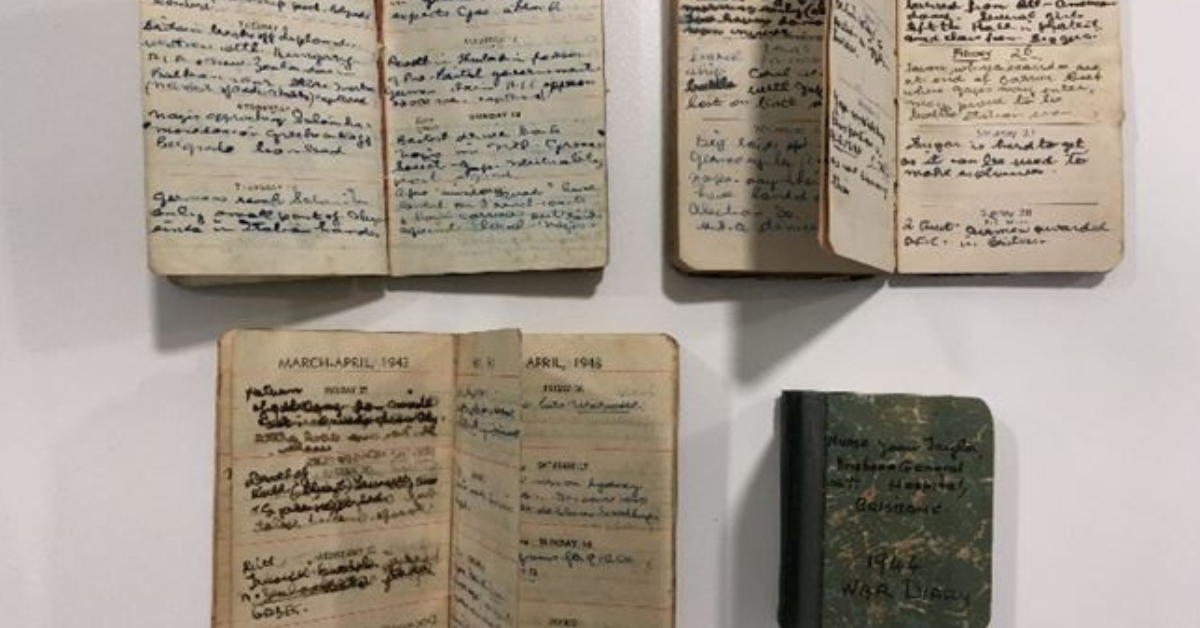
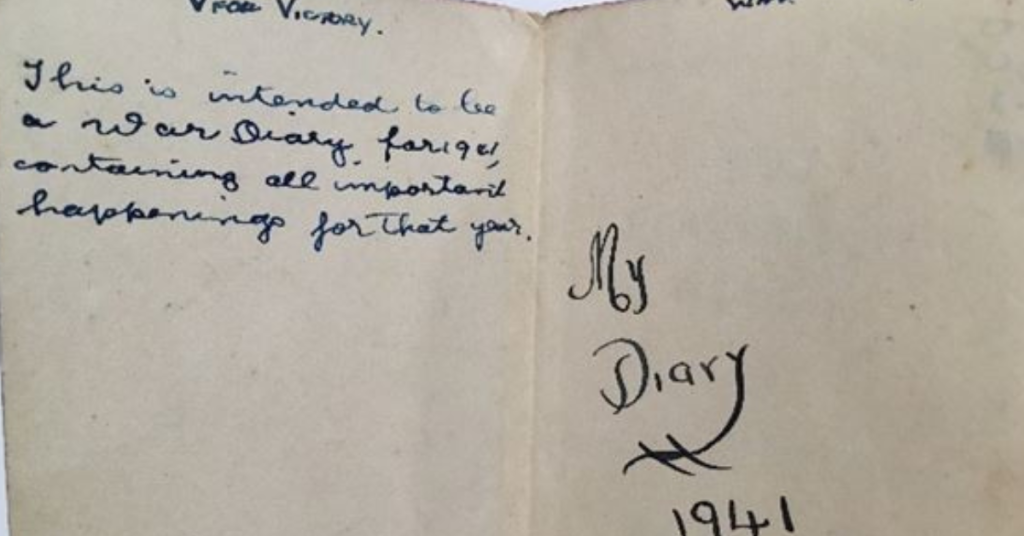
A set of war diaries kept between 1941 and 1944 by a young Annerley woman, Joan Taylor, provides a rare daily record of World War II’s impact on Brisbane. The diaries provide a unique and interesting glimpse of then-news about the global conflict, observations of local life and events, all written under the risk of wartime censorship.
Joan Taylor’s four diaries document the years 1941 to 1944. When she began writing in 1941, Joan lived with her parents in the Brisbane suburb of Annerley, and she made it clear her goal was to create a record of the war’s development.
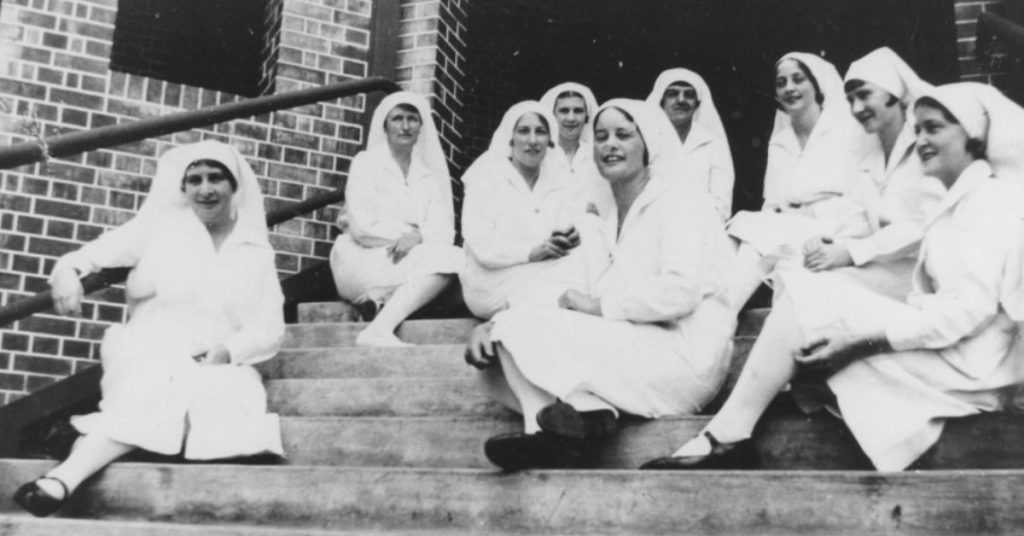
True to this aim, the diaries contain scant information about her personal life, focusing instead on daily events related to the conflict. By January 1943, her entries indicate she had moved into the nurses’ quarters at the Brisbane General Hospital.
Joan filled her diary pages daily with headlines concerning the war, adding her observations and notes. Her entries from 1941 noted the arrival of an American fleet in Brisbane to a warm welcome in March, reported large numbers killed in the Belgrade massacre in April, and recorded Germany’s declaration of war on Russia in June, alongside Mr Churchill’s promise of British help.
Later that year, she remarked on clothes rationing in England and the use of “liquid hosiery,” a substitute for stockings that was also popular locally. A grim entry in November 1941 mentioned thousands of Jews being killed in Roumania. On 8 December 1941, she recorded the bombing of Hawaii and Manila by Japanese planes and Japan’s subsequent declaration of war on the US and Britain.
As the war progressed, she documented major turning points, including the massive Allied D-Day landings in France in June 1944, the liberation of Paris in August 1944, President Roosevelt winning a fourth term in the US in November 1944, and the bombing of Tokyo later that month.
War Comes to Brisbane
As the war intensified in the Pacific, Joan’s diaries reflected the growing threat and changes felt directly in Australia, particularly Queensland. In early 1942, she recorded the arrival of thousands of US soldiers, a significant round-up of enemy aliens in Queensland, the surrender of Singapore, and the shocking bombing of Darwin by Japanese forces. Life in Brisbane itself changed, with entries describing air raid practices, surprise blackouts, and the introduction of sugar rationing limiting each person to one pound (about 450 grams) per week.
She also noted the decision to employ 100 women as tram conductresses and observed an increase in stabbings occurring during quarrels in Brisbane later in 1942. The threat remained palpable into 1943, with entries mentioning Japanese raids on Darwin, the sinking of two Japanese transports off the North Australian coast, and an enemy plane being sighted and fired upon near Sydney. Local shortages became acute, with Joan writing in late 1943 about an extreme lack of meat that saw hundreds turned away from butcher shops daily.
Some of Joan Taylor’s entries were marked with notes like “private information” or “not in newspapers,” suggesting she recorded details that might not have passed official wartime censorship. This information, possibly heard through word-of-mouth, included incidents of local violence. An April 1942 entry under “private information” alleged that two Black soldiers were shot in Brisbane for attacking women.
In July 1942, she wrote that witnesses claimed many were killed in a Townsville raid, despite official reports stating no casualties. Another shocking incident recorded in August 1942 involved an Allied soldier seriously wounding a girl at the Lyceum Theatre before killing himself. The diaries also touched on local health issues, noting a significant typhoid outbreak in Melbourne in May 1943 and increased cases of Scarlet Fever in Brisbane later that year.
That same May, the hospital ship Centaur was sunk by the Japanese east of Brisbane; Joan recorded that the survivors were brought quietly to the hospital ward next to hers, likely to prevent public panic. Not all unofficial information was accurate; an early 1944 entry reported Mussolini’s death from stomach ulcers in a German clinic, which was incorrect.
As 1944 progressed, Joan Taylor’s dedication to daily entries seemed to lessen. Weeks sometimes passed without an entry, and those she made became shorter. The source material suggests this was due to the demands of her nursing work, personal matters taking precedence, or a growing weariness with the seemingly endless war.
Her final entry on 31 December 1944, reflected on reports of a sniper nearly hitting Churchill in Athens and quoted Hitler’s defiant speech claiming Germany would not lose the war, to which Joan added a sceptical parenthetical comment: “(oh yeah!)”.
Lieutenant-Colonel Ian Murray Mackerras and Major Mabel Josephine (‘Jo’) Mackerras significantly contributed to medical entomology and parasitology during World War II. They served in the Australian Army Medical Corps and were instrumental in advancing medical research in Yeerongpilly.
Ian and Jo Mackerras were a husband-and-wife team of medical researchers renowned for their work in parasitology and entomology. They played pivotal roles at the Queensland Institute of Medical Research (QIMR). Ian was the founding director focusing on zoonoses, diseases transmitted from animals to humans. Jo was a senior parasitologist who made major strides in understanding the rat lungworm’s life cycle linked to eosinophilic meningitis in the Pacific.
Caption: The late Lt Col Ian Murray Mackerras. Photo Credit: The Australian Society for Parasitology Inc.
The Mackerras duo conducted extensive research on Australian Simuliidae (blackflies), blowfly infestation, and the role of cockroaches in transmitting salmonella. They co-authored 17 joint publications. They also produced over 80 individual papers, cementing their status as leading medical entomologists.
Early Life and Education: A Partnership Forged in Science
Born in Balclutha, New Zealand, Ian Mackerras moved to Sydney. He served in the Australian Imperial Force (AIF) during World War I. After the war, he studied at the University of Sydney, earning degrees in science and medicine.
Caption: The late Maj Mabel Josephine Mackerras. Photo Credit: The Australian Society for Parasitology Inc.
Jo Mackerras (née Bancroft) was born in Deception Bay and was influenced by her father, a medical practitioner with a passion for parasitology. She graduated from the University of Queensland and later obtained a Master of Science. The couple met while studying medicine at the University of Sydney. They married in 1924.
War Service and Scientific Breakthroughs
During World War II, both enlisted in the Australian Army Medical Corps. Ian served as a pathologist in the Middle East before becoming Director of Entomology at Land Headquarters. Jo joined the corps in 1942, eventually becoming a major and leading efforts against malaria among Australian troops in the South-West Pacific.
One of their key contributions was malaria prevention. Ian collaborated with Hugh Ward and Bill Keogh to establish Cairns’s Land Headquarters Medical Research Unit (LHQMRU). Jo led the Entomology Section, where infected mosquitoes were bred to test antimalarial drugs. This work significantly reduced malaria infection rates among soldiers.
Post-War Contributions: Building a Scientific Legacy
Returning to Yeerongpilly after the war, the Mackerras couple continued their research at QIMR. Ian’s focus on cattle tick research helped address tick fever and parasitic infections in Australian wildlife. They also studied the role of cockroaches in spreading salmonella among children, publishing influential findings.
After retiring from QIMR in 1961, they remained active in research as CSIRO fellows. Ian edited The Insects of Australia, a key publication. Jo continued her entomological study, particularly on cockroaches.
Caption: The late Maj Mabel Josephine Mackerras in a garden. Photo Credit: Wikimedia Commons
Honours and Recognition
The couple received awards for their work and contributions in the field of science. Ian was awarded the Clarke Medal (1950) and the Mueller Medal (1961). He also became a Fellow of the Australian Academy of Science. Jo received the Clarke Medal (1965) and became a Fellow of the Australian Society of Parasitology (1966). Despite their wartime contributions, neither received military awards.
Ian passed away in 1980, and Jo in 1971. Their legacy endures through their scientific contributions, which continue to influence medical research. As Yeerongpilly commemorates ANZAC Day on 25 April, the community also remembers the Mackerras legacy.