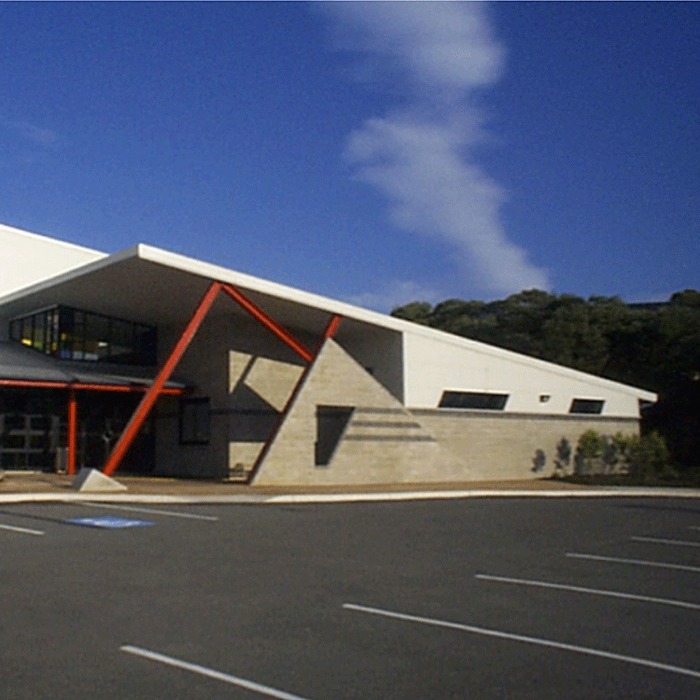
If you’re looking for something to do after work or to unwind during your weekend downtime, have you tried checking out the activities at the Annerley Community Bookshop on Ipswich Road?
This community store with large comfy couches and wooden floors is not just known for the varied book selection that it sells. Every month, the Annerley Community Bookshop also hosts different events, meetings, and discussions for hobbyists and enthusiasts.
This February alone, the Annerley Community Bookshop will have its International Language Exchange (16 Feb), Green’s Discussion (18 Feb), Bookshop Committee Meeting (19 Feb) and Junction Yarn Jammers meet (20 Feb).
The bookshop also holds its monthly book club meets every second Mondays of the month at 7:00 p.m. There are currently 675 members of the Annerley Community Bookshop Monthly Book Club.
Photo Credit: Facebook/AnnerleyBooks
The site is also a favourite venue for fundraising activities to support literacy programs in the community. This is the only not-for-profit bookshop in Australia managed by over 40 volunteers.
If you’d actually like to help manage the bookstore, you may also volunteer to be a member of the staff by contacting the manager or visiting the site.
But if you’re just looking for a good book to read, the community bookshop has a wide selection of second-hand books. From non-fiction to fiction, or sci-fi, romance, political thrillers, history and women’s studies — you’ll find a lot of great literature from the library.
Photo Credit: Facebook/AnnerleyBooks
The store’s children’s books selections are also abundant. There’s also a collection of rare books at bargain prices.
John Mills House in Kadumba Street is part of Queensland Heritage Register as one of the heritage places in Yeronga.
Did you know that as early as the start of the 20th century, Yeronga was already an established residential area in Brisbane?
Indeed, a number of middle-class families during that era found Yeronga a desirable place to live in. This includes a well-known Brisbane printer, named John Charles Mills.
Photo credit: johnmillshimself.com.au
Mills was trading as John Mills Himself in 1909 and his business continued to expand and flourish during and even after the First World War. After his death, his sons- John and Sam, continued the business up until the 1980s.
John Mills’ Residence
John Mills’ family house, located at 107 Kadumba Street in Yeronga, was built in 1914. Over the years, the Mills’ residence has been lauded by locals for to its striking beauty.
The timber-made villa with its intricate and ornate interior was originally placed on a two-acre land surrounded by tall tallowwood trees. Around the location, other grand Yeronga homes such as Cosmo and Astolat, can be seen.
John and his wife Sarah lived in this home up until their deaths in 1934 and 1953, respectively.The property was then passed on to the Queensland Trustees Ltd, but it was eventually sold in 1954 to Frederick William Filer and James Francis Swengley.
By 1958, the villa was reduced in size and was passed on to James Francis and Grace Agnes Swengley.
In 1962, the house was bought by Keith Eric Watt, making him the fourth homeowner of the property. And finally in 1989, Ian Evans, a heritage conservation writer, acquired and meticulously restored this historical house of John Mills.
Photo credit: mustdobrisbane.com
Historical Significance
This residential property at Kadumba Street became an official heritage site in August 2000. As part of the Queensland Heritage Register, the property has successfully met the following criteria:
The place is important in demonstrating the evolution or pattern of Queensland’s history: This property is considered as an evidence of the evolution of Yeronga as a middle-class residential suburb, having been established and sustained during the second half of the 20th century.
The place has potential to yield information that will contribute to an understanding of Queensland’s history: This property can be of use for further research about late 19th-20th century Brisbane architects and their works.
The place is important in demonstrating the principal characteristics of a particular class of cultural places: This property contains substantial and ornate interiors.
The place is important because of its aesthetic significance: This property highly contributes to the streetscape of Kadumba and to the overall townscape of Yeronga.
The place has a special association with the life or work of a particular person, group or organisation of importance in Queensland’s history: This property is associated with John Charles Mills, a well-known Brisbane printer during the early 20th century.
Did you know that one of Yeronga’s grandest heritage-listed houses, Rhyndarra, used to be a Salvation Army home for orphaned and wayward girls back in the 1900s?
Built from 1888-1938 by architect Andrea Stombuco, the looming two-storey brick mansion along Riverview Place at Yeronga was more than just a residence. Rhyndarra marked its role in Yeronga’s history when it served as a home for the Yeronga Girls’ Industrial School under the administration of the Salvation Army back in the early 1900s, and as a military hospital and training ground during the World War II and the Cold War.
Old picture of Rhyndarra, 1897. (Photo Credits:Queenslander/Wikimedia Commons)
In 1907, when owner William Williams was declared insolvent, the non-profit life insurance company AMP Society facilitated the sale of the residential Rhyndarra. It was then passed on to William Booth, the founder of the Salvation Army.
Booth opened Rhyndarra’s doors to girls who were orphaned, or who were deemed during those times to be “of questionable character.” He continued his campaign with the Salvos to help the poor and destitute, by establishing such homes.
The girls staying at Rhyndarra were taught household work and other similar domestic services until they were ready to leave the orphanage to seek employment.
The older girls, on the other hand, were tasked to look after the younger girls, and had the privilege of attending state schools within nearby suburbs.
Rhyndarra itself was restructured in a way to suit the lifestyle of its occupants, both as a school and as a residence. Rooms were combined and converted into a dormitory to accommodate the greater number of its occupants. The stable was used as a schoolroom for teaching the younger girls.
Perhaps the biggest change to Rhyndarra was a two-storey building extension at the back of the house that was constructed and funded by the government, and was used for recreation.
Old Stables, part of the residence, Rhynadarra, ca. 1931. The building was used as a schoolroom for the Salvation Army Home. (Photo Credit: The Queenslander, 12 November 1931
The number of occupants at Rhyndarra shifted along with the changing times as the institution continued to take in orphaned girls relinquished by parents who were in poverty, who were difficult to handle, or who ran away from home.
The economic depression increased Rhyndarra’s occupants in the 1930s, with girls ranging from babies to teenagers taken in by the institution.
Military Post and Hospital Accommodation
The Salvation Army continued its operation of the Yeronga Girls’ Industrial School until it was claimed by the Australian Army in 1942, and became a a training ground for the Australian Women’s Army Service (AAMWS). The girls and the rest of the occupants of the school had then been transferred to other institutions outside of Brisbane.
At the same year, a military hospital was put up for the Australian servicewomen on the grounds, and the rooms and halls of Rhyndarra accommodated the officers. In 1943-1944, the Australian Women’s Hospital at Yeronga, known as the 2 Women’s Hospital, was built northeast of Rhyndarra.
1st Military Hospital, 1970s. (Photo Credits: Rhyndarra/Paulatim-Mates Together Again)
When the war ended, the AAMWS was demobilised, and the 2 Women’s Hospital was taken over by the Department of Social Services and was used as a rehabilitation center. However, because of the housing shortage, Rhyndarra was given to the Queensland Housing Commission within the late 1940s to early 1950s to temporarily accommodate homeless people.
During the Cold War in the 1950s, Rhyndarra was once again used as a training and command post, as well as a hospital for the recruits and trainees. Called as the National Service Training Hospital in 1951, it was renamed in the 1960s as 1 Camp Hospital, then later on as 1 Military Hospital in the 1970s. The hospital’s operation continued until the mid 1990s, when it was decommissioned in June 1996.
Today, Rhyndarra still proudly stands and is listed as one of the heritage sites in Yeronga, because of the significant part it played in Australia’s history.
It’s time to mark your calendars! Brisbane City Council’s Kerbside Collection for Annerley is scheduled on Monday, 28 January 2019.
It is that time of the year when we clean up our homes and dispose some of our unwanted items, but for some people, Kerbside Collection means hunting down still-usable items for free!
To start off, here is a quick recap of acceptable items for the kerbside pick-up:
Bath and laundry tubs
Bicycles and sporting equipment
Carpet and rugs
Electronic waste (e.g. television and computers)
Furniture and white goods (e.g. firdges and stoves)
Small household appliances (e.g. fans and toasters)
Wood products less than 1.5 metres
Who does not love free stuff? No one. This is why a number of people often drive around their neighbourhoods in their utes just to find salvageable items on their neighbour’s kerb.
Looking for a new couch or sofa? Photo Credit: CCO Public Domain/ Dokumol / Pixabay
Who are we to judge these crawlers? After all, “one man’s loss is another man’s profit.” Finding treasure from our neighbour’s throwaways is not a bad thing. In fact, “reduce, reuse, recycle” can result in less waste going to our landfills and a better carbon footprint.
Reminders and Tips
If you love scavenging through kerbsides or are looking for a coffee table on zero budget, here are some reminders and tips that you must take into mind:
Make sure to check the exact date of the kerbside collection in your area. You may download the Brisbane Bin and Recycling App for more convenience. This app is free for both iOs and Android devices.
Photo Credit : iTunes/Impact Apps Pty Ltd
It is possible to find a lot of kerbside items that you may like, so make sure your ute is primed and ready. Bringing a friend along to help you in scavenging can also be beneficial.
Scavenging for items in your area can be fun and thrilling. But make sure you won’t get thrown off by this excitement. Believe it or not, a proper scavenging etiquette exists, and this must be observed at all times. If you find an item that you like, make sure you remove it as carefully as possible to avoid any damage not just on your desired item but also to all the other items in the pile. After successfully crawling your treasured item, do not leave the rest of the items cluttered. Always keep the stack tidy.
Stay full and hydrated! Looking for desired kerbside items can be tiring, especially when you consciously crawl into your entire neighbourhood’s kerb. Be ready to prepare some snacks and drinks that can give you enough energy for the rest of the day. But make sure not to litter!
Happy hunting, and may the odds be in your favour!
Annerley motorists, stay as alert as ever and always obey road rules especially on Ipswich Road — one of the top car crash hot spots, according to the latest insurance claims data.
The State’s peak motoring body, RACQ, revealed the list of 20 most accident-prone areas based on insurance claims data from 1 January 2015 – 31 October 2018 which included Ipswich Road and named Gympie Road as the top car crash hotspot.
“Unfortunately, the top 20 list is made up of a lot of the usual suspects. Gympie Road took out the top three spots, with Mains Road at Sunnybank and Logan Road at Eight Mile Plains rounding out the top five,” RACQ spokesperson Kirsty Clinton said
Roads that made the list, Ms Clinton said, are the typically heavily congested, high volume, and multi-lane roads with many intersections and locations for interactions between multiple vehicles.
Photo Credit: PublicDomainPictures / Pixabay.com
“A large portion of the crashes will be rear-end crashes which happen during congestion and at traffic lights and sideswipes and crashes where drivers have failed to give way properly.”
“As always when behind the wheel, but even more so on busy roads, drivers need to avoid distraction, obey traffic signals, give way correctly, travel at a safe following distance and carefully check blind spots and indicate when merging or change lanes,” advised Ms Clinton.
The top 20 most accident-prone locations in Brisbane (1 January 2015 – 31 October 2018) :
Gympie Road, Chermside
Gympie Road, Aspley
Gympie Road, Kedron
Mains Road, Sunnybank
Logan Road, Eight Mile Plains
Moggill Road, Indooroopilly
Sandgate Road, Clayfield
Ipswich Road, Annerley
Anzac Avenue, Kippa-Ring
Anzac Avenue, Rothwell
Sandgate Road, Virginia
Milton Road, Milton
Pacific Motorway, Greenslopes
Logan Road, Mt Gravatt
Hamilton Road, Chermside
Coronation Drive, Milton
Beaudesert Road, Calamvale
Ipswich Motorway, Oxley
Old Cleveland Road, Carindale
Ipswich Motorway, Darra and Gateway Motorway, Nudgee
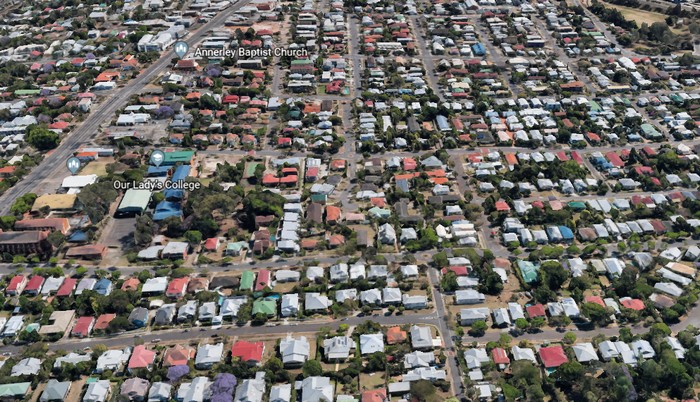
How do you top your most successful soccer season, so far? Well, if talks go well, Our Lady’s Collegecould be sending players to represent Annerley FC next year.
Our Lady’s College is enjoying a great sporting season this year, notably in soccer, which saw all its soccer teams winning their premiership in their respective divisions. Their hard work may well be further rewarded next year as they are now in talks with Annerley Football Club which could see the girls from Our Lady’s College representing the Club.
Looks like Our Lady’s College’s sports program has worked very well this year, with several championship titles to its name, including one football title in the open premiership and two in junior premiership, as well as winning the netball tournament and the CaSSSA athletics percentage trophy. The school also performed well in other sport disciplines like volleyball, touch, and cricket.
Our Lady’s College is a member of the Catholic Secondary Schoolgirls’ Sports Association or CaSSSA — a sports association consisting of 13 catholic girls’ schools. Our Lady’s College provide opportunities to student to participate at an inter-school level in the Swimming, Cross Country, and Athletics carnival, Saturday Tennis fixtures, and in a range of sporting disciplines on a Wednesday afternoon including AFL, Volleyball, Indoor Cricket, Netball, Soccer, Touch and Basketball.
About Annerley FC
Annerley Football Club is located in the Annerley / Greenslopes area on Norman Creek. The Club provides quality facilities and football to Inner-South Brisbane Community, catering to all age levels and abilities from Squirts to Capital One Men and BWPL Women.
The Club was established in 1945, known as the Annerley Boomerangs. The name was later changed to Annerley Stars Soccer Club with its matches being played at the Junction Park State School.
In 1946, with the help of the Brisbane City Council, work began on the Ekibin Reserve; which will be the site of the Annerley Recreation Club’s Seniors’ Clubhouse and field No.1. During the time of the Southeast Freeway’s construction in the 1970s, the grounds expanded to the section between Juliette and Ridge Streets, including the Elder Oval’s site.
Initially playing in the Brisbane junior competition, Annerley Football Club transferred to senior football Division Five in 1949. For winning consecutive promotions in 1954 to 1956, the Club moved to Division Four to Division One in three seasons.
With mid-table finishes in 1957 and 1958, Annerley FC rose to Division One. In the 1959 season, the club won Division One against Oxley United and the right to be named Brisbane soccer’s champion club via 5-4 grand finals win against Hellenic.
Due to the alarming rate of fatal crashes on South Brisbane District roads, the police is now running Operation Wake Up which will run for two months between November and December 2018.
Reports show that in 2017, there were 13 fatalities on South Brisbane roads. For this year, South Brisbane District has had 16 fatal crashes resulting in a total of 18 fatalities.
Because of this, the police has launched Operation Wake Up that focuses on reducing road fatalities on South Brisbane roads.
South Brisbane Fatal Crash Analysis
Photo credit: CC0 Public Domain/PxHere
The police designed Operation Wake Up in coordination with a Fatal Crash Analysis and the data from a Victim Profile Analysis.
The analyses indicate that out of the 18 fatalities, 14 were male with the average age being 43 years old.
Also, out of the 18 victims, 13 live within the South Brisbane District whilst 5 were from outside the district.
It was also noted that drivers who caused the fatal crashes had a traffic history, with a majority for speeding offences.
Operation Wake Up aims to create a visible police presence in and around South Brisbane District roads. This will help promote positive driving behaviour.
As part of the program, 200 extra police will be on South Brisbane roads until the busy Christmas period.
The police will also execute a series of traffic enforcement activities. This will serve as a preventable measure to help stop road fatalities in South Brisbane.
As a means of informing the public, Operation Wake Up will also include educational material and discussions. This involves attending local schools, a social media campaign, and meeting with community groups and members throughout the operation.
Credit: Queensland Police Service/Facebook
According to Acting Chief Superintendent Virginia Nelson, the officers in South Brisbane District will be relentless in working towards making the roads safer.
“Over the next two months we are implementing targeted, intelligence driven enforcement operations aimed at keeping our roads safer for all road users,” Acting Chief Superintendent Virginia Nelson said.
“This is a busy time of year, having already seen 18 people die on roads across South Brisbane District and in all cases those crashes were preventable,” she added.
Police operations will particularly be targeting the Fatal Five. This involves speeding, drink and drug driving, failure to wear a seatbelt, and driving while fatigued. Furthermore, officers will be working closely with the community to ensure safer roads within South Brisbane District.
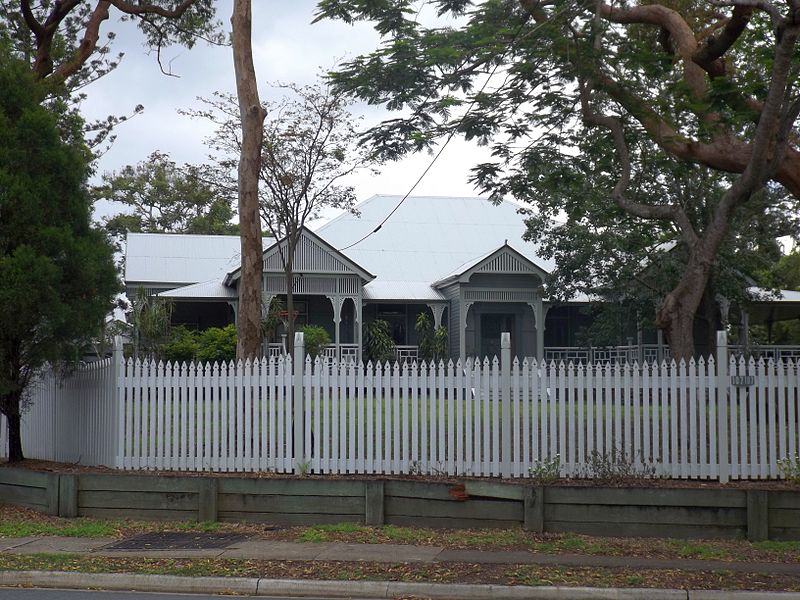
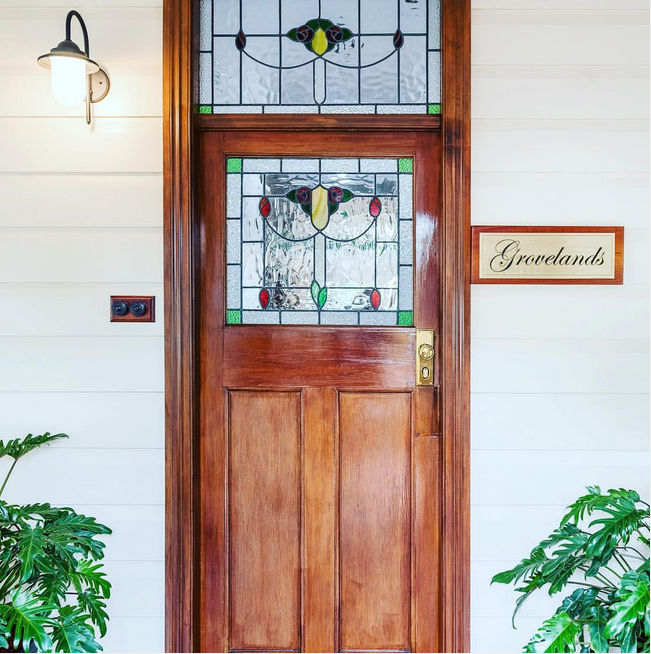
A 128-year-old home in Annerley has been given a new lease on life. Grovelands, which sits on historic Cracknell Road, has gone through a massive transformation.
Couple Dr Jill Freiberg and Paul Flanders purchased the property in 2015 with plans to renovate it, then sell it or rent it out. They chose to restore the home to its former glory. The renovation underwent several stages over a period of seven months.
March 2013 Exterior of the house Photo Credit : Google MapsJune 2018 Exterior of the house Photo Credit : Google Maps
Showcasing the true characteristics of a Queenslander with its timber weatherboards, French doors, and a spacious front verandah, the home’s character was preserved.
Upon walking through the front door, you will be welcomed to the open plan kitchen and dining room whilst basking in abundant natural light.
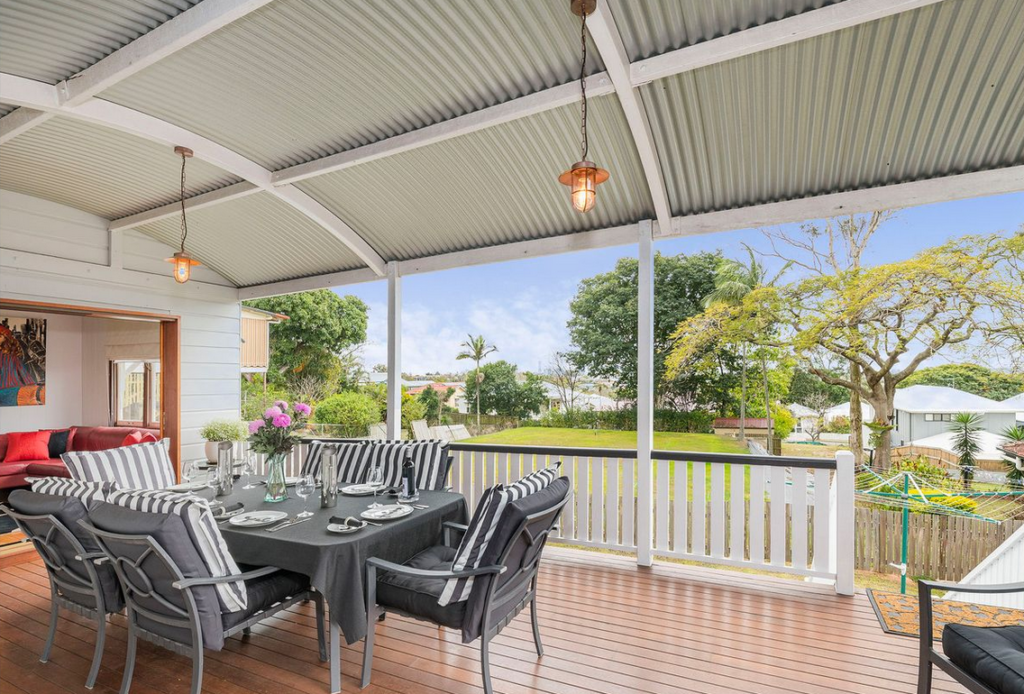
Photo credit : realestate.com.au/A lounge adjoins the main living place, with a restored fireplace as its focal point. Photo Credit : realestate.com.au/The spacious and elevated back deck offers great a great vista of the surrounding landscape. Photo credit : realestate.com.au/
They also installed built-in wardrobes in the main bedroom and loft. With three bedrooms, the master bedroom and the second bedroom are located on the ground floor whilst the second floor provides access to the third bedroom.
The home has undergone numerous structural works including the replacement of kitchen floorboards and some ceiling boards. It now boasts of a new kitchen, bathroom, and laundry.
Today, Grovelands lies as an example of a restored historical home that can accommodate a contemporary lifestyle without compromising its heritage. The three-bedroom property is now up for sale.
The REIQ recently reported the latest housing market statistics which showed median house price in Annerley hitting $711,000, sliding -1.3% over the last 12 months but jumping by 35.8% over the last 5 years. There were 22 houses sold during the 2nd quarter of 2018 in the suburb.
“We are currently experiencing very strong activity currently in the Annerley house market,” says Geoff Sellars of Ray White Annerley.
“There is an oversupply of buyers and a shortage of homes listed for sale. Open home numbers have been strong and resulted in many owners achieving above expectations with a number of exceptional sales recently. Units are still proving to a tighter market but those well-priced, well-presented properties still selling. We are starting to see signs of days on market lengthening compared to this time last year.”
The Yeronga TAFE site has been declared a Priority Development Area (PDA) last month. Set on 3 hectares of land, the site will be transformed into an area that will be valuable to the community. Plans for a community centre along with residential and retail options are underway.
Since 2017, the Economic Development Queensland (EDQ) has been working with the local community, exploring the numerous opportunities that they can do to transform the site.
Four public consultations were held in August-September 2017 to ensure the best for the community.
The old TAFE site will be mainly transformed into a residential community that will provide various housing options to ensure that housing needs will be accommodated as much as possible. There will also be public open spaces along with retail and small business opportunities on-site.
The upcoming community centre is also a huge improvement for the community giving them to easily access the centre for services and functions.
How The PDA Works
The PDA is an identified land for specific development that will contribute to economic development and will be valuable to the community. Whilst the development scheme is being prepared, the Interim Land Use Plan (ILUP) will be in effect for up to 12 months. The ILUP will provide the planning framework to make way for early works that includes the demolition of existing buildings.
Now, with the plans set in motion, EDQ will work on the development scheme whilst the community will be given the chance to have their say early next year. Once the development scheme is finished, the development within the PDA will be regulated under the ILUP. Demolition will begin during the 2018/2019 school holidays.