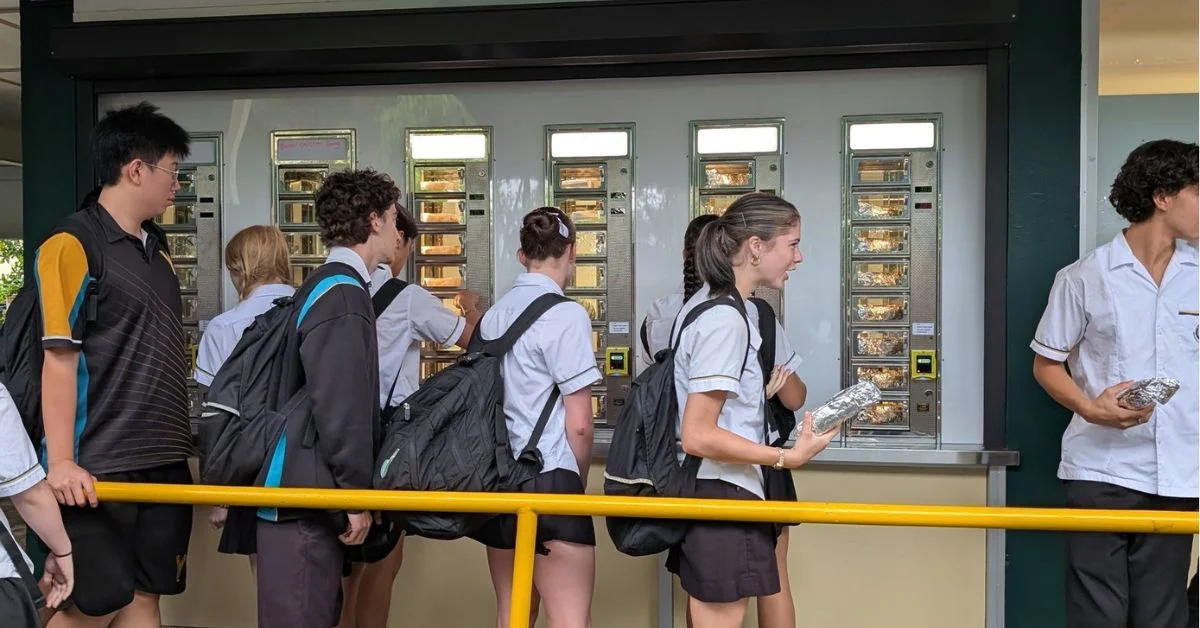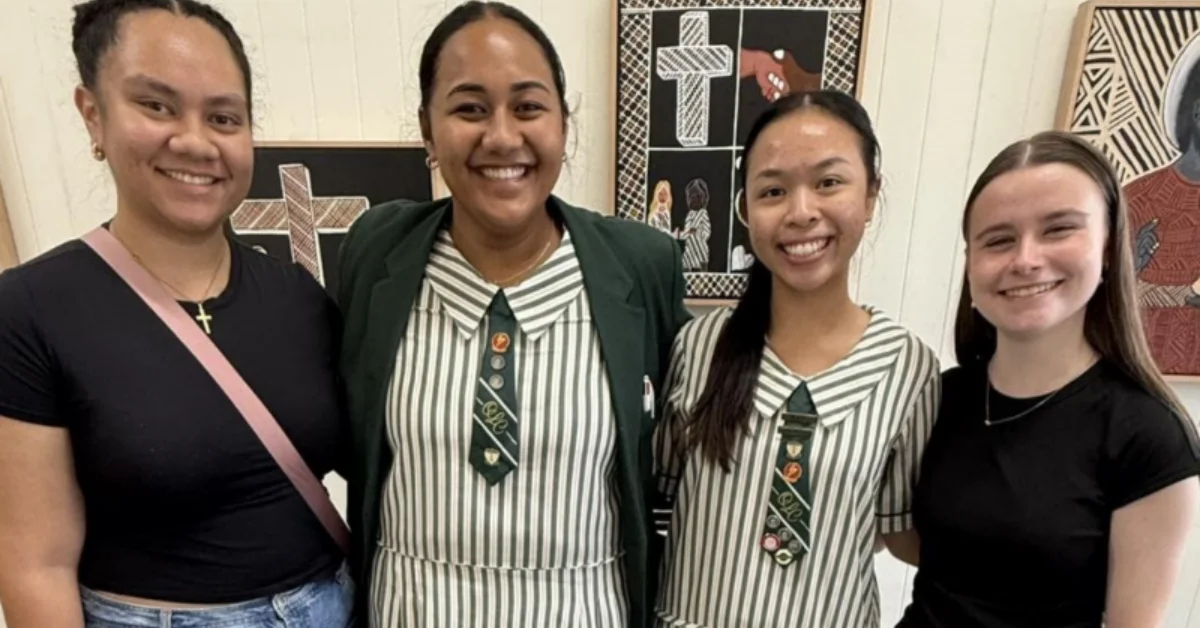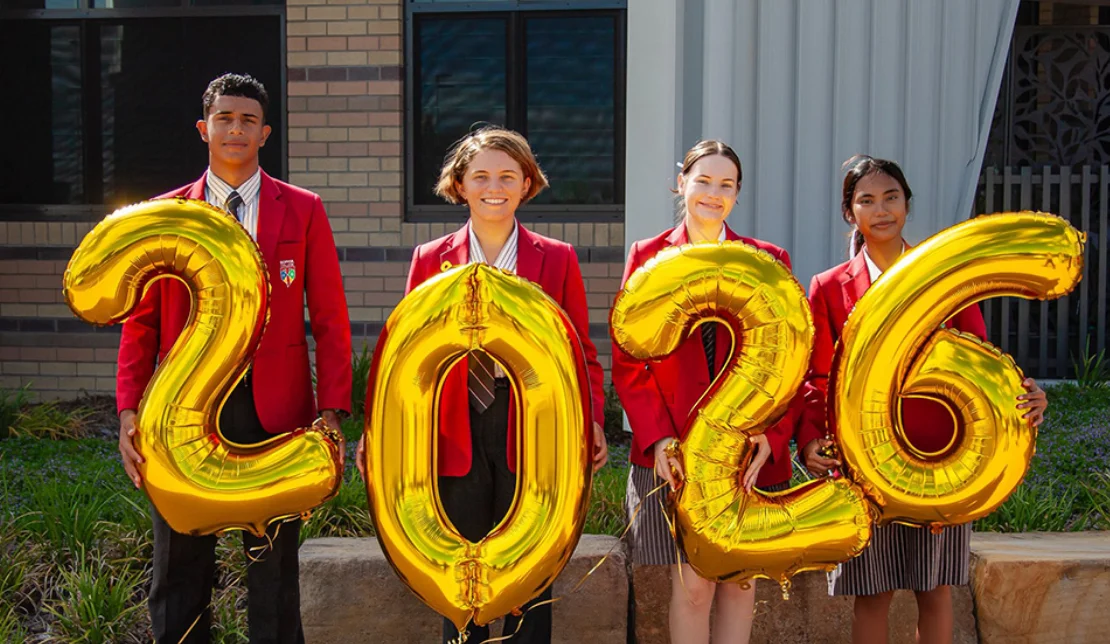




Two students at Our Lady’s College in Annerley have been appointed as College Captains for 2026, joining a broader cohort of student leaders named across Brisbane Catholic Education schools.
At Our Lady’s College, Annerley, Isabella and Melesisi have been named as College Captains for 2026.
Our Lady’s College is a girls’ secondary school catering for students in Years 7 to 12. The college operates under the motto Ad Altiora, meaning “Ever Higher”, which reflects its stated commitment to encouraging students to pursue their potential.
The college outlines a contemporary, evidence-informed approach to teaching and learning. Its framework includes the development of critical thinking, communication, collaboration and creativity, alongside spirituality, self-awareness and wellbeing.
2026 Leadership Appointments Across BCE
Brisbane Catholic Education confirmed its 2026 College Captain appointments on 11 February 2026, naming 86 captains across its 146 schools in South East Queensland. The announcement coincides with the start of the 2026 school year.
The captains represent secondary colleges and Prep to Year 12 schools within the network. The leadership roles involve guiding peers, mentoring younger students and supporting the values associated with Catholic education within each school community.
Across Brisbane Catholic Education schools, College Captains take on representative responsibilities within their campuses. These can include acting as student voices, fostering connections within the school community and modelling service-based leadership.
At the Annerley campus, the appointments position Isabella and Melesisi as the senior student representatives for the 2026 school year.
As the academic year progresses, the Annerley College Captains will carry out their leadership duties within the school’s established student leadership structure.
In Yeronga, not all homes are being swept up equally in Brisbane’s red‑hot property boom. While the city’s overall market continues to surge, houses in flood zones are taking longer to sell, and some are fetching lower prices than similar homes outside risk zones.
Even as three‑bedroom Yeronga homes have seen median growth, demand for certain property types appears softer, with potential buyers navigating the trade‑off between desirable riverside living and the very real risk of flooding.
A real estate agent working in Yeronga says flood risk often comes up early in conversations with buyers. Properties closer to the Brisbane River, particularly those identified as flood‑prone, tend to attract fewer interested parties and can remain on the market longer than homes in less exposed parts of the suburb.
Yeronga’s Flood Footprint
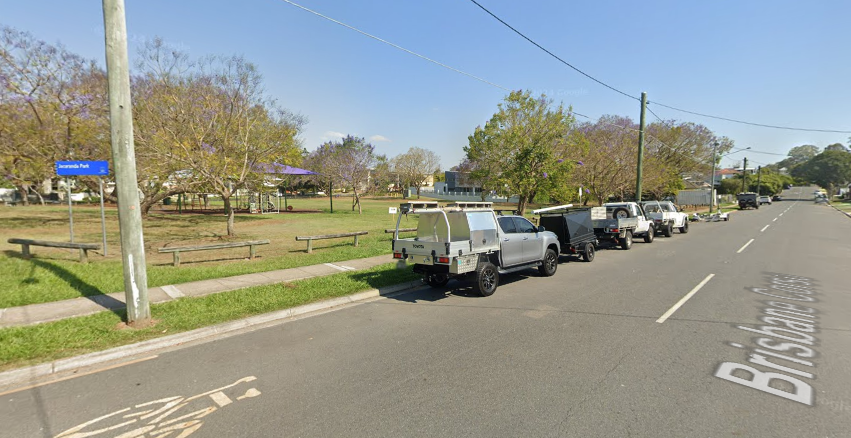
Yeronga’s location along the Brisbane River has long been both a selling point and a potential concern. Significant flooding events, including major inundations in 2011 and again in 2022, affected parts of the suburb, and lower‑lying streets near the river remain at higher risk. During the 2022 floods, rising waters forced evacuations at a retirement living facility in the area.
Buyers looking at Yeronga properties are increasingly advised to check Brisbane’s Flood Awareness Maps or generate a detailed FloodWise Property Report to understand a property’s flood exposure. These tools show where flooding has occurred historically and model future risk, helping buyers make informed decisions about homes that might be affected by riverine or overland flooding.
Median House Prices and Market Numbers
Photo credit: Google Street View
Recent property market data for Yeronga paints a nuanced picture. According to realestate.com.au, the median house price for a three‑bedroom home in Yeronga in the period from February 2025 to January 2026 was $1,377,500, with growth of 13.6 percent. Two‑bedroom houses had a median price of $1,140,000, down 17.1 percent over the same period, indicating weaker demand in smaller properties..
In the same period, there were 1,351 prospective buyers interested in properties in Yeronga, but only 74 houses were sold — illustrating a significant disparity between demand and homes available. This tight supply helps explain ongoing interest in the suburb despite flood risk concerns.
Even within areas considered prone to flooding, some larger homes near the river have sold for strong prices, sometimes above typical median values, indicating that factors such as location, lot size and proximity to amenities still strongly influence buyer behaviour.
Buyer Sentiment: Risk vs Reward
Photo credit: Pexels/RDNE Stock Project
Industry professionals say that flood risk is part of most buyers’ research process. Prospective buyers frequently consult official flood maps and property reports before attending inspections, and agents ensure this information is available early to help buyers assess risk.
Some buyers are prepared to accept the flood risk in exchange for access to the suburb’s desirable features, such as proximity to Brisbane’s inner city, quality schools and established neighbourhood character. Others, particularly those sensitive to long‑term resale prospects or higher insurance costs, are more cautious, and the flood overlay can be a deciding factor against purchase.
Insurance costs for properties in designated high‑risk flood areas are often higher, particularly for homes near waterways, and buyers are encouraged to consider these costs as part of their overall budget. This reflects broader patterns across Brisbane, where flood risk and climate impacts increasingly intersect with property decisions.
Yeronga’s housing market exemplifies the tension in Brisbane’s broader property boom. While median prices for some property types continue to rise, others lag or soften, particularly where flood risk is a factor.
Buyers and sellers in Yeronga must balance financial aspirations with practical risk assessments, weighing location, lifestyle and long‑term value against the unpredictability of nature. In this leafy riverside suburb, flood awareness has become an integral part of the property conversation.
Locals living along one of Brisbane’s busiest southside corridors are being asked to have their say on the future of the Fairfield Road roundabout, as a community survey opens on its potential upgrade.
Cr Nicole Johnston has released a draft concept plan for discussion purposes, along with a list of pros and cons to help residents think through what a change would actually mean for their daily lives.
A Busy Road With a Known Safety Problem
Photo credit: Google Street View
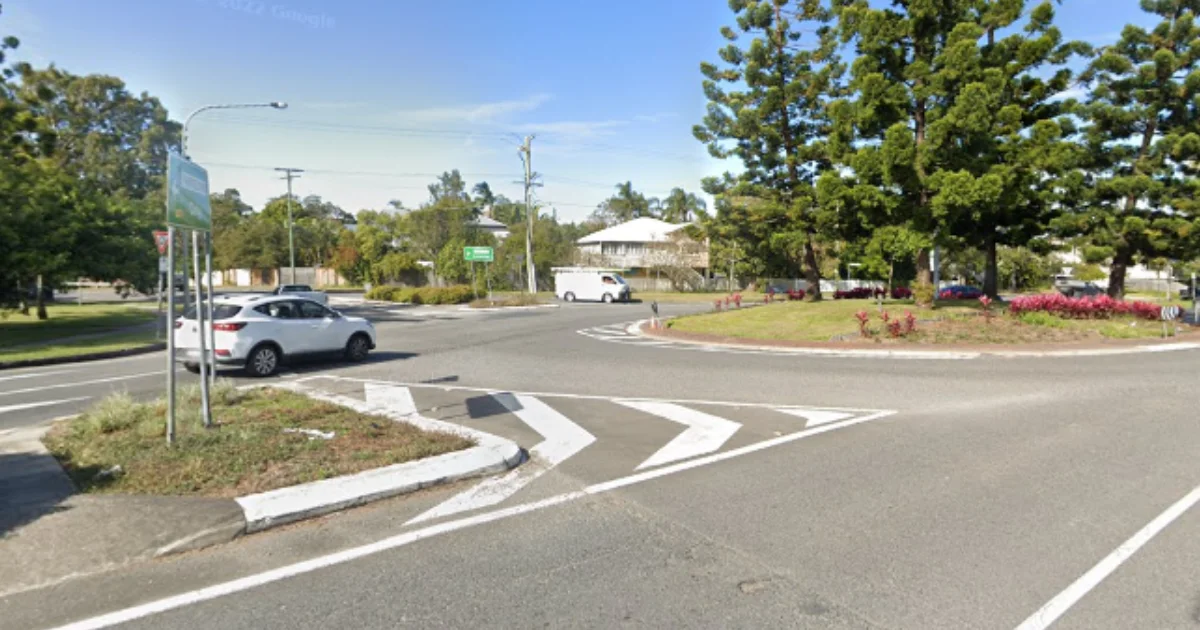
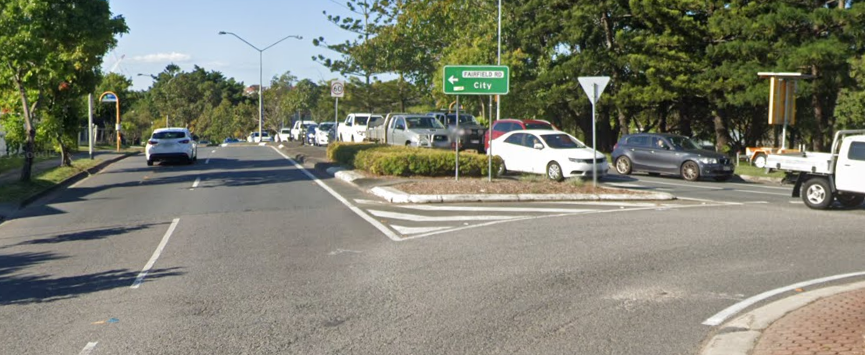
The roundabout sits on one of the southside’s major arterial roads. Fairfield Road carries around 26,000 vehicles a day, including trucks, and is formally designated under Brisbane’s road network as a principal cycling route despite having no dedicated bike lanes.
The crash data for the intersection makes for uncomfortable reading. Of roughly 2,700 intersections across Brisbane, the Fairfield Road and Venner Road roundabout ranks in the top 10 per cent for crash history. In fact, the nearby intersection of Fairfield Road and Hyde Road in Yeronga ranks even higher, in the top five per cent, and a cyclist has already lost their life there. Pedestrian and cyclist access at that location remains poor.
Further along, the intersection of Ipswich Road, Venner Road and Waterton Street in Annerley holds the grim distinction of being the highest ranked intersection in Tennyson Ward for crash history, sitting in the top one per cent across the whole of Brisbane.
What’s Being Proposed
Photo credit: Cr Nicole Johnston
The roundabout is already listed on Brisbane’s capital works program for a future conversion to traffic lights but it currently sits low on the priority list. The survey is part of an effort to push for outcomes that reflect local needs as part of future road network projects.
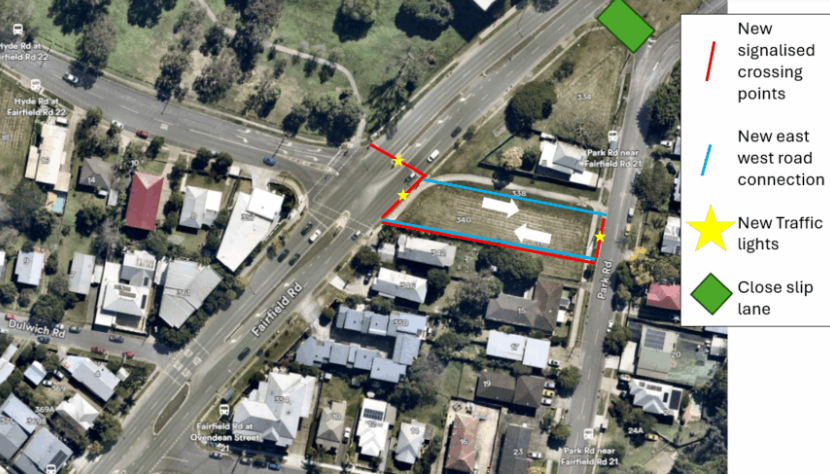
Converting the roundabout to a four way signalised intersection would almost certainly mean closing one of its current access points, with Park Road the most likely candidate. To offset that, a complementary idea has been floated: extending Hyde Road through the now vacant flood buy-back blocks to connect with Park Road in Yeronga, creating a new east-west link that could also help ease congestion on the congested Cardross Street rail bridge.
On the plus side, traffic signals would require all vehicles to stop, giving pedestrians and cyclists formal crossing signals and fairer access for all connecting streets. On the downside, vehicles would be required to stop even when there are no oncoming vehicles, trees would be lost, and the closure of Park Road access would directly affect some households.
The draft concept plan makes clear these are ideas on the table, not decisions already made.
Why Local Input Matters
Community feedback gathered through the survey is intended to inform future road, pedestrian and cycling projects in the area, not to trigger immediate works. The feedback will be used to push for outcomes that reflect local needs at future budget negotiations.
The Brisbane Southside BUG (Bicycle User Group) has also flagged the survey, noting the area sits on a busy arterial route with a well documented safety history, and encouraging anyone who cares about safer, better connected active transport on the southside to take a few minutes to respond.
Beyond the roundabout itself, the survey asks residents to rank their priorities for future transport investment in the area, including the Cardross Street rail bridge upgrade and improvements to the Ipswich Road and Venner Road intersection in Annerley.
The survey is open until 31 March 2026 and can be completed via Cr Johnston’s website.
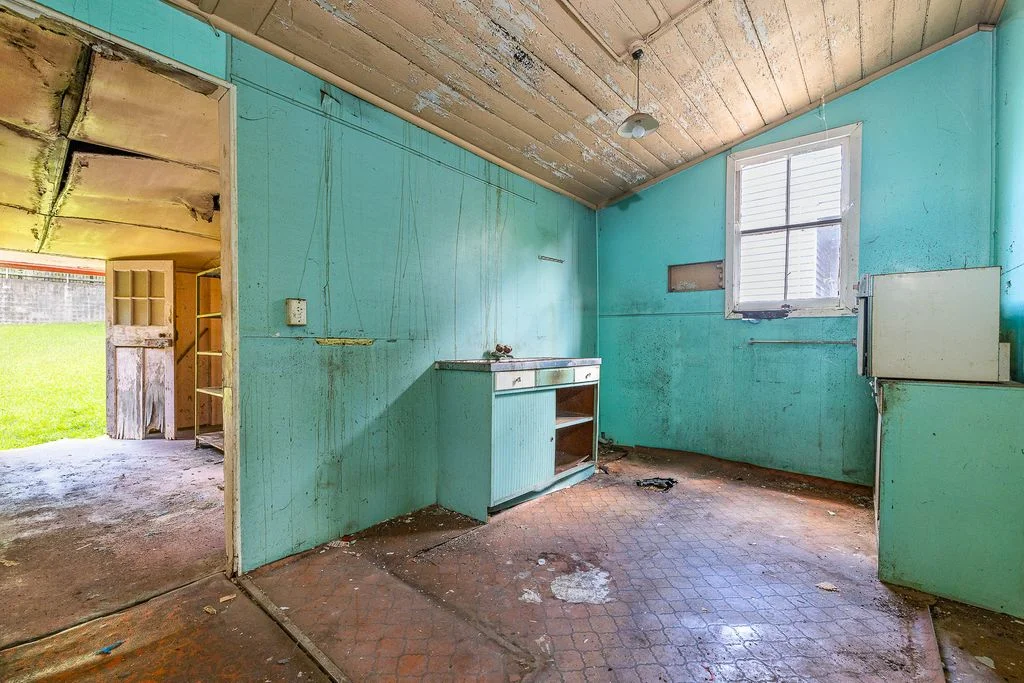
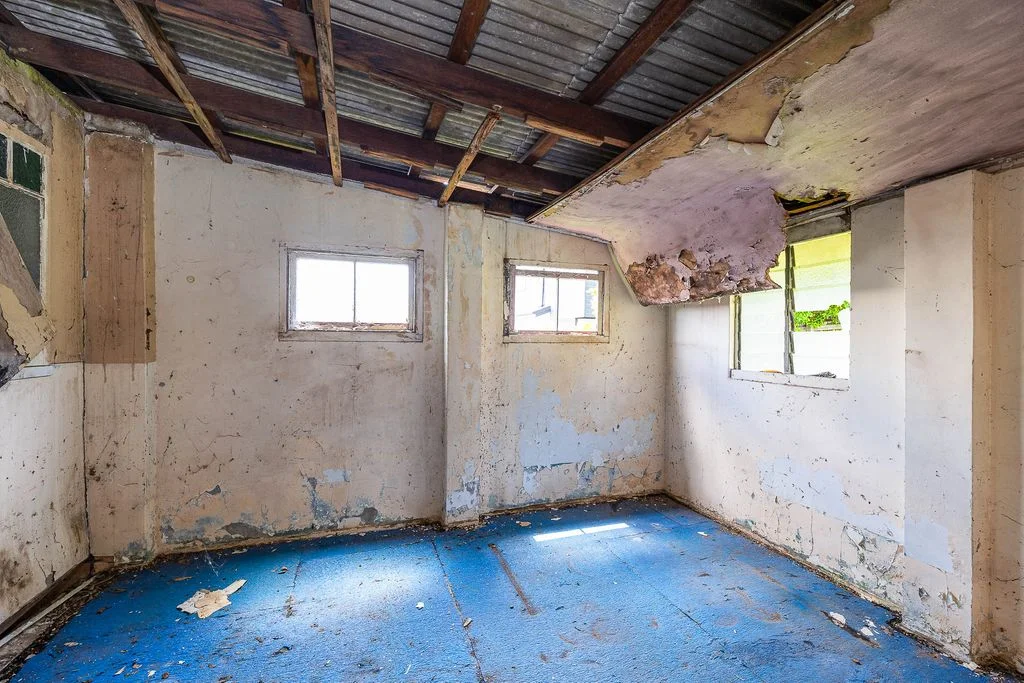
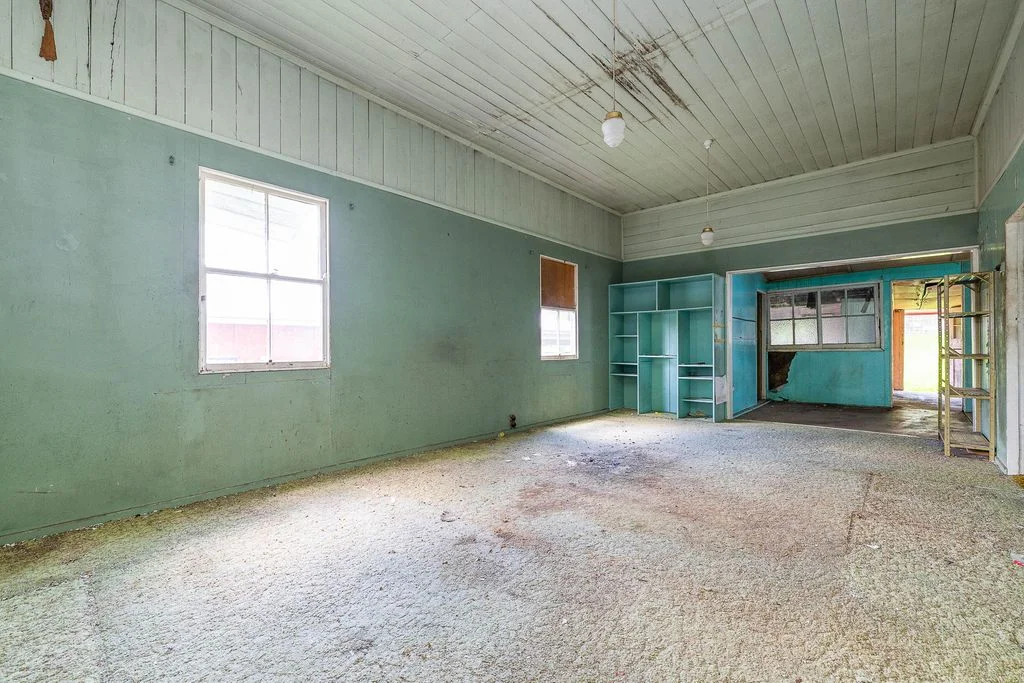
A crumbling post-war house on Swansea Street that no one has been inside in some time — at least not safely — is set to go under the hammer this Friday, drawing interest from builders, renovators, and families hoping to plant roots in one of Brisbane’s most sought-after inner-south suburbs.
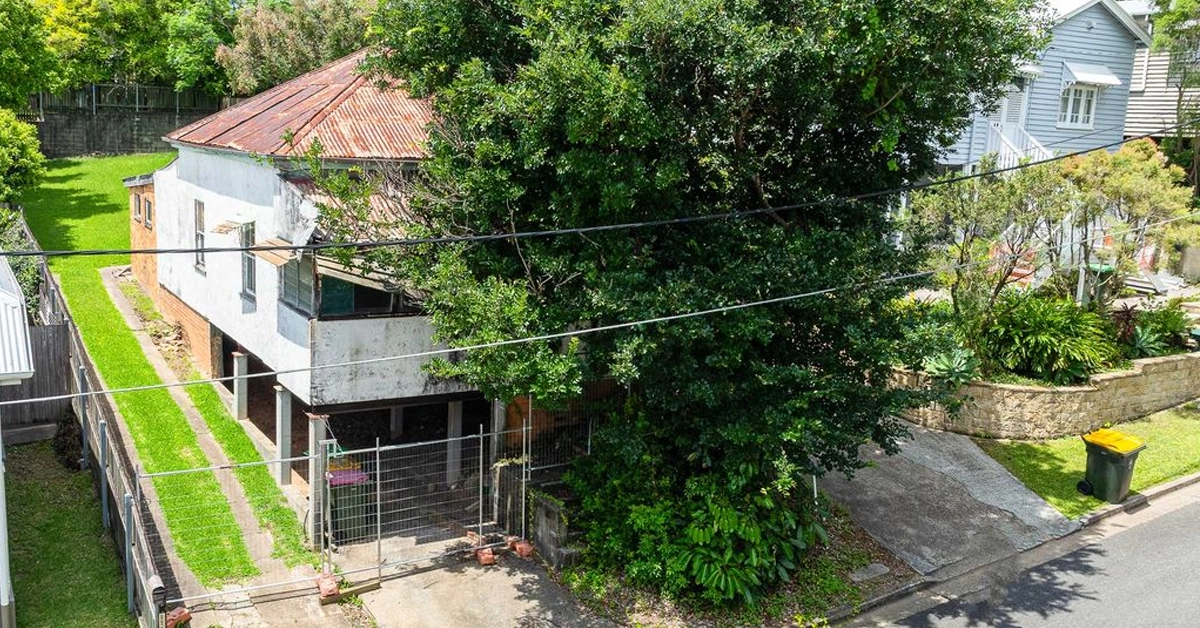
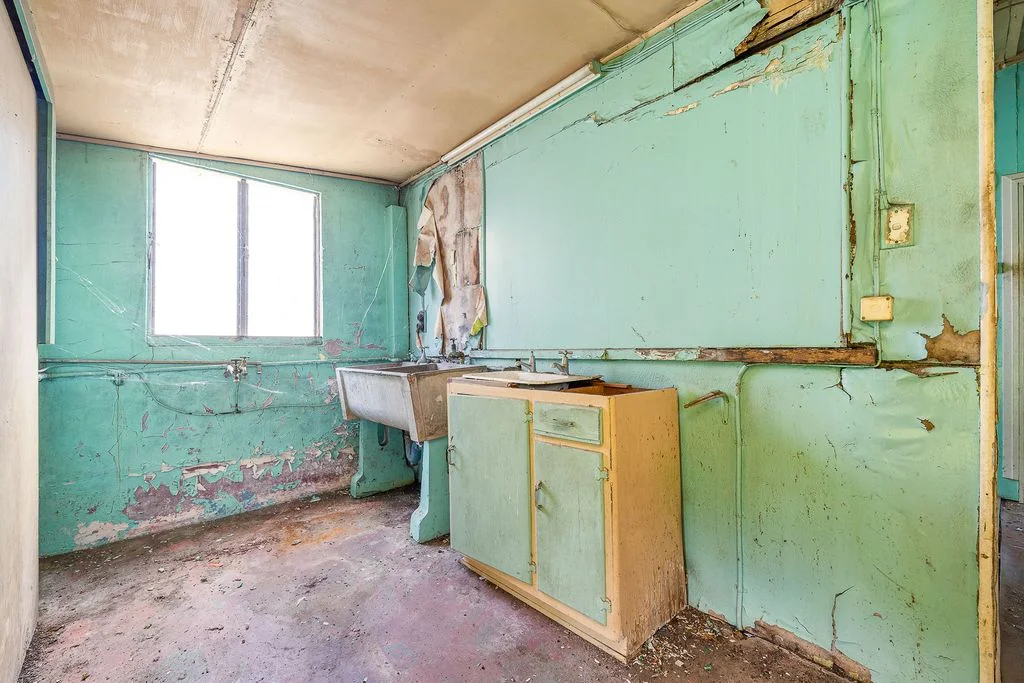
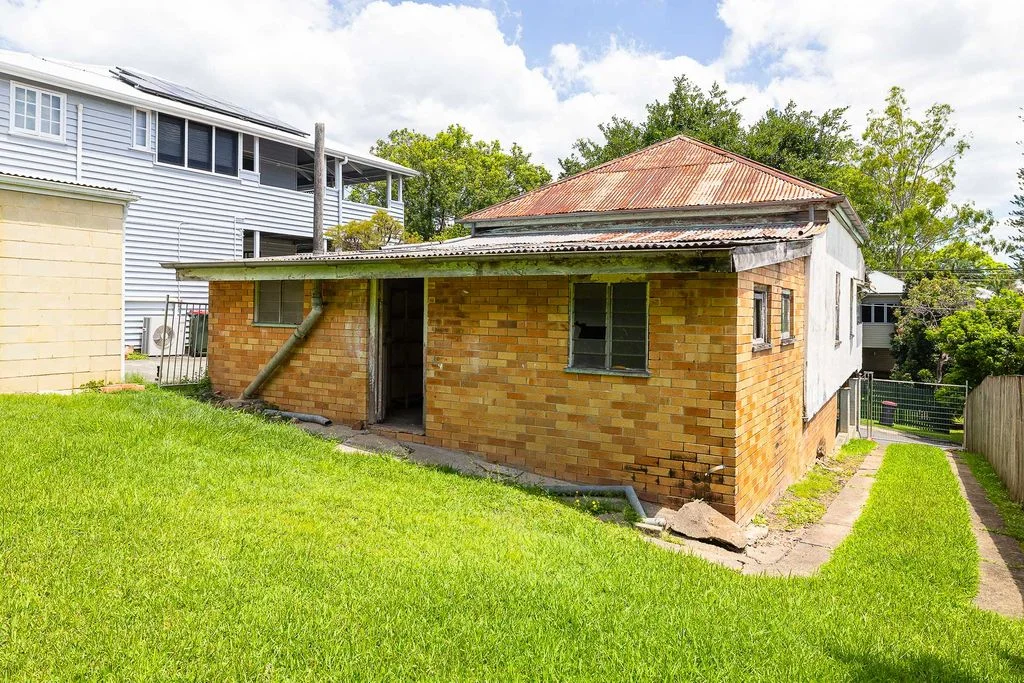
The three-bedroom home at 8 Swansea Street, Annerley, was built around 1946 and is being auctioned by the Queensland Public Trustee (QPT) on Friday, 13 February at 12.30pm on site. The auction is unusual even by QPT standards: prospective buyers are barred from stepping inside, with the property’s condition deemed too hazardous for internal inspections. A disclosure document outlines a range of structural concerns that buyers are advised to investigate independently before signing any contract.
Despite that, the 405-square-metre block — zoned low-medium density residential, with a frontage of roughly 10.29 metres and a depth of around 40.25 metres — is attracting genuine buyer attention. In its current configuration the home includes a forward sunroom, three bedrooms, a combined meals and family area, kitchen, laundry, bathroom, toilet, and a single carport.
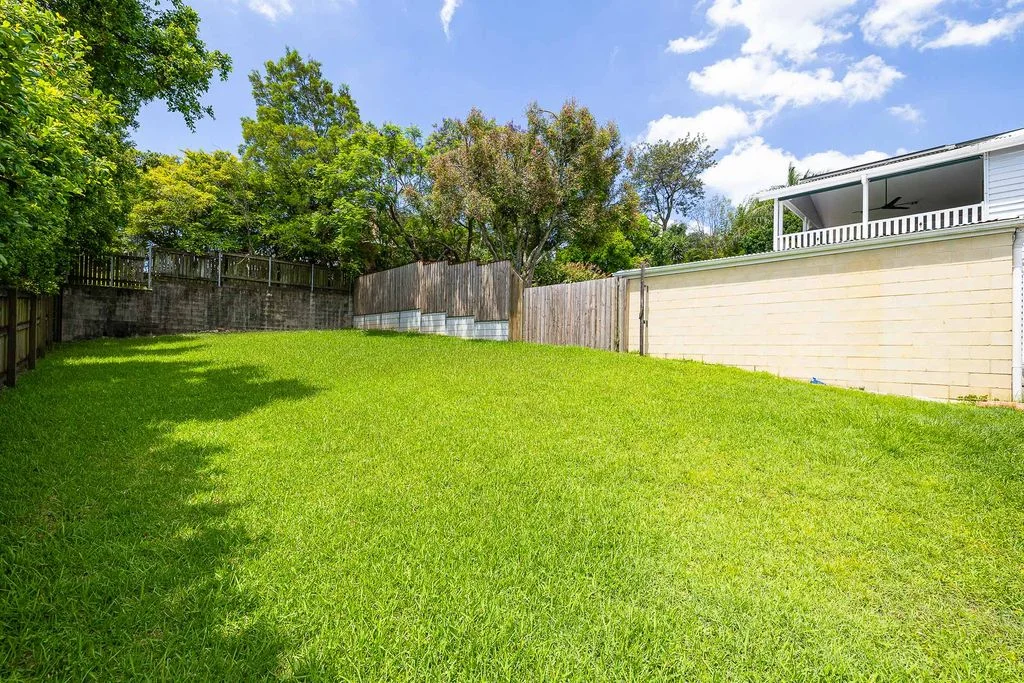
Photographs of the property reveal an exterior largely hidden behind overgrown vegetation. Strikingly, though, the backyard lawn is in pristine condition — an incongruous patch of green against the otherwise battered façade.
Principal auctioneer Paul Gaffney, who manages the listing for QPT, says that selling sight unseen is a measure of absolute last resort — but that it rarely deters serious buyers. He describes QPT’s buyer pool as genuinely diverse, ranging from tradies with utes full of tools to mum-and-dad renovators and families looking for a long-term home, with one thing in common: they are all after a property they can add significant value to.
Gaffney also points to the property’s location as a major drawcard. Swansea Street sits roughly a four-minute drive or 12-minute walk from Fairfield Station, offering regular train services directly into the Brisbane CBD, with plenty of local cafés, restaurants and businesses nearby along the Ipswich Road corridor.
There are no heritage overlays on the property, meaning buyers have flexibility in how they approach any future works or redevelopment. The suburb’s median house price currently sits at $1.3 million, based on 112 house sales over the past 12 months.Annual capital growth for houses in Annerley currently stands at around 5.6 per cent.
The source article cited five-year growth of 75.3 per cent, a figure consistent with broader Brisbane trends. Brisbane dwelling values have surged around 82.5 per cent over the past five years, according to CoreLogic research director Tim Lawless.
The Queensland Public Trustee administers more than 2,200 estates each year, selling properties as directed under a person’s will, on behalf of beneficiaries, or where someone has died intestate. Properties managed by QPT are sold as-is, with buyers taking on the property in whatever condition it is found.
For anyone keen to have a look before Friday’s auction, the exterior is viewable from the street. The auction contract and disclosure statement are available by submitting an enquiry through the QPT real estate website.
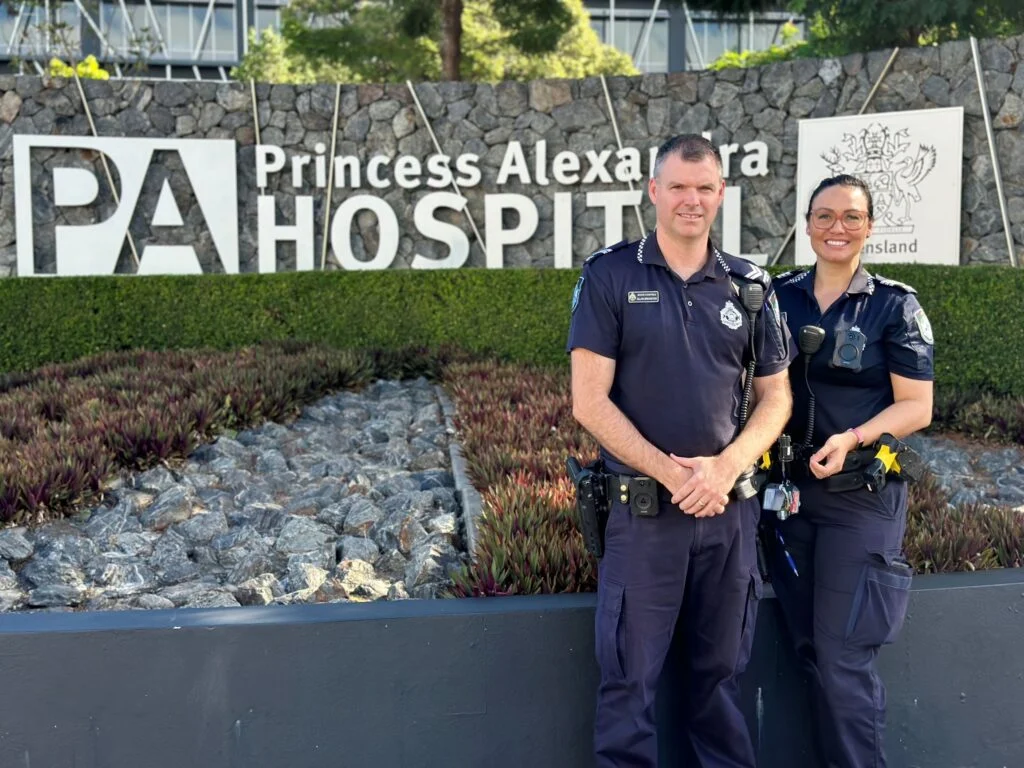
Princess Alexandra Hospital is marking 20 years since the launch of its on-site police beat, a first-of-its-kind initiative that reshaped how police and hospitals work together in Queensland.
The PA Hospital Police Beat started as a trial in November 2005 to handle the steady flow of road trauma and assault cases coming through the emergency department. The idea was simple: having police permanently stationed at the hospital would speed up response times for patient needs, investigations, coronial matters and criminal cases.
Twenty years later, the model has proven successful enough that Logan Hospital and Royal Brisbane and Women’s Hospital both established their own campus police beats in 2025.
How It Works
The team has grown from its initial trial size to six police officers plus an administration officer. This allows better coverage for calls within the hospital, particularly in the emergency department where occupational violence and aggressive patients can create unpredictable situations.
Acting Sergeant Simone Beckett, who has worked at the beat for five and a half years, says demand for police services at the hospital has steadily increased over the past 20 years. The focus remains on partnership and efficiency between two large government organisations with different priorities.
The officers handle coronial and information requests, work with social workers and intensive care staff, and deal with mental health presentations involving police. They’ve also built strong relationships with Metro South Health’s legal team and the Information Access Unit to ensure evidence gets collected quickly for court proceedings.
Beyond immediate police work, the police beat runs education sessions for nursing and medical staff, participates in community activities on campus, and collaborates on research projects about acute injuries from e-transport devices.
Why It Matters
Having police permanently based at a major hospital addresses a practical problem. Emergency departments regularly see patients who are victims or perpetrators of crime, and investigations often need to happen quickly while evidence is still fresh and witnesses are available.
The model bridges the gap between healthcare and law enforcement, allowing faster responses without pulling police away from other duties across the city. Staff at PA Hospital’s emergency department have developed what Beckett describes as an exceptional working relationship with the police team given the dynamic environment they share.
What This Means For Annerley and Woolloongabba
Princess Alexandra Hospital sits on the border of Annerley and Woolloongabba, serving as the major trauma centre for Brisbane’s southside and beyond. The police beat contributes to safety both within the hospital and in the surrounding community.
The team’s work extends beyond just responding to incidents. By maintaining a visible presence and building relationships with hospital staff, they help prevent problems before they escalate and ensure victims of crime get appropriate support.
The 20-year milestone recognises several long-serving team members. Founding Sergeant Chris Hale dedicated 17 years to the PA Police Beat. Administration Officer Upali Vithana retired in January 2026 after serving all 20 years with the team. Acting Sergeant Simone Beckett is now the longest-serving current member.
The success of the model shows how collaboration between health services and police can improve both patient care and community safety when organisations work through their different priorities to focus on shared goals.
As students across Brisbane return to classrooms for the 2026 school year, Brisbane’s Active School Travel program is encouraging families to rethink the school run—swapping car trips for walking, cycling, and public transport.
The initiative, which supports primary schools throughout the city including local institutions such as St Sebastian Primary School in Yeronga, aims to reduce traffic congestion around school gates while promoting healthier, more active lifestyles for young people.
Photo credit: Google Street View
Cr Nicole Johnston announced the program’s return for 2026, reminding motorists to slow down and watch for students making their way to school on foot, by bike, or scooter.
The Active School Travel program invites primary schools to participate in initiatives designed to make the journey to and from school safer and more active. Schools that join the programme work to build awareness about road safety, encourage physical activity among students, and ease the morning traffic chaos that many parents know all too well.
The program comes as Brisbane continues to roll out its broader Safer School Precincts initiative across the city. While the initial precincts focus on Kedron, Mansfield, Wynnum Manly, and Indooroopilly, the council has committed to improving road safety infrastructure, pedestrian connectivity, and opportunities for active travel near schools throughout Brisbane.
These improvements are designed to benefit everyone in the community, whether they walk, ride, catch public transport, or drive. The goal is straightforward: get students to school and home again more safely, with more transport choices and less time spent in traffic.
Photo credit: BCC
The Active School Travel initiative addresses safety concerns by building greater awareness about school road safety among students and families. The program encourages school students to be more active, building healthier habits while helping students develop road safety awareness.
As the new school year gets underway, council representatives are urging all road users to exercise extra caution in school zones. Increased foot and bicycle traffic means drivers need to be particularly vigilant, especially during the first weeks of term when routines are still being established.
Parents interested in learning more about active school travel options can contact their school directly or visit BCC’s website for resources and information about the program.
With Brisbane students heading back to school, the message from council is clear: slow down, look out for kids, and consider whether your family might join those choosing to walk, ride, or roll to school.
The 25-storey Gloriette residential tower approved for Bedivere Street will deliver 181 apartments alongside more than 2,000 square metres of publicly accessible parkland in Yeerongpilly, adding housing within walking distance of the upgraded Cross River Rail station.
The Gloriette development sits within the broader Yeerongpilly Green precinct, which has already delivered the Woolworths-anchored riverside village and is preparing for the Queensland Tennis Centre expansion ahead of the 2032 Olympics. For Yeerongpilly residents, the approved tower represents both increased density and the addition of green space that anyone can use.
What This Means for the Neighbourhood
The development on the 4,323 square metre site at 30 Bedivere Street creates a reduced building footprint that allows for landscaped gardens surrounding the tower. Unlike typical high-density developments that maximize site coverage, this design dedicates nearly half the land to gardens that will remain open to the public despite being privately owned.
Photo Credit: Brisbane PD Online (A006748034)
Yeerongpilly’s transformation centers on its upgraded train station, which reopened in February 2025 after extensive Cross River Rail works. The station now features three platforms, improved accessibility, new ticket facilities, and public toilets. Platform 1 remains temporarily closed but will open later this year.
For residents in the area, the 181 new apartments add to housing supply within genuine walking distance of public transport. The Yeerongpilly station sits directly across from the Queensland Tennis Centre and provides access to the new Cross River Rail tunnels opening in 2026, dramatically reducing travel times to the CBD and inner suburbs.
Olympics Infrastructure Changing the Precinct
The Queensland Tennis Centre expansion will add 2.3 hectares to the existing facility, creating a new 3,000-seat roofed show court alongside the Pat Rafter Arena and 12 additional courts meeting International Tennis Federation standards. During the 2032 Olympics, the venue will host tennis matches before returning to its role hosting events like the Brisbane International.
Photo Credit: Brisbane PD Online (A006748034)
This infrastructure investment changes what it means to live in Yeerongpilly. The suburb gains major sporting facilities, upgraded public transport, and new commercial amenities while maintaining its position as an inner-south residential area with river and golf course views.
The Yeerongpilly Green Riverside retail village already serves the community with Woolworths, Goodlife Health Clubs, medical services, and restaurants. That established amenity means new residents moving into the tower will have immediate access to daily needs without adding pressure on surrounding suburbs.
Housing Supply and Community Impact
Brisbane faces ongoing housing demand as the city grows by roughly 1,000 residents weekly. Developments near major transport infrastructure address this demand while reducing car dependency. Cross River Rail will enable turn-up-and-go service frequencies across Southeast Queensland, making transit-oriented living increasingly viable.
The two- and three-bedroom apartment configuration targets downsizers and families rather than just investors buying studios. Larger floor plans mean the development could free up existing houses for families needing more space, as households transition to apartment living without sacrificing room.
Views from the elevated position take in the Brisbane River, Indooroopilly Golf Course, and CBD skyline. These aspects attracted the developer to the site and will likely influence pricing when sales launch later this year.
Precinct Still Evolving
Yeerongpilly Green encompasses multiple development sites beyond this tower. Two additional parcels totaling over one hectare have been released to market for high-density residential and mixed-use projects, with proposal submissions closing in February 2026.
The precinct benefits from established infrastructure including connections for water, sewer, electricity, and telecommunications. More than $30 million in community infrastructure investment has delivered roads and parklands throughout the area.
Photo supplied
For current Yeerongpilly residents, the next few years will bring continued construction activity as the precinct develops and Olympics preparation accelerates. The Queensland Tennis Centre upgrades, additional residential towers, and Cross River Rail completion will reshape the suburb significantly before 2032.
The publicly accessible parkland component of developments like Gloriette represents one approach to balancing density with green space. Whether this model becomes standard for the precinct or remains exceptional will emerge as additional sites receive approval and commence construction.
A major hospital expansion is planned for Woolloongabba, with Princess Alexandra Hospital set to add a new acute services building and additional bed capacity under the 2025–26 Budget.
The 2025–26 Budget documents list a significant expansion for Princess Alexandra Hospital, located in Woolloongabba, as part of a broader hospital works program across Brisbane and the Redlands.
The expansion includes construction of a new acute services building above the existing emergency department, delivering 249 additional beds. The documents also state that more car parking spaces will be built to support patients, carers, visitors and staff.
Photo Credit: QLD Gov
Role Within A Wider Hospital Program
The Princess Alexandra Hospital project forms part of a wider package of hospital works listed in the same Budget documents.
Other projects include 112 new beds and a multi-storey car park at Queen Elizabeth II Jubilee Hospital, and at least 93 new beds at Prince Charles Hospital alongside a new emergency department, paediatrics and an operating theatre.
Additional works listed include refurbishment of the Psychiatric Emergency Centre at Royal Brisbane and Women’s Hospital to improve capacity and patient flow, along with $48.7 million for equipment replacement and works at its Sterile Supply Department. Queensland Children’s Hospital is listed for $10.7 million to update emergency and exit lighting in the hospital precinct.
Supporting Infrastructure And Access
While the Woolloongabba hospital expansion is the largest health project listed for the inner south, the Budget documents also reference transport and safety upgrades across Brisbane that may support access to major facilities.
These include a major upgrade to the Gympie Road and Beams Road intersection at Carseldine, described as carrying more than 80,000 vehicles a day, as well as $500,000 for expanded CCTV coverage across inner-city suburbs.
Photo Credit: QLD Gov
Looking Forward
The Budget documents outline funding allocations and project scopes for Princess Alexandra Hospital and other health facilities but do not provide detailed delivery schedules or construction staging.
Dutton Park locals no longer need to venture far for a decent brunch. Zmirk Co, a fresh café has landed on Annerley Road, and it’s already generating buzz for its Asian-inspired menu and inventive drinks lineup that goes well beyond your standard flat white.
The cafe opened in December 2025, breathing new life into a former fish-and-chip shop on Annerley Road. The 40-seat venue offers both indoor dining and outdoor seating, creating a relaxed space for the neighbourhood’s brunch enthusiasts.
Photo credit: Zmirk Co/Google Maps
Behind the venture are four Thai-born chefs—two couples who’ve spent years working in Brisbane’s hospitality scene. After deciding to leave the demanding restaurant kitchen lifestyle behind, they’ve poured their experience into this daytime café concept built around creative fusion cooking.
What really distinguishes Zmirk Co from Dutton Park’s existing café offerings is its bold approach to the menu. Rather than playing it safe with standard brunch fare, the four-chef team decided early on that fusion would be their calling card. Getting there required some spirited debates, with the chefs eventually whittling down an ambitious list of ideas to fit on just a page of offerings.
Photo credit: Finn Khoo/Google Maps
The philosophy driving the menu is refreshingly straightforward: food shouldn’t be constrained by borders. Japanese, Chinese, Korean, Thai and even Mexican influences all find their way onto plates here, blended together in ways that reflect Brisbane’s multicultural dining landscape.
Photo credit: Tu P/Google Maps
The all-day ‘Anytime Line-up’ delivers familiar comfort food elevated with Asian twists. The Seoul Good Chicken Sando pairs crispy fried chicken with fresh Asian slaw and sweet-and-spicy gochujang, while the Holy Wagyu Burger gets its punch from Thai basil, garlic and chilli krapow sauce. Papa’s Sriracha Melt offers a nostalgic touch—Bell’s childhood favourite reimagined with house-made tuna salad, sriracha mayo and melted cheese.
Photo credit: Dens O’Sullivan/Google Maps
The menu pushes even further into creative territory. The AMC Fried Rice combines tomato fried rice with golden fried chicken, a fried egg and chicken frankfurter, all finished with a gochujang glaze. The menu also features udon noodles with grilled salmon in a creamy spicy rose sauce, topped with nori, tobiko and parmesan—a dish that demonstrates the team’s approach to blending diverse influences. The Fiesta Corn Fritters round out the offering with avocado smash, fresh salsa, mixed salad and a poached egg.
Photo credit: Jessica Ngyuyen Piano/Google Maps
Coffee comes courtesy of Single O, ensuring a solid foundation for your morning brew, but Zmirk’s drinks menu ventures well beyond standard café territory. Specialty beverages reflect the same creative fusion approach as the food. Matcha features prominently across several drinks, including the matcha tiramisu latte that’s already earning particular praise from early visitors. Oat-milk hojicha lattes offer a toasty, gentler alternative to standard coffee, while chrysanthemum tea topped with matcha foam provides a lighter option.
Thai milk-tea clouds bring a nostalgic Southeast Asian favourite to the menu, and the fresh strawberry milk, made from house-made strawberry coulis rather than artificial syrups,demonstrates the kitchen’s commitment to doing things properly. Mont Blancs round out the specialty lineup.
For Dutton Park and Annerley residents tired of the same breakfast rotation, Zmirk Co offers something genuinely different—a café that’s unafraid to experiment while delivering the quality brews and bites that make a neighbourhood spot worth returning to week after week.
Yeronga is set to take centre stage in Brisbane’s football landscape, with community umpires preparing to shift their training base to the suburb, marking a major change in where the next generation of officials will learn, connect and grow within the game.
After several years based at Moorooka, Brisbane’s community umpire program will relocate its main training operations to Yeronga, reflecting a broader alignment with AFL Queensland’s home.
The move brings youth and South East Queensland senior umpires into a more central setting, placing training alongside the state body that oversees the sport’s development. The change is designed to strengthen links between umpires and the wider football network while keeping training accessible for participants across Brisbane.
The relocation also marks the end of a long partnership with Moorooka AFC, which has hosted community umpire training for many seasons.
The AFL Queensland has formally recognised Moorooka’s contribution, noting the role the club played in supporting and mentoring umpires at grassroots level. Moorooka was an important base that helped foster a supportive and welcoming environment for officials learning their craft.
Opportunities for new and returning umpires
From 21 January 2026, weekly training for youth and South East Queensland senior umpires will take place at Yeronga AFC in Leyshon Park on Wednesday nights from 6:00 p.m. to 8:00 p.m.
Not all umpire programs will move to Yeronga. State League umpires will continue training at Zillmere AFC on Tuesday and Thursday nights, while a Brisbane North venue for youth umpires is expected to be confirmed later.
Together, the arrangements aim to balance continuity with change as Brisbane’s umpiring structure adapts for the 2026 season.