Birds on Bikes has transitioned to fully in-house production, prioritising quality and sustainable practices. With this move, the company ensures that every garment meets their exacting standards for craftsmanship and fit.
Their new premises in Annerley Arcade boast advanced equipment and a team of skilled local artisans.
Further demonstrating their commitment to the industry, the shop is opening its doors to other apparel brands seeking manufacturing solutions. They offer access to their honed production processes and expertise, fostering a community of innovation.
Barbara Spooner, Founder/CEO, expressed her enthusiasm for the Annerley move and the opportunities it brings.
“In-house manufacturing allows us to uphold the quality and integrity our customers value. By supporting other brands, we aim to cultivate an environment where innovation thrives in the apparel sector,” Ms Spooner said.
Birds on Bikes extends an invitation to visit their new Annerley Arcade facility. Witness where creativity takes flight and discover their exciting plans for the future.
About Birds on Bikes
The Annerley shop specialises in crafting high-quality, comfortable cycling apparel that caters to all body types, with a particular focus on curvy figures. Offering sizes ranging from 6 to 24, Birds on Bikes is committed to inclusivity and empowering more women to embrace the joy of cycling.
Developers have lodged plans for a 67-unit student accommodation complex at on Duke Street in Annerley, promising a modern living hub for the area’s tertiary scholars.
The proposal (DA A006427969), led by Elevation Architecture, aims to construct a 67-unit, three-story residential building for student housing, replacing the current multi-family homes on the 1,663-square-meter site zoned for low-medium density residential use.
The proposed project entails the construction of a basement car park equipped with 40 spaces for cars and bicycles. The car park would be accessible through Duke Street, fulfilling the needs of the students who would be residing in the development.
Photo Credit: DA A006427969
Moreover, the development features 158.2 square metres of communal areas distributed across all levels. These areas include indoor recreation and dining facilities as well as outdoor spaces.
The proposal’s breakdown reveals a 2,159.1-square-metre gross floor area (GFA), with a site cover of 986.4 square metres (59.3%) over the subject site. Other key features include 10% deep planting, refuse storage, and collection facilities.
Viva Property Group, the planners behind the project, have sought to allay concerns about the development’s scale and bulk.
“The development is vigilantly planned so as to provide some articulation to facades, pitched roof forms, and variation of materials as well as finishes across the site so as to decrease perceived building scale and bulk.”
Photo Credit: DA A006427969
However, residents in the area have filed submissions opposing the project.
“67 units PLUS a manager’s unit will be built. It is entirely probable that 100+ people could live on this parcel of land. The sheer density of this proposed development does definitely not suit an LMR2 zoned area. By any description, the number of proposed residents on this allotment this would be a HIGH DENSITY development,” One local wrote.
“Ideally this development would not go ahead in its current form, but if it is approved there must be screening installed OR the units reorientated so that the apartment bathrooms are facing the western side so people’s living area is not overlooking and looking into my private space,” the local added.
“The addition of 67 accommodation units will transform the area into a hotel-like setting, and the current parking infrastructure is insufficient to support this influx. Additionally, a three-story building will obstruct sunlight and natural light access to surrounding houses,” another concerned resident said.
“The proposed development could have adverse effects on the quality of life for residents in the area. The increased traffic congestion, noise pollution are major concerns.”
“Bird life, particularly Bush Turkeys, has been a longstanding presence in the Duke Street premises, spanning at least the 17 years I’ve resided in the neighbouring property. Generations of Bush Turkeys have made our local backyards their habitat and nesting grounds, with a mound at the rear of the Duke Street premises likely existing for over 20 years,” a neighbour in the area stated.
“There are also huge tropical fruit trees (lychee and mango) and other trees on these lots that are decades old. These trees are where native birds have nested for years and possums have lived for generations. There has been no consideration of the current ecosystem in the DA. These trees will be destroyed if this development is approved by Council therefore destroying the habitat of the local wildlife.”
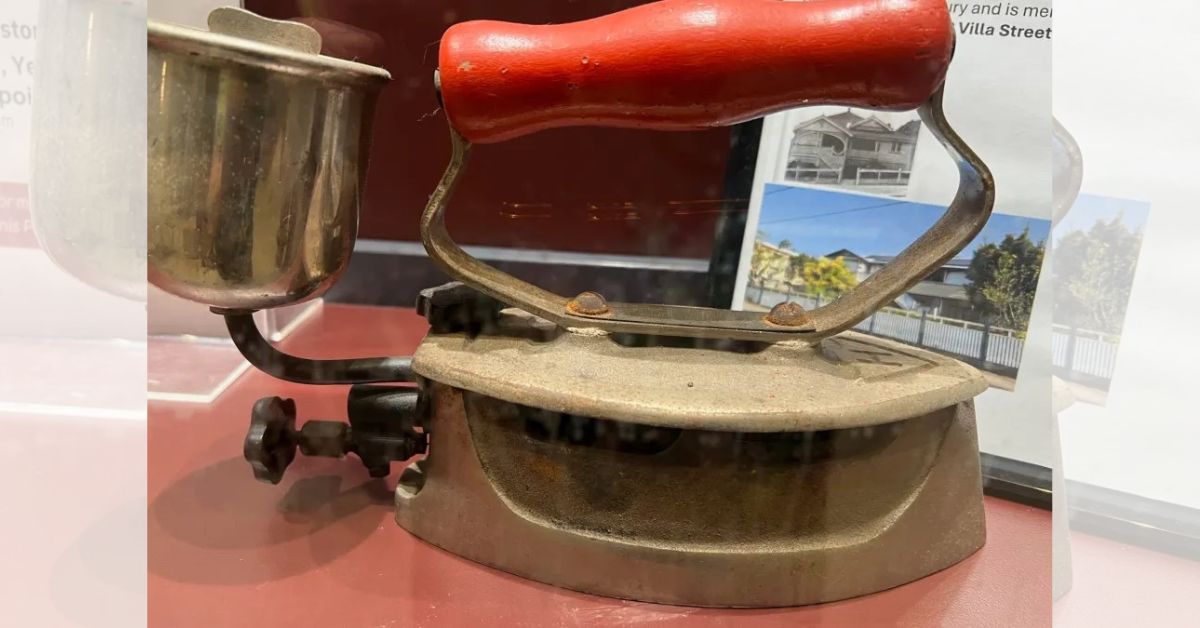
Did you know that a captivating 20th-century petrol iron relic sits on display at the Yeronga Community Centre, offering an insightful glimpse into the suburb’s rich history?
The petrol iron, showcased in the ASHG history room of the Yeronga Community Centre, is a portal to the past, illuminating the daily lives of Yeronga residents in the early 1900s.
Originating from when electricity was not a household staple, these irons used fuel such as petrol, alcohol, methylated spirits, and kerosene to generate heat. The innovation represented by these irons includes a built-in pump to pressurize the fuel, a significant advancement over the traditional flat irons heated on stoves.
Personal Stories from Villa Street
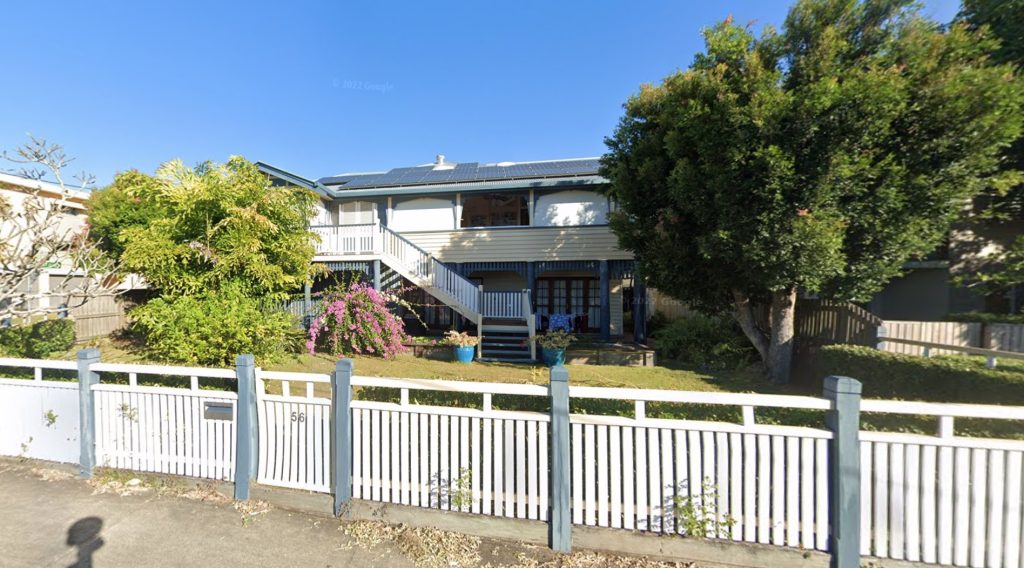
The historical significance of the petrol iron is further deepened by its mentions in the autobiographical works of two former Villa Street residents in Yeronga — Jessica Anderson and Ivy May Lydia Marsh.
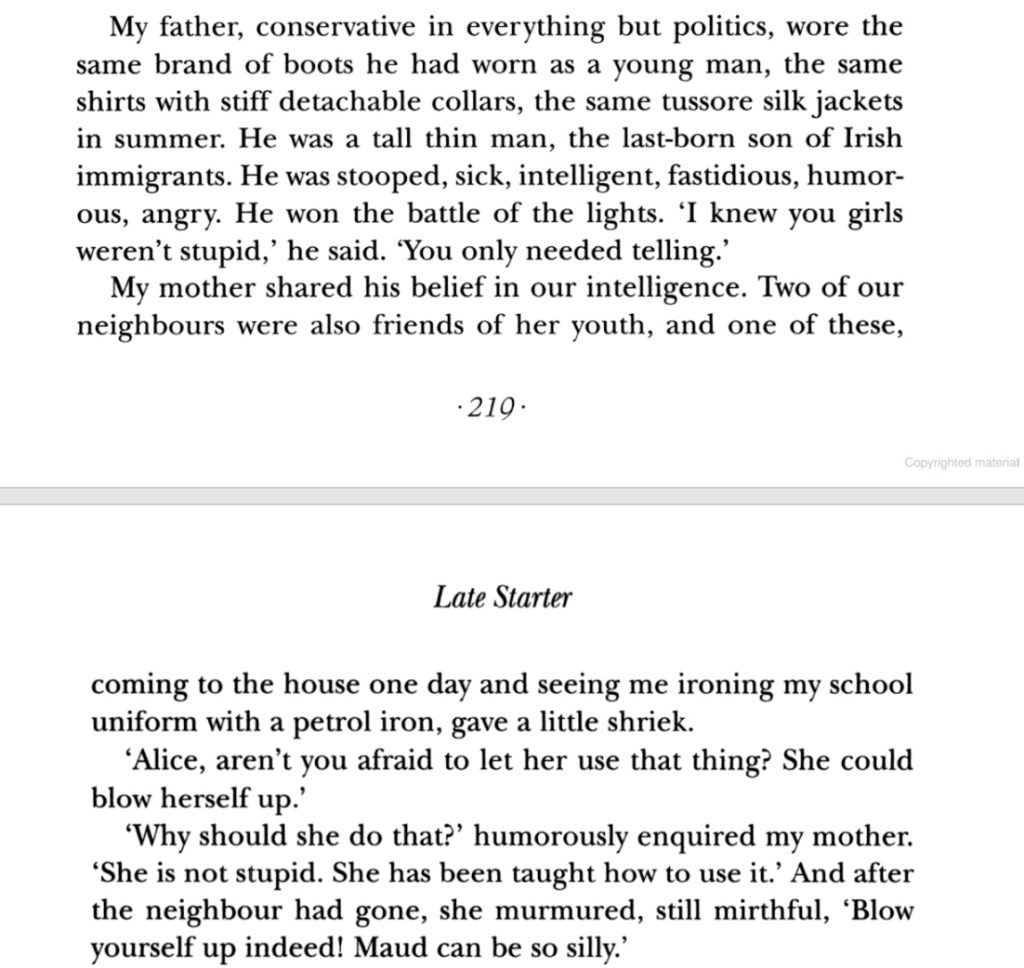
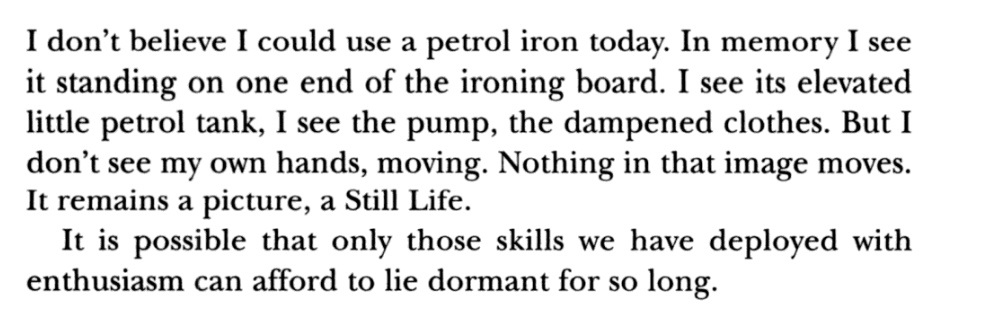
Ms Anderson, a notable Australian writer who grew up in Yeronga during the 1920s and 1930s, reflects on the iron’s perceived dangers in her award-winning stories.
Photo Credit: Ms Anderson’s former home in Yeronga/Google Maps
In contrast, Ms Marsh’s autobiographical notes celebrate the petrol iron as a significant improvement over the arduous “Mother Pots” irons, praising its convenience and the relief it brought from the heat generated by wood-fired stoves.
Photo Credit: from Ms Anderson’s short stories/Google Books
Photo Credit: from Ms Anderson’s short stories/Google Books
A Petrol Iron Backstory
The backstory of the petrol iron intersects with the industrial growth of Brisbane.
Initially associated with James Colquhoun and Sons and later with the Gloria Light Co., the iron’s history traces through various ownerships, including significant corporate transitions and the economic ebb and flow of the early to mid-20th century.
The Gloria Light Co., initially involved in lighting, began to diversify its product range to include household items such as the petrol iron.
Although the company was not based in Brisbane initially, it expanded into various Australian cities, including Brisbane, especially under the influence of figures like Sir John Beals Chandler, the former Lord Mayor of Brisbane.
“This petrol iron was made by the Gloria Light Company Pty Ltd (Australia) in the 1930s. It has a Patent Applied for date of 1936. The Patent was applied for on 1 May 1936 and granted in early 1937. The basis for the Patent is the design of the pricker/fuel control mechanism. The patent was applied for by John Beals Chandler, who at the time was Managing Director of the Gloria Light Company Pty Ltd.”
By 1916, Mr Chandler, from England, had set up an office in Charlotte Street, Brisbane, as a local agent for the Gloria Light Co. His involvement brought the products, including petrol irons, closer to the Brisbane market.
Eventually, Mr Chandler took over the Gloria Light Co., influencing its operations and product distribution from Brisbane. This local management helped integrate the petrol iron and other products into the Brisbane and broader Queensland markets, establishing a more direct connection between the product and the city.
The presence of such appliances in Brisbane homes, as indicated by personal accounts and historical records, shows that these items were part of everyday life and contributed to Brisbane’s historical and cultural fabric.
Community and Connection
Ros Watson loaned the petrol iron relic to the ASHG history room to preserve and share its history. The display not only educates visitors about the technological innovations of the past but also celebrates the communal spirit of Yeronga.
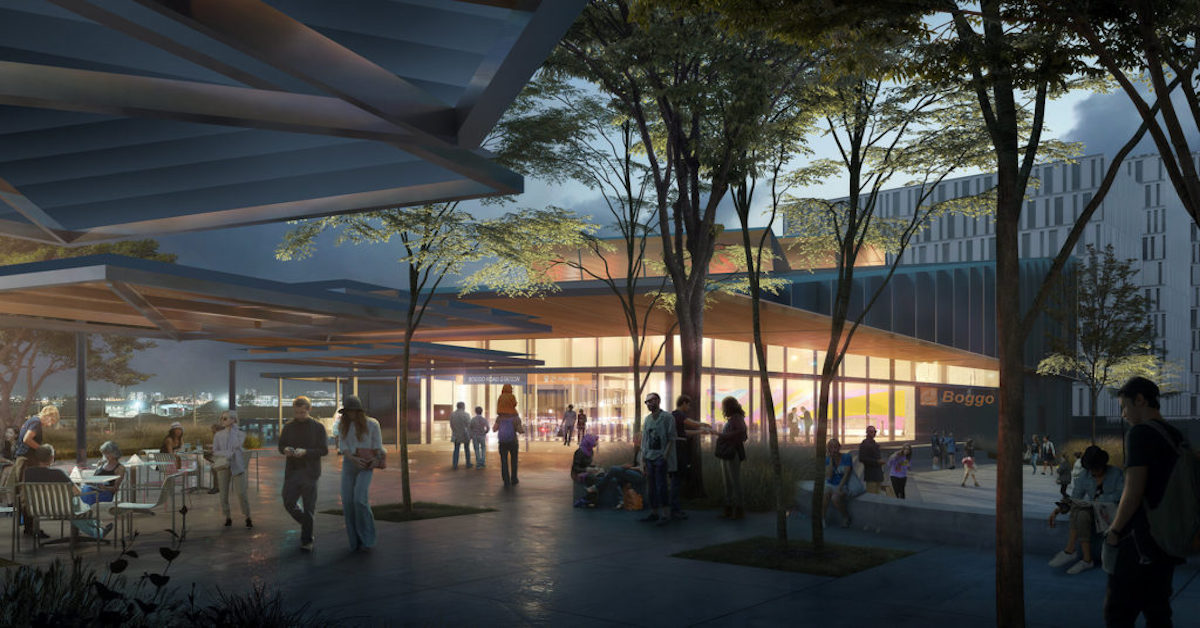
Platform screen doors, a familiar sight to those who have travelled on the Sydney Metro, will be introduced to Brisbane commuters, with plans to install them as safety improvements at the Boggo Road Station in Dutton Park and several other underground Cross River Rail stations, beginning 2026.
These screens, a novelty to Brisbane’s train network, will also be installed at the Woolloongabba, Albert Street, and Roma Street underground stations.
Photo Credit: Cross River Rail
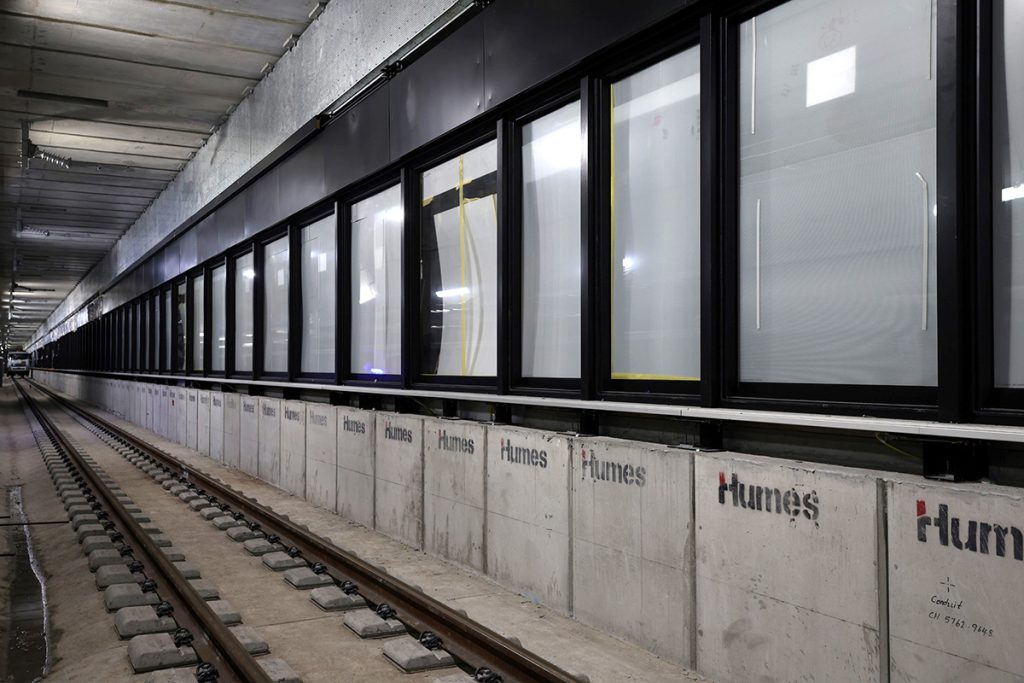
The installation of platform screen doors has been implemented to enhance passenger safety by reducing the likelihood of falls onto the tracks and object drops. In addition, these screens help to decrease noise levels within underground stations and provide air conditioning, resulting in a more comfortable commuting experience for passengers.
Construction Progress
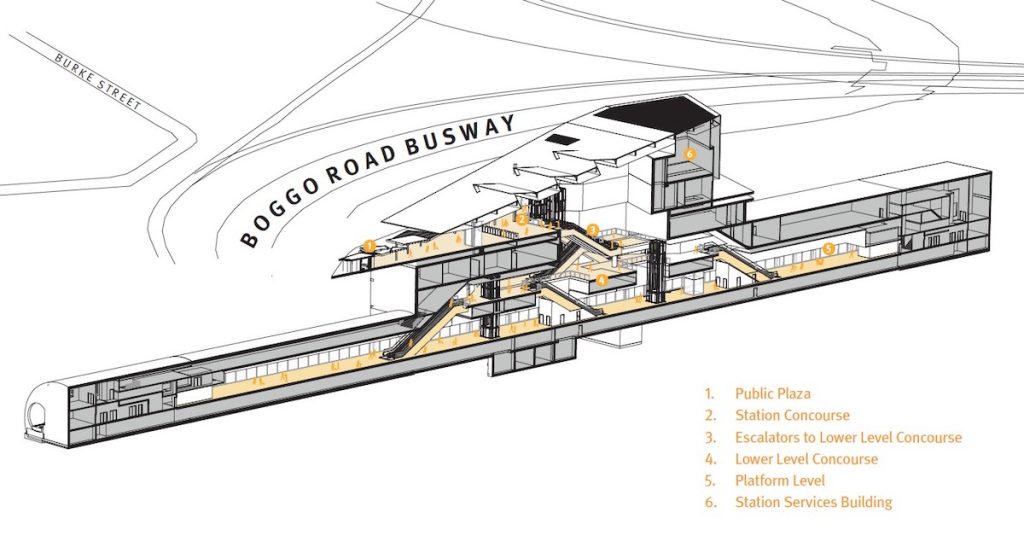
Progress persists at the Boggo Road station construction site as the edifice steadily emerges above ground level. Teams are currently focused on erecting internal walls ready for canopy installation.
Below ground, rail installation within the station is set to proceed in the following months, representing a pivotal milestone. Meanwhile, fit-out endeavours within the station box are underway, featuring the installation of utility rooms crucial for station operations.
Photo Credit: Cross rRver Rail
Graeme Newton, CEO of the Cross River Rail Delivery Authority, expressed enthusiasm about the ongoing construction progress.
He highlighted the innovative features introduced, such as escalators, elevators, spacious walkways, and glass panelling at the platform level, all contributing to an unprecedented safe and efficient transport experience in Brisbane.
The Yeronga Memorial Park, with its solemn cenotaph, has long stood as a tribute to the courage and sacrifice of those who served from the Stephens Shire during World War I. However, the memorial’s integrity was challenged when the community discovered that the tablet included the names of civic officials instead of solely honouring the soldiers.
In 1922, the community was stirred into action upon learning that the Memorial Tablet at Yeronga Memorial Park listed not just the soldiers who had given their lives but also several local councillors, including the Chairman and members of the Stephens Shire Council.
Photo Credit: State Library of Queensland
A heated debate ensued at local meetings over including councillors’ names, deemed insulting to service members. The public demanded their removal.
The Campaign for Justice
Central to the dispute was the campaign led by the family of Sgt William Percival Sparkes, a Gallipoli veteran and war hero, whose name was initially excluded from the tablet due to bureaucratic stipulations that he did not die overseas.
The relentless efforts of Sparkes’ mother and sister highlighted the perceived inequity in the tablet’s inscriptions, putting pressure on the local government to amend this oversight.
The controversy reached a turning point when the Governor of Queensland intervened, suggesting at a public ceremony that the councillors’ contributions paled in comparison to the sacrifices made by the soldiers.
Subsequently, the council agreed to remove the non-military names, aligning the memorial solely with those who fought and died in the war.
Photo Credit: Google Maps
Who was Sgt William Percival Sparkes?
Sgt William Percival Sparkes was a distinguished soldier and a significant figure in the local community of Stephens Shire. Before the war, he lived in his,”Glen View” home on Annerley Road. His life and military service shed light on the bravery of those who fought and the complexities of post-war recognition.
Born in 1882, Sparkes was an advertising manager for the Allan & Stark department store in Brisbane before the war. Well-known in local musical, sporting, and horticultural circles, he enlisted as a gunner in the 3rd Brigade Field Artillery on 20 August 1914, just as World War I began.
Military Service
Rapid advancements and commendations marked Sparkes’ military career. After training, he was deployed to Egypt with the Mediterranean Expeditionary Force (MEF). His exceptional skills in artillery earned him a promotion to bombardier, followed by further promotions due to his gallantry and leadership at Gallipoli.
He landed with the first Anzacs in April 1915 and was soon Mentioned in Despatches for his acts of bravery under fire. Despite suffering multiple gunshot wounds in May 1915, he returned to the front lines after recovering.
The physical toll of the war significantly impacted Sparkes. He developed a heart murmur attributed to the stress of his service, leading to his discharge in October 1917 as permanently unfit for military duty.
Photo Credit: Australian War Memorial
Returning to Brisbane, he rejoined Allan & Stark and ventured into politics, standing for the Buranda seat in the State Legislative Assembly in 1918. Despite his efforts, he was defeated, a campaign marred by personal attacks on his military record.
Advocacy for Recognition
In the post-war years, Sparkes was involved in another battle, this time for recognition at the Yeronga Memorial Park. His initial exclusion from the Memorial Tablet due to not dying overseas sparked a campaign by his family, emphasising the inconsistency in the memorial’s criteria, given that non-military personnel were included.
Death and Legacy
William Percival Sparkes passed away on 15 December 1921, from an aortic aneurysm, which doctors attributed to his war service. His papers, including war diaries, were later acquired by the State Library of New South Wales, preserving his legacy.
Meanwhile, the Yeronga Memorial Park now stands corrected, reflecting only the names of those soldiers from the Stephens Shire who served their country with valour.
Yeerongpilly artist Rachel Si-En Choi has been awarded a $9,900 grant from the Brisbane City Council’s Creative Sparks Programme to develop a groundbreaking project titled “New Waves.”
Rachel’s project will be a hybrid event and exhibition designed to explore the intersection of art and the lived experiences of the deaf and hard-of-hearing communities. By incorporating film, music, and photography, the event aims to bridge the gap between artistic expression and accessibility.
Set against a melancholic beach backdrop, “WAVES” tells the story of Indiana, a young woman grappling with the recent death of her mother. Seeking solace in music, Indiana finds no comfort, instead experiencing a tormenting descent into debilitating phantom noises and intrusive sounds from her neighbour.
The Creative Sparks Grants program, a joint initiative by Brisbane City Council and Arts Queensland, awarded nearly $200,000 in total funding to 19 Brisbane-based artists and arts groups. This investment aims to bolster the city’s vibrant creative scene by supporting the development and presentation of diverse artistic projects across various suburbs.
The 2024 Creative Sparks grant recipients represent a wide range of artistic disciplines. Alongside Rachel’s exploration of accessibility, other funded projects include a new musical by Paul Hodge and a circus performance.
This diversity ensures Brisbane audiences will have a multitude of exciting artistic experiences to choose from in the coming months.
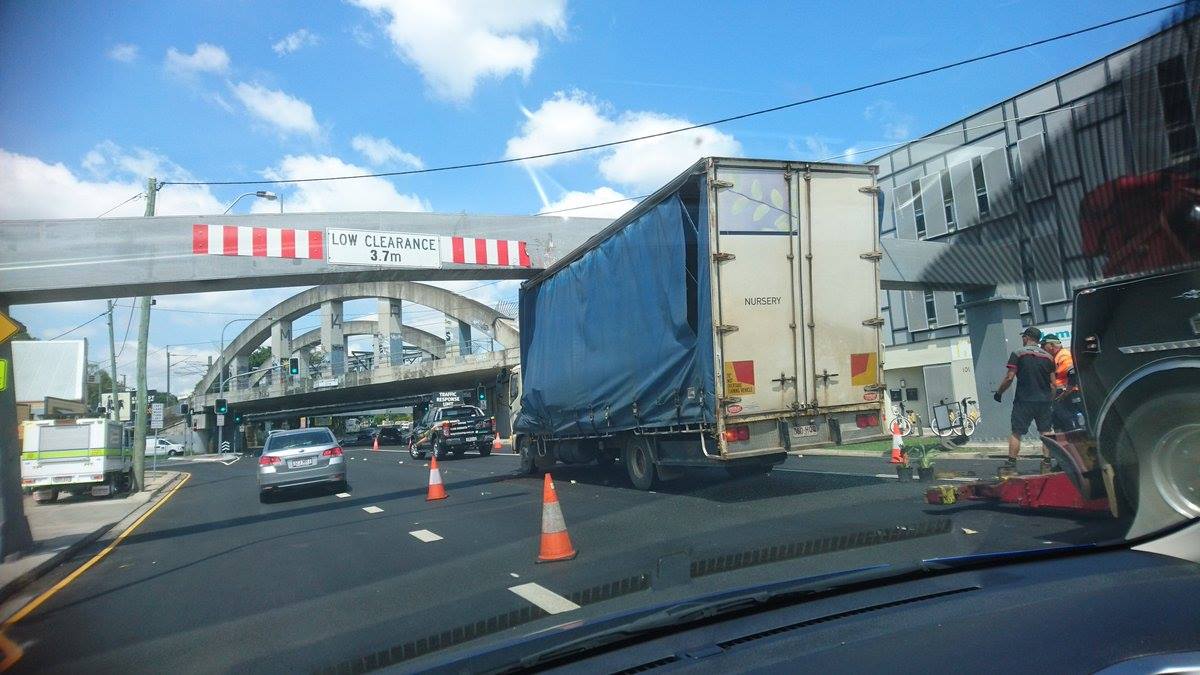
Queensland Rail is urging drivers to remain attentive on the roads after releasing CCTV footage showing a series of trucks colliding with rail bridges and protection beams across South East Queensland.
One of the incidents was spotted at Annerley Road in Dutton Park. According to the rail operator, they recorded nine trucks striking rail bridges and protection beams along some of the region’s busiest roads within a 48-hour period.
Striking a low bridge over rail lines risks harming not just the vehicle’s driver and passengers, as well as other motorists nearby, but it can also jeopardise the safety of train passengers and rail workers if the impact severely damages the critical rail infrastructure.
Photo credit: RAIL – Back On Track/Facebook
Queensland Rail has previously highlighted that collisions with rail bridges can lead to significant disruptions for drivers, causing over 200 hours of traffic delays each year, as well as result in costly fines due to the damage inflicted on the rail infrastructure.
Queensland Rail executive general manager Sarah Dixon commented that while only one of the incidents involved a vehicle hitting a rail bridge directly, the remaining eight saw vehicles strike protection beams, preventing them from damaging the bridges.
She acknowledged that thanks to the protection beams in place, impacts to rail services were minimal, as each protection beam strike would have been a bridge strike without that infrastructure.
Ms Dixon described the spate of bridge and protection beam strikes earlier this week as “worrying”. She mentioned that although no rail traffic was affected by the Countess Street protection beam strike in Brisbane’s CBD on Monday, there was a significant impact on road traffic after multiple lanes were closed for several hours.
With bridge strikes causing major delays and costly damage, Queensland Rail hopes the release of this CCTV footage will serve as a wake-up call for drivers. The rail operator emphasises the importance of staying alert behind the wheel and being aware of vehicle height restrictions, especially when approaching bridges and overpasses.
Did you know that the Fairfield Library, located at Fairfield Gardens Shopping Centre, has a line-up of FREE, inclusive events for the community? Not all of them are about books either so check them out!
If you’re between 18 to 29 years old, the 20-Something Book Club offers a dynamic platform for young adult readers of fiction and non-fiction to discuss captivating reads with like-minded peers.
Get ready to bring your paper and pens as you engage with diverse people who are into an equally diverse selection of genres and authors. This event encourages readers to engage, exchange thoughts, and expand their reading list. Join the event on Thursday, May 3, from 6:00 p.m. to 7:00 p.m. Click here to learn more about it.
Southside Community Craft Circle
The association’s mission is to utilise their talents in making crafts to help the disadvantaged in the community and provide a welcoming space for craft enthusiasts of all skill levels.
With free admission catered for audiences like young adults, adults, and seniors, this event offers an engaging opportunity to connect with fellow crafters, from knitting and crocheting, and more.
This inclusive gathering will meet from 1:00 pm to 3:00 pm. on Tuesday, May 7 Interested participants can learn more here.
One-on-One Tech Help
Technology can sometimes be overwhelming, but fear not! The One-on-One Tech Help workshop, led by Brisbane Libraries Tech Connect, is here to provide assistance with troubleshooting technical issues, developing digital skills, and improving overall online confidence.
The goal of this event is to aid attendees who have difficulties with technology and improve their online confidence in navigating digital devices. This free One-on-One Tech Help workshop is scheduled from 2:00 p.m. to 3:30 p.m. on Friday, May 7.
Interested audiences of young adults, adults, and seniors can learn more about the event at Fairfield Library here.
Evening Book Club
For those with a passion for books but limited daytime availability, Brisbane’s Evening Book Club presents the perfect solution. Attendees will expect to read and discuss “Operation Jungle” by the author John Shobbrook.
This event aims to strengthen the joy that literature brings to local book enthusiasts. Mark your calendar for this free event for audiences of adults, young adults, and seniors from 6:00 p.m. to 7:00 p.m. on Thursday, May 16. Click here to learn more.
The Tinker Table features Cubelets, a fascinating hands-on activity for all ages. Participants will get the chance to experiment with modular robotic blocks that snap together to create functioning robots.
Scheduled on Saturday, May 25, from 2:00 p.m. to 3:00 p.m. Led by BNEtechkids, this interactive session encourages exploration, problem-solving, and creativity in a playful environment.
Opened just this week, the green-hued cafe is already making waves, offering locals a brand-new spot to indulge in sublime ST ALi coffee, gourmet sourdough toasties, and a generous dose of community spirit.
The team behind the trendy Fifth Avenue Lifestyle complex, home to Hawthorne Coffee, approached Fieldy’s owner Tom Wilcock with the perfect opportunity – a vacant space in Fairfield that was ripe for a cosy new cafe concept. Seeing a chance to replicate Hawthorne’s resounding success in an area lacking quality coffee options, Mr Wilcock enthusiastically agreed.
Photo credit: Fieldy’s Coffee/Instagram
The food menu at Fieldy’s Coffee features a selection of house-baked muffins and cookies, five different crispy toasties with a rotating special, as well as acai bowls, and avocado toast. In addition to their cafe menu, Fieldy’s also offers their signature coffee beans for retail sale.
Visually, the cafe has a distinct earthy aesthetic compared to Hawthorne’s pastel palette, with forest green tiles and cushions accenting the black and timber decor. There’s also a small parking area out back, making it easy for Fairfield residents to pop in for their morning caffeine fix.
Photo Credit: Fieldy’s Coffee/Instagram
With Fieldy’s Coffee now open in Fairfield, this vibrant neighbourhood has a new caffeine oasis to call its own – a little sibling to the beloved Hawthorne, but with its own unique personality that’s sure to win over the locals.
Fieldy’s Coffee is open seven days a week, from 6:00 a.m. to 1:00 p.m. on weekdays and 6:00 a.m. to 12:00 p.m. on weekends. Follow them on Instagram @fieldyscoffee for updates.
Claims abound about Johnny Cash, the iconic “Man in Black,” performing at Boggo Road Gaol in Dutton Park, in the early 1970s, stirring both fascination and scepticism among fans and historians alike.
More than 45 years since Johnny Cash came to Australia in 1971, a story still persists that he visited Boggo Road Gaol, the most notorious prison in Queensland during that time, to perform for a select group of inmates.
The narrative, fueled by memories of retired prison officer Bill Eaddows, suggested Mr Cash played within the gaol’s confines, bringing his music directly to those living in the shadow of the state’s heavy-handed justice system, under the watchful eye of Premier Joh Bjelke-Petersen’s administration.
Mr Cash, no stranger to the prison environment with his performances in American facilities like Folsom and San Quentin, allegedly sought to extend his advocacy for prison reform internationally, choosing Boggo Road as a venue not once, but reportedly twice, in the early ’70s.
A Musical Family’s Australian Journey
Verifying the specifics is challenging due to the scarcity of records, such as historical correspondences, which have long been lost. The late Mr Eaddows remembered Mr Cash’s performances at Boggo Road Gaol twice in the 1970s, likely during ’71 and ’73, coinciding with his tours in Australia. Due to a rigorous ban on photography within prison walls at the time, no visual evidence of these events exists.
On the evening of 29 March 1971, Mr Cash had a show at Brisbane’s Festival Hall. This performance is believed to have occurred on the same day he visited Boggo Road Gaol, marking the finale of his Australian tour before departing for New Zealand.
Accompanying the singer to Australia were his wife, June Carter, and six members of her illustrious country music family, The Carters. Alongside them was Johnny and June’s one-year-old son, John, with the family traversing Australia in a caravan.
Advocacy Behind Bars
By the early 1970s, Mr Cash emerged as the foremost figure advocating prison reform. Drawing inspiration from the life of Jesus, whom he greatly admired, Mr Cash leveraged his fame to foster positive change. According to Mr Eaddows, this advocacy led him to perform at Boggo Road Gaol.
The inmates present at his performance likely had no prior knowledge of Mr Cash’s visit, as such an event would have required discreet and advanced planning. A former inmate suggested that Mr Cash might have corresponded with one of the prisoners, indicating a personal connection to the cause.
Photo Credit: Adam French/Google Maps
This behaviour was consistent with the singer’s approach to his tours; he often made unpublicised visits to prisons across the globe, including facilities in Sweden and Germany, totalling over 20 and, by some accounts, as many as 30 prisons. During these visits, he performed for the inmates and engaged with them personally, responding to their letters and listening to their stories.
Mr Dawson’s investigation, prompted by inquiries and the recounting of supposed witnesses, ultimately revealed these stories as potentially fabricated. This conclusion is supported by responses from former staff and inmates who collectively deny the event’s occurrence.
Despite the allure of Mr Cash’s legendary status and his known prison tours, Mr Dawson’s research suggests that the Boggo Road performances are more likely a part of local lore, a myth perpetuated without substantial evidence.
Yet the intrigue surrounding Johnny Cash’s connection to Boggo Road Gaol highlights the enduring impact of his legacy, not only as a musician but as a figure of cultural significance, whose life and work continue to inspire debate and investigation.
Whilst the truth of his presence at Boggo Road may remain elusive, the story itself speaks volumes about Mr Cash’s lasting influence and the intersection of music, justice, and history in Australia’s collective consciousness.